
A sore throat hurts most in the first day or two, and most cases ease within a week without any special treatment. You can feel better faster by soothing the tissue directly — warm salt water gargles, cool drinks, honey, and lozenges all reduce irritation — while treating the cause if one is identified. Most sore throats are caused by viruses, which means antibiotics do not help and rest plus symptom relief is the right approach.
What Actually Causes a Sore Throat?
The vast majority of sore throats come from viral infections — the common cold, influenza, and other respiratory viruses. The tissue lining your throat becomes inflamed and swollen, which is what produces the raw, scratchy sensation.
Bacterial causes are less common. Strep throat, caused by group A streptococcus, accounts for a minority of adult sore throats and a somewhat larger share in children. Other triggers include dry air, allergies, acid reflux, smoke, and vocal strain.
This distinction matters because it drives treatment. Viral sore throats do not respond to antibiotics. Using them anyway does nothing for your symptoms and contributes to antibiotic resistance. Some clinicians use scoring tools to estimate strep likelihood before testing, but confirmation requires a rapid test or throat culture.
How To Help Your Sore Throat Feel Better Fast
The fastest relief comes from reducing friction and moisture loss in the throat. Warm salt water gargles are one of the most consistently recommended home measures. Dissolve about half a teaspoon of salt in a glass of warm water and gargle, then spit. The salt draws fluid from swollen tissue and temporarily reduces swelling.
Honey is another well-supported option. Research published in the BMJ found that honey relieved cough symptoms compared with usual care, and it coats and soothes an irritated throat. A spoonful taken straight or stirred into warm — not boiling — water works. Do not give honey to children under 12 months because of the risk of infant botulism.
Beyond those two, the practical steps that help most are:
- Drink fluids steadily through the day to keep the throat moist.
- Use a humidifier or breathe steam from a hot shower to ease dryness.
- Suck on lozenges or hard candy to increase saliva, which coats the throat.
- Rest your voice and avoid shouting or prolonged talking.
- Avoid smoke, including secondhand smoke, which worsens irritation.
Over-the-counter pain relievers such as acetaminophen or ibuprofen reduce throat pain. Follow the dosing on the package and check with a pharmacist if you take other medications or have liver, kidney, or stomach conditions.
Do Lozenges and Sprays Really Work?
Some do, but the evidence varies widely by product. Medicated lozenges containing benzocaine or phenol numb the throat temporarily. Those with menthol create a cooling sensation that can make swallowing feel easier.
Many lozenges marketed for sore throat contain ingredients with limited supporting evidence. The honest position is that the physical act of sucking on a lozenge — any lozenge — increases saliva and moistens the throat, which helps regardless of the active ingredient. If a product promises to “boost immunity” or “kill the virus,” no strong clinical evidence backs that claim for sore throat relief.
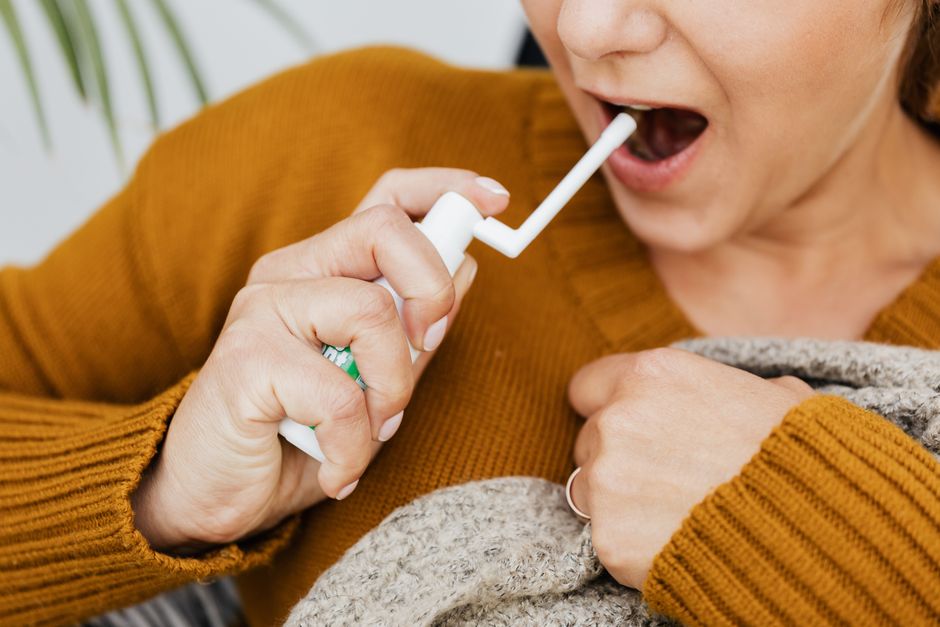
Throat sprays containing numbing agents can reduce pain for a short period. They do not treat the underlying cause. Use them as directed and avoid exceeding the labeled frequency.
When Should You See a Doctor for a Sore Throat?
Most sore throats resolve on their own within about a week. Seek medical care if symptoms are severe, last longer than a week, or come with warning signs.
Signs that warrant a prompt medical visit include:
- Difficulty swallowing saliva or breathing
- Drooling or inability to open your mouth fully
- A high fever, particularly with a rash
- One-sided severe throat pain with swelling
- Blood in your saliva
- A muffled or “hot potato” voice
These can signal conditions such as a peritonsillar abscess or epiglottitis, which need urgent evaluation. In most cases they are not present, but they are the reasons not to dismiss a rapidly worsening throat.
See a clinician if you have a weakened immune system, if symptoms keep returning, or if you develop a sore throat after starting a new medication.
Does Strep Throat Need Antibiotics?
Confirmed strep throat is treated with antibiotics, and that treatment is appropriate. Antibiotics shorten the illness modestly and reduce the risk of complications such as rheumatic fever, which is rare in the United States but serious when it occurs.
The key word is confirmed. Many sore throats look like strep but are viral. A rapid antigen test or culture is how clinicians tell the difference. Taking leftover antibiotics without testing is not recommended — the wrong antibiotic, or an antibiotic for a viral infection, provides no benefit.
If you are prescribed antibiotics for confirmed strep, complete the full course as directed. Stopping early raises the chance the infection returns and contributes to resistance.
What Home Remedies Have Weak or No Evidence?
Some popular sore throat remedies have little reliable support. Apple cider vinegar gargles, for example, are widely promoted online but no clinical trials confirm they relieve sore throat better than salt water. The acidity may irritate tissue further.
Essential oil gargles and “immune-boosting” supplements have not been shown in controlled trials to shorten a sore throat. Some can cause irritation or allergic reactions when applied to the throat.
This does not mean everything unproven is harmful. It means the evidence is genuinely absent, and the reliable basics — fluids, salt water, honey, rest, and pain relievers — are where the support actually sits.
How Long Does a Sore Throat Usually Last?
A viral sore throat typically improves within a few days and resolves within about a week. Strep throat treated with antibiotics usually improves within a day or two of starting treatment.
If a sore throat lingers beyond a week or keeps coming back, that pattern deserves evaluation. Persistent throat pain can have causes beyond infection, including reflux, allergies, or irritation from dry air, and a clinician can help sort out which is most likely.
Frequently Asked Questions
How can I get rid of a sore throat overnight?
You cannot cure a sore throat overnight, but gargling warm salt water, drinking warm fluids, and using a humidifier before bed can reduce morning soreness. Honey taken before sleep may also soothe the throat.
Does honey really help a sore throat?
Yes, honey coats and soothes irritated throat tissue, and research published in the BMJ found it relieved cough symptoms. Do not give honey to children under 12 months old.
Should I take antibiotics for a sore throat?
Only if a clinician confirms a bacterial cause such as strep throat with a test. Most sore throats are viral, and antibiotics do not help viral infections.
When should I worry about a sore throat?
Seek care if you have trouble swallowing saliva or breathing, drool, have a high fever with a rash, or have severe one-sided throat pain. These can signal conditions that need urgent evaluation.
