
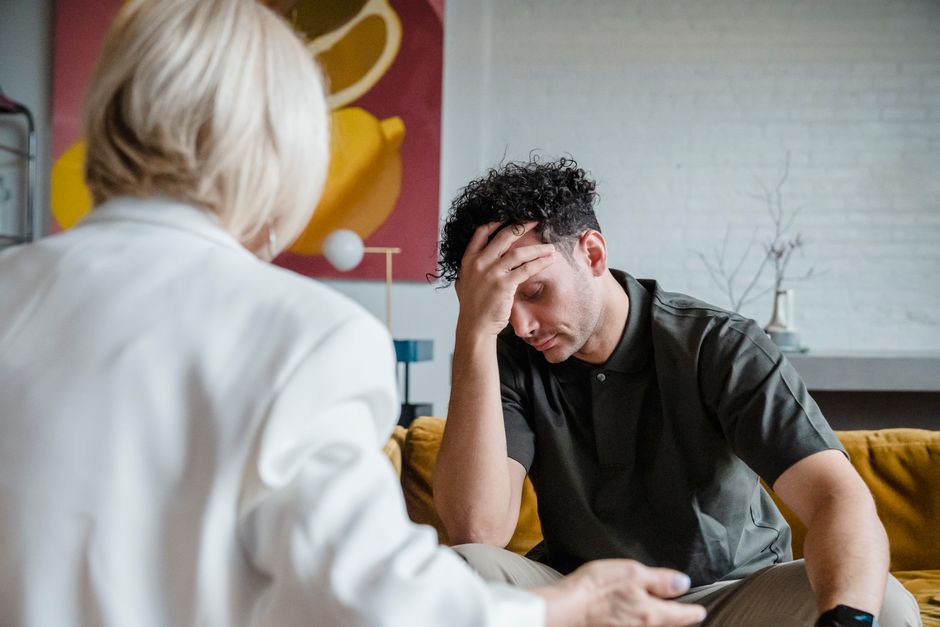
Watching someone you care about struggle to breathe, shake, or panic is frightening. The most helpful thing you can do is stay calm, stay with them, and help them feel safe. Anxiety attacks peak and pass, usually within minutes to about half an hour, and your steady presence can make that time easier to get through. You do not need special training to help. You need patience, a quiet voice, and a willingness to stay.
What Is Happening During an Anxiety Attack?
An anxiety attack is a surge of intense fear that triggers the body’s fight-or-flight response. The brain perceives danger, even when no real threat exists, and releases stress hormones like adrenaline and cortisol. Those hormones speed up the heart, quicken breathing, and send blood to major muscles.
This is why the physical symptoms feel so overwhelming. A racing heart, chest tightness, sweating, trembling, dizziness, and a feeling of losing control are all part of the same stress response. The body is preparing to fight or run. There is no danger to fight or run from, but the body does not know that yet.
It helps to understand that an anxiety attack is not a heart attack, though the symptoms can feel similar. It is not a sign of weakness. It is a misfiring alarm system. The alarm is real. The emergency is not.
Some people use the terms anxiety attack and panic attack interchangeably. In clinical settings, panic attacks are defined by specific criteria and can occur with or without a trigger. Anxiety attacks are a more general term for intense anxiety that builds in response to stress. Either way, the practical steps for helping someone are largely the same.
How To Help Someone During An Anxiety Attack?
Stay with the person and help them ride out the wave. Your calm presence is the most important tool you have. Do not try to fix the situation or reason them out of it. The thinking part of the brain is temporarily offline. Logic will not land right now.
Here is what tends to work:
- Stay close and stay calm. Lower your voice. Speak slowly. Your nervous system can help regulate theirs.
- Ask before touching. Some people find a hand on the arm grounding. Others feel trapped. Ask, “Is it okay if I hold your hand?”
- Give simple, short directions. “Breathe with me.” “Look at me.” “You are safe.” Long explanations will not help.
- Move them to a quieter space if possible. Less noise and fewer people can reduce the load.
- Stay until it passes. Do not leave them alone unless they ask you to.
- Afterward, offer water and a chance to sit quietly. The body needs time to settle.
What you should not do matters just as much. Do not tell them to calm down. Do not say “it’s all in your head.” Do not crowd them or grab them without warning. Do not ask a string of questions. These responses, even when well-intentioned, tend to make things worse.
If you are not sure what to do, ask a simple question: “What do you need right now?” Some people know. Some do not. Either answer is fine.
What Should You Say and What Should You Avoid?
Words matter during an anxiety attack, but fewer words are usually better. Short, grounding statements work best. Say things like “I’m here,” “You’re not alone,” and “This will pass.” Repeat them if needed. Repetition is soothing.
Avoid anything that sounds like a demand. “You need to breathe slower” can feel like pressure when breathing already feels impossible. Instead, try “Let’s breathe together.” Then breathe slowly and audibly so they have something to follow.
Avoid minimizing. Phrases like “It’s not a big deal” or “You’re overreacting” dismiss what feels like a real emergency to them. Even if you cannot see a threat, their body is responding as if one exists.
Avoid asking too many questions. “What happened? Why are you upset? Did you take your medication?” A barrage of questions adds cognitive load when the brain is already overloaded. Save those conversations for later, when the person is calm.
One thing many people get wrong: they try to problem-solve in the moment. The time to talk through what triggered the attack is after it ends, not during. During the attack, your only job is to help them feel safe and supported.





How Can You Help Someone Breathe Through It?
Breathing is one of the few voluntary functions that can directly influence the nervous system. Slow, controlled breathing activates the parasympathetic branch, which helps counter the fight-or-flight response. This is well established in physiology.
But telling someone mid-attack to “just breathe” rarely works. A better approach is to breathe with them. Here is a simple method you can guide them through:
- Ask them to breathe in through their nose for a count of four.
- Hold for a count of four.
- Breathe out through their mouth for a count of six.
- Repeat for a few rounds.
The longer exhale is the key part. A slightly longer out-breath than in-breath tends to support the calming response. If counting feels like too much, just breathe slowly and let them follow you. You do not need to get it perfect. The goal is rhythm, not precision.
Some people find it easier to ground themselves through their senses rather than their breath. You can guide them to name five things they can see, four they can touch, three they can hear, two they can smell, and one they can taste. This is a common grounding technique used in anxiety treatment. It works by pulling attention away from internal panic and toward the present environment. The evidence for it is mostly from clinical practice rather than large trials, but many people find it helpful.
When Should You Seek Professional Help?
An anxiety attack on its own is not usually a medical emergency. But there are times when you should call for help. If the person has chest pain that does not ease, faints, has a seizure, or seems confused in a way that does not improve, treat it as a medical situation and call 911.
If this is the person’s first attack and you are unsure whether it is anxiety or something else, err on the side of caution. Heart attacks and panic attacks can feel similar. It is always acceptable to seek medical evaluation when you are not sure.
Beyond the immediate moment, recurring anxiety attacks may point to an underlying anxiety disorder. Panic disorder, generalized anxiety disorder, and other conditions are treatable. If someone you care about has repeated attacks, avoids situations because of them, or finds that anxiety is interfering with daily life, encourage them to talk to a doctor or mental health professional. Effective treatments exist, including therapy and medication.
If someone talks about harming themselves or others during or after an attack, take it seriously. Contact a crisis line or emergency services right away. In the US, you can call or text 988 to reach the Suicide and Crisis Lifeline.
How Can You Support Someone Long-Term?
Helping someone during an attack is one thing. Supporting them over time is another. The most useful thing you can do is learn their patterns. Ask them, when they are calm, what helps and what does not. Some people want to be held. Some want space. Some want distraction. Some want silence.
Make a plan together for future attacks. What should you say? Should you touch them? Do they have a preferred breathing technique? Do they want you to call anyone? Having a plan in place reduces confusion when an attack happens.
Encourage professional care without pushing. Therapy, particularly cognitive behavioral therapy, has strong evidence for treating panic and anxiety disorders. Some people also benefit from medication. These are decisions to make with a clinician, not something to manage alone.
Take care of yourself too. Watching someone you love struggle with anxiety is hard. You cannot pour from an empty cup. If you feel overwhelmed, that is normal. Consider talking to someone yourself, whether a friend, a therapist, or a support group.
Anxiety attacks are frightening, but they are not dangerous in themselves. They peak, they pass, and the person comes back. Your steady presence during that window can make a real difference. You do not need to be perfect. You just need to stay.
Frequently Asked Questions
How long does an anxiety attack usually last?
Most anxiety attacks peak within 10 minutes and begin to ease after that. Some can last longer, but the most intense phase typically passes within 20 to 30 minutes.
Should I call 911 during an anxiety attack?
Call 911 if the person has chest pain that does not ease, faints, has a seizure, or seems confused in a way that does not improve. If you are unsure whether it is anxiety or a medical emergency, call for help.
What should I not say during an anxiety attack?
Avoid saying “calm down,” “it’s all in your head,” or “you’re overreacting.” These phrases dismiss what feels like a real emergency and tend to make things worse.
Can I leave someone alone during an anxiety attack?
Only if they ask you to. Most people find it reassuring to have someone stay nearby, even in silence. If you must step away, tell them you will be right back and keep that promise.
