
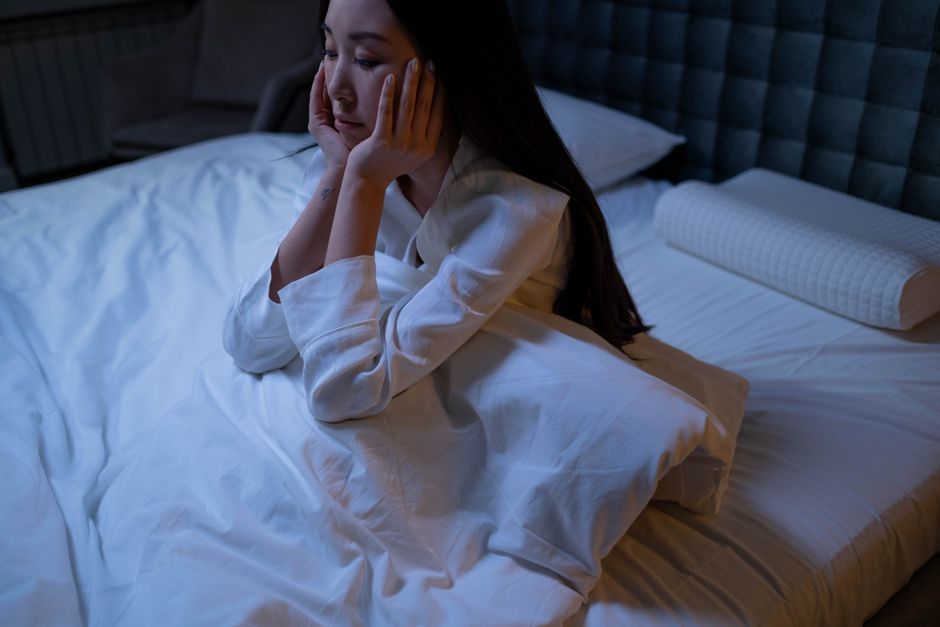
If your mind races the moment your head hits the pillow, you are not alone. Anxiety and sleep problems often feed each other. The good news is that small, specific steps can help you break that cycle. Calming your nervous system before bed, building a consistent wind‑down routine, and addressing anxious thoughts directly are proven ways to help sleep with anxiety.
Why Anxiety Makes It Hard to Fall Asleep
Anxiety activates the body’s stress response system. Your heart beats faster, your breathing speeds up, and stress hormones like cortisol rise. These changes are designed to help you handle a threat, but they interfere with the relaxation needed for sleep.
Racing thoughts keep your brain alert. The part of your brain that worries, the amygdala, becomes more active. Meanwhile, the part that helps you rest, the prefrontal cortex, has a harder time calming things down. This creates a vicious cycle: anxiety keeps you awake, and lack of sleep makes you more anxious the next day.
Research consistently shows that people with chronic anxiety take longer to fall asleep and wake up more often during the night. Understanding this biology can help you see why certain strategies work better than others.
How to Help Sleep with Anxiety During a Middle‑of‑the‑Night Panic
Waking up with a pounding heart and a flood of worries is common when anxiety is high. The key is to stop the spiral before it takes over.
Try the 5‑4‑3‑2‑1 grounding technique. Name five things you can see, four you can touch, three you hear, two you smell, and one you taste. This pulls your brain away from anxious thoughts and back to the present moment. It takes less than a minute and can be done without leaving bed.
Slow, deep breathing also helps. Breathe in for four counts, hold for four, and exhale for six. Longer exhalations activate the vagus nerve, which signals your body to relax. Practicing this during a panic episode can lower your heart rate within a few minutes.
If you are still awake after 20 minutes, get out of bed. Go to another dimly lit room and do something quiet, like reading a book or listening to calm music. Stay in bed only for sleep and sex. This trains your brain to associate bed with rest, not worry.
The Role of a Consistent Bedtime Routine
A predictable routine tells your brain that sleep is coming. Do the same activities in the same order each night, starting 30 to 60 minutes before you plan to sleep.
Dim the lights in your home an hour before bed. Bright light, especially blue light from screens, suppresses melatonin, the hormone that regulates sleep. Put away phones, tablets, and laptops during that hour. If you must use a screen, enable a blue‑light filter and lower the brightness.
Include a relaxing activity such as:
- Taking a warm bath or shower (the drop in body temperature afterward promotes sleep)
- Reading a physical book (not on a screen)
- Gentle stretching or yoga
- Listening to an audio book or calm music
- Writing down worries in a journal to get them out of your head
Keep your bedroom cool, around 65 to 68 degrees Fahrenheit (18‑20°C). A dark, quiet room is best. Use blackout curtains or an eye mask, and consider a white noise machine if outside sounds bother you.





Cognitive Behavioral Techniques You Can Try Tonight
Cognitive behavioral therapy for insomnia (CBT‑I) is the most effective non‑drug treatment for sleep problems linked to anxiety. Several techniques can be done on your own.
Schedule a “worry time” earlier in the day. Set aside 10 to 15 minutes to write down everything that is bothering you. When worries show up at bedtime, remind yourself that you already dealt with them during worry time. This helps stop the cycle of rumination.
Challenge anxious thoughts. Ask yourself: “Is this worry realistic? What is the evidence for and against it?” Often, the worst‑case scenario is unlikely. Replacing catastrophic thinking with a more balanced view reduces the emotional charge of the worry.
Stick to a consistent sleep schedule, even on weekends. Going to bed and waking up at the same time stabilizes your internal clock. Irregular sleep patterns make anxiety and insomnia worse.
Some studies suggest that keeping a gratitude journal before bed can also shift focus away from anxiety. Write down three things you are grateful for that day. This practice helps quiet the brain’s fear center over time.
When to Consider Professional Help
If anxiety and sleep problems last more than a few weeks despite your best efforts, talk to a healthcare provider. Therapy, particularly cognitive behavioral therapy for anxiety and insomnia, is a first‑line treatment. A therapist can help you identify thought patterns you may not notice on your own.
Medication may be an option, but it is not a first choice for everyone. Some doctors prescribe short‑term sleep aids or anti‑anxiety medicines. However, many sedative medications carry risks of dependence and daytime drowsiness. They should be used only under medical supervision and usually for a limited time.
Evidence‑based supplements are limited. Melatonin can help with timing sleep, especially if your internal clock is off, but it does not treat anxiety itself. Magnesium and certain herbal teas like chamomile are safe for most people, but clinical evidence for their effect on anxiety‑related insomnia is not strong. Never start a supplement without checking with a doctor, especially if you take other medications or have a chronic condition.
Lifestyle Habits That Support Calmer Nights
What you do during the day affects your sleep. Regular physical activity, especially aerobic exercise, reduces anxiety and improves sleep quality. Aim for at least 30 minutes of moderate exercise most days. Avoid vigorous activity within two hours of bedtime, as it can be too stimulating.
Limit caffeine and nicotine, both of which are stimulants. Stop caffeine by early afternoon. For most people, a 2 p.m. cutoff helps avoid interference with sleep. Alcohol is not a sleep aid. It may help you fall asleep faster, but it disrupts deep sleep and can cause earlier waking.
Exposure to natural light during the day, especially in the morning, helps regulate your circadian rhythm. A 15‑ to 30‑minute walk outside after waking can strengthen your body’s sleep‑wake cycle.
Eating a heavy meal close to bedtime can cause discomfort and heartburn, which may trigger anxiety. If you are hungry, choose a light snack such as a banana, a small bowl of plain yogurt, or a handful of almonds.
Frequently Asked Questions
Frequently Asked Questions
Does melatonin really help with anxiety‑related sleep problems?
Melatonin can help you fall asleep faster if your internal clock is off, but it does not treat anxiety itself. Some research suggests it may have a mild calming effect, but the evidence is not strong enough to recommend it as a treatment for anxiety‑related insomnia.
Can breathing exercises stop a panic attack at night?
Yes. Slow, deep breathing with a longer exhale can activate the vagus nerve and lower your heart rate within a few minutes. It is a safe and effective way to calm the body during night‑time panic.
Should I go to bed earlier if I can’t sleep due to anxiety?
No. Going to bed earlier when you are not sleepy can worsen the problem. Stick to a consistent bedtime that matches when you actually feel sleepy. If you are not asleep after 20 minutes, get up and do something relaxing until you feel drowsy.
Is it safe to use over‑the‑counter sleep aids every night?
No. Most over‑the‑counter sleep aids contain antihistamines, which can cause daytime drowsiness and memory problems with regular use. They are meant for short‑term use only. Talk to a doctor before using any sleep aid for more than a few nights.
