
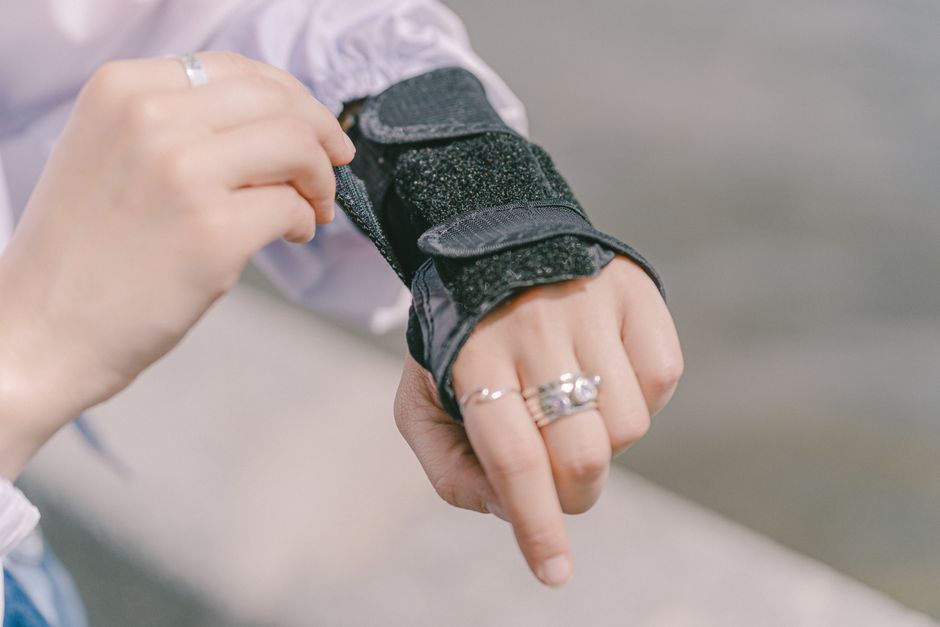
If you spend hours typing, swiping, or gripping tools, you have likely wondered how to help prevent carpal tunnel syndrome before the numbness and tingling start. The short answer is that no single trick guarantees prevention, but research identifies several habits that lower your risk. The most effective approach combines frequent breaks, proper wrist positioning, and nerve gliding exercises. These strategies work by reducing pressure on the median nerve in your wrist, which is the core problem in carpal tunnel syndrome.
What Actually Causes Carpal Tunnel Syndrome?
Carpal tunnel syndrome happens when the median nerve gets squeezed as it passes through a narrow passage in your wrist called the carpal tunnel. This tunnel is made of bones and a tough band of tissue. When the tissues inside swell or become inflamed, the nerve gets compressed.
The National Institute of Neurological Disorders and Stroke reports that repetitive hand movements, vibration, and sustained awkward wrist positions are common contributors. But here is what many articles get wrong: typing alone is not a direct proven cause. Studies have found that people who do assembly line work, use vibrating tools, or perform forceful gripping have higher rates of carpal tunnel syndrome than office workers do.
Genetics also plays a big role. Some people are simply born with a narrower carpal tunnel. Women are three times more likely to develop it than men, according to the American Academy of Orthopaedic Surgeons. Pregnancy, diabetes, and thyroid conditions can also increase risk by causing fluid retention or tissue changes. Knowing this matters because it means you cannot prevent carpal tunnel syndrome by changing your keyboard alone. You have to address the whole picture.
How To Help Prevent Carpal Tunnel Syndrome With Your Workstation Setup
Your desk setup matters, but not in the way you might think. The goal is not a fancy ergonomic chair. The goal is keeping your wrists straight while you work. Research published in the Journal of Orthopaedic Research found that bending your wrist more than 20 degrees in any direction doubles the pressure inside the carpal tunnel.
Here are the key adjustments based on that finding:
- Keep your forearms parallel to the floor when typing. Your elbows should be at a 90-degree angle.
- Your wrists should be straight, not bent up or down. A wrist rest can help, but only if it keeps your wrist neutral. Do not rest your wrists on it while typing.
- Your keyboard should be flat or slightly tilted away from you. Negative tilt keyboards reduce wrist extension.
- Your mouse should be at the same height as your keyboard. Reaching up or down for it strains the wrist.
One study in the journal Ergonomics compared workers who used standard keyboards with those who used split, tented keyboards. The split keyboards reduced wrist extension and ulnar deviation — that is the sideways bend toward your pinky. People who used them reported less pain over three months. This does not mean you must buy a split keyboard. But it does mean that keeping your wrists straight is more important than any specific product.
Do Stretches and Exercises Really Help?
Yes, but only specific ones. The most researched exercises are nerve glides, also called nerve flossing. These are gentle movements that help the median nerve slide more freely through the carpal tunnel. A 2020 randomized controlled trial published in the Journal of Hand Therapy found that people who did nerve gliding exercises for four weeks had significantly less pain and better function than those who did no exercises.
The basic nerve glide looks like this: Make a fist with your thumb tucked inside your fingers. Straighten your fingers and thumb. Bend your wrist back gently. Turn your palm away from your face. Use your other hand to gently stretch your thumb. Hold each position for a few seconds. Repeat five times on each hand.
There is a common mistake here. Some people aggressively stretch their wrists by pulling their fingers back hard. That can actually irritate the nerve further. Nerve glides should feel like a gentle pull, never sharp pain. If it hurts, you are pushing too far.
Strengthening exercises for the forearm muscles may also help. A study in the Journal of Physical Therapy Science showed that grip strengthening combined with nerve glides improved symptoms more than nerve glides alone. But do not use a heavy grip trainer. Use a soft ball or putty and squeeze lightly. Heavy gripping increases pressure inside the carpal tunnel.





What About Wrist Braces and Splints?
Wrist braces are one of the most commonly recommended tools, but they are often misunderstood. A brace keeps your wrist in a neutral position, usually at night. The reason is simple: many people sleep with their wrists bent. A 2015 study in the Journal of Orthopaedic Surgery and Research found that wearing a night splint for six weeks reduced symptoms in 67 percent of people with mild to moderate carpal tunnel syndrome.
Here is the catch. Wearing a brace all day can weaken your forearm muscles and make you dependent on it. The American Academy of Family Physicians recommends wearing a brace only at night or during specific activities that trigger symptoms. Do not wear it while you are typing unless your symptoms are severe and your doctor advises it.
There is also a difference between a prefabricated brace and a custom one. Research does not show that custom braces work better than off-the-shelf models. What matters is that the brace holds your wrist in a neutral position — not bent forward or backward. Look for a brace with a rigid metal or plastic insert on the palm side. Soft fabric braces without a stay do not prevent bending.
| Intervention | What Research Shows | Who It Helps Most |
|---|---|---|
| Night splint | Reduces symptoms in about two-thirds of mild cases | People with nighttime symptoms or early-stage carpal tunnel |
| Daytime brace | Can weaken muscles if overused | Only during specific trigger activities, not all-day wear |
| Nerve glides | Significant improvement in pain and function after 4 weeks | People with mild to moderate symptoms |
| Ergonomic keyboard | Reduces wrist extension but not proven to prevent onset | People who already have wrist discomfort while typing |
Does Diet or Supplements Play a Role?
This is where the evidence gets thin and the hype gets thick. You will see claims that vitamin B6 cures carpal tunnel syndrome. The reality is more complicated. Some older studies suggested that B6 deficiency might contribute to nerve symptoms. But a 2014 review in the Cochrane Database of Systematic Reviews found no good evidence that B6 supplements improve carpal tunnel symptoms compared to placebo.
Vitamin B6 is not harmless in high doses. Taking more than 100 milligrams per day for long periods can actually cause nerve damage. That is the opposite of what you want. The same is true for other supplements like alpha-lipoic acid and turmeric. Some small studies show modest benefits, but the quality of evidence is low. The National Center for Complementary and Integrative Health states that no supplement has been proven to prevent or treat carpal tunnel syndrome.
What does have some support is reducing inflammation through diet. A 2019 study in the Journal of Inflammation Research found that people with higher levels of C-reactive protein, a marker of inflammation, had more severe carpal tunnel symptoms. Eating a diet rich in anti-inflammatory foods — vegetables, fruits, whole grains, and omega-3 fatty acids from fish — is reasonable advice for general health. But there are no clinical trials showing that any specific diet prevents carpal tunnel syndrome.
What Common Prevention Advice Should You Ignore?
A lot of popular advice sounds good but has little science behind it. Here are three things to stop doing:
Do not shake your hands out hard. Many people shake their hands when they feel numbness. This is a reflex, not a treatment. Aggressive shaking can strain the tendons and make inflammation worse. Gentle wrist circles or nerve glides are better.
Do not buy a vibrating massage tool for your wrist. Vibration is a known risk factor for carpal tunnel syndrome in occupational studies. Workers who use vibrating tools like jackhammers have higher rates of the condition. Applying vibration directly to your wrist is not smart. If you want massage, use gentle pressure with your thumb on your forearm muscles, not directly over the carpal tunnel.
Do not wear a magnetic bracelet or copper band. This has been tested. A 2013 study in the Journal of Pain Research compared magnetic wrist straps to placebo straps in people with carpal tunnel syndrome. Neither group improved. There is no evidence that magnets or copper affect nerve compression or inflammation. Save your money.
One more thing to watch out for: stretching your fingers back hard against your palm. This is sometimes called a “carpal tunnel stretch.” It actually compresses the carpal tunnel further because it pulls the tendons tight against the nerve. If you feel a stretch in your palm or wrist, you are doing it wrong.
Frequently Asked Questions
Can carpal tunnel syndrome be prevented completely?
No method guarantees complete prevention because genetics and underlying health conditions play a large role. But reducing repetitive strain and keeping your wrist neutral lowers your risk significantly.
How often should I take breaks from typing?
Take a 30-second break every 10 minutes and a longer 5-minute break every hour. During breaks, let your hands rest flat or do gentle nerve glides.
Does an ergonomic keyboard actually prevent carpal tunnel?
Ergonomic keyboards can reduce wrist bending, which may help if you already have discomfort. But no keyboard has been proven to prevent carpal tunnel syndrome from developing in a healthy person.
When should I see a doctor for wrist pain?
See a doctor if you have numbness or tingling that lasts more than two weeks, if you drop things, or if symptoms wake you at night. Early treatment gives the best outcomes.
