
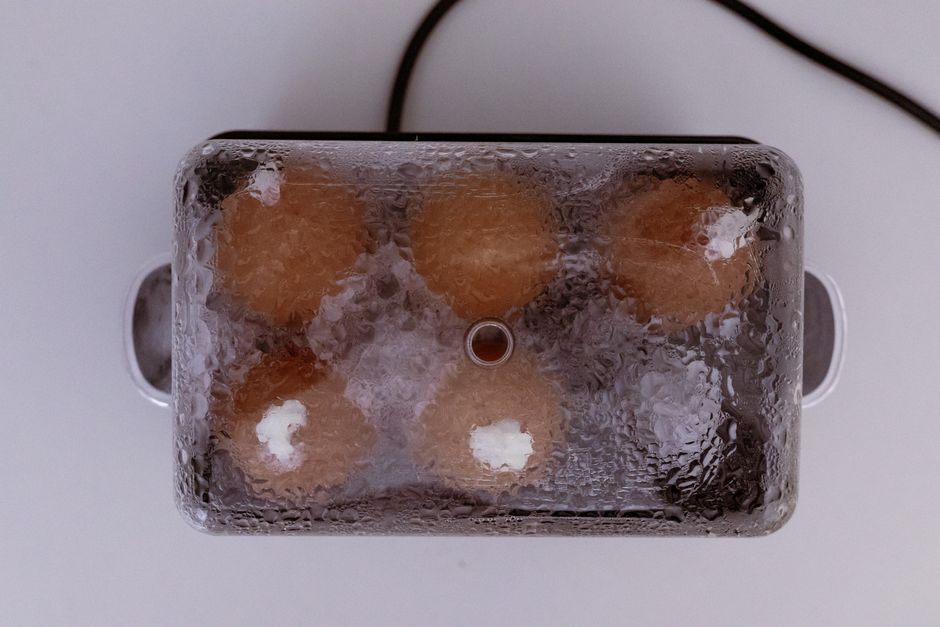
Reheating a boiled egg sounds simple, and it mostly is — but the method matters more than most people expect. The fastest safe way to heat boiled eggs is to lower them into simmering water for a few minutes, or to steam them briefly, so the yolk warms without the white turning rubbery. Microwaving a whole egg in its shell is dangerous and can cause it to burst. If the egg is already peeled, a bowl of hot water or a quick steam works well. The goal is gentle, even heat — not high heat for a long time, which is what ruins the texture.
Why Does Reheating Boiled Eggs Go Wrong So Often?
Egg white proteins are sensitive to heat. Once they have already set during boiling, applying more heat causes them to tighten further and squeeze out water. That is why a reheated egg can taste dry and feel rubbery even though nothing was technically cooked incorrectly.
The yolk behaves differently. It contains fat, which slows heat transfer. So the white can overcook while the yolk is still cold in the middle. This mismatch is the core problem with reheating boiled eggs, and it is why gentle, even heat beats fast, intense heat almost every time.
There is also a food safety layer. A boiled egg left at room temperature for more than about two hours should be discarded, according to standard food safety guidance. Reheating does not undo bacterial growth that already happened. If you are unsure how long an egg sat out, throw it away.
What Is the Best Way To Reheat a Boiled Egg in the Shell?
Hot water is the most reliable method. Bring a pot of water to a gentle simmer, then lower the eggs in using a spoon. Let them sit for a few minutes until warmed through, then remove them. Do not boil them hard again — a rolling boil is what makes the white tough.
Steaming works just as well and is often faster. Place the eggs in a steamer basket over simmering water and cover the pot. The moist heat warms them evenly without direct contact with boiling water.
A few practical points:
- Warm the egg gradually rather than dropping a cold egg into rapidly boiling water, which can crack the shell.
- Use a spoon or slotted ladle to avoid burning your fingers.
- Test the temperature by tapping the shell — a warm egg feels noticeably hot to the touch.
- Peel after heating, since a warm egg peels more easily than a cold one in many cases.
If you are reheating several eggs, keep them in a single layer so they heat evenly. Piling them up means the ones in the middle stay cool while the outer ones overcook.
How Do You Reheat Peeled Boiled Eggs Without Ruining Them?
Peeled eggs are more fragile because the protective shell is gone. The gentlest method is to place them in a bowl and cover them with hot — not boiling — water for a couple of minutes. This warms them through without exposing the surface to aggressive heat.
You can also steam peeled eggs briefly. Just a minute or two is usually enough, since peeled eggs warm faster than shelled ones. Watch them closely. Because there is no shell to buffer the heat, they can go from warm to rubbery quickly.
For a single peeled egg, some people simply pour hot water over it in a mug and let it sit. This is a low-effort option that works reasonably well and is hard to get wrong.





Can You Reheat Boiled Eggs in the Microwave?
You can microwave a peeled boiled egg, but you have to be careful. A whole egg in the shell should never go in a microwave. Pressure builds inside the shell and the egg can explode — sometimes after you take it out, which makes it especially dangerous near your face.
Even a peeled whole egg can burst in the microwave because steam gets trapped inside. If you microwave a peeled egg, cut it in half or into pieces first. This lets steam escape and reduces the risk of a sudden pop.
Use short bursts of a few seconds at a time and check between them. Microwaves heat unevenly, so the outside can be hot while the center is still cool. Stirring or turning the pieces helps.
The honest summary: the microwave is convenient but the least forgiving method for eggs. If you want consistent results, water or steam is the better choice.
Does Reheating a Boiled Egg Change Its Nutrition?
Reheating does not meaningfully change the nutrition of a boiled egg. The protein, fat, vitamins, and minerals stay largely the same. What changes is texture and moisture, not the basic nutrient content.
One nutrient worth noting is that egg protein is highly digestible and contains all nine essential amino acids. A large boiled egg provides roughly 6 grams of protein and about 70 calories, based on standard USDA nutrient data. These figures do not shift much whether the egg is cold or reheated.
What can change is how much you enjoy eating it. A dry, rubbery egg is less appealing, which is a texture issue rather than a nutritional one.
How Long Can You Store Boiled Eggs Before Reheating?
Hard-boiled eggs keep in the refrigerator for about one week, whether peeled or unpeeled, according to standard food safety guidance. After that, the risk of spoilage rises and they should be discarded.
Peeled eggs are best eaten within a few days because the loss of the shell leaves them more exposed. Store them in a covered container to limit moisture loss and odor absorption.
Signs an egg has gone bad include a sour or sulfurous smell, a slimy texture, or a discolored yolk or white. When in doubt, throw it out. Reheating a spoiled egg does not make it safe — heat kills bacteria but does not remove the toxins some bacteria produce.
What About Reheating Eggs in Dishes and Leftovers?
If your boiled eggs are part of a dish — egg salad, deviled eggs, a casserole, or a salad topping — the reheating question changes. Egg salad and deviled eggs are usually served cold and should not be reheated. They also should not sit out for long periods.
For dishes like curries, stews, or casseroles that contain boiled eggs, reheating the whole dish gently on the stovetop or in the oven works fine. The eggs will warm along with everything else. Avoid high heat, which can make the eggs tough and rubbery inside the dish.
If you are reheating a dish in the microwave, stir it partway through so the heat distributes evenly and no single egg piece overheats.
Tips for Getting the Texture Right Every Time
The single biggest factor in good reheated eggs is heat level. Gentle and brief beats hot and long. Think of it as warming, not cooking.
A few habits that help:
- Reheat only what you plan to eat, since repeated reheating dries eggs out further.
- Use moist heat — water or steam — rather than dry heat when you can.
- Keep the time short and check often, especially with peeled eggs.
- Let the egg rest for a moment after heating so the warmth spreads evenly through the yolk.
- If the egg still feels cold in the center, give it a bit more time rather than turning up the heat.
One detail many people miss: the yolk warms more slowly than the white because of its fat content. That is why an egg can feel hot on the outside and still be cool at the center. Patience solves this better than extra heat.
Frequently Asked Questions
How do you heat up a boiled egg without it exploding?
Use hot water or steam instead of a microwave, and never microwave a whole egg in its shell. If you must use a microwave, cut a peeled egg into pieces first so steam can escape.
Can you reheat a boiled egg in the microwave?
Yes, but only if it is peeled and cut into pieces, and only in short bursts of a few seconds. A whole egg in the shell can burst and cause burns.
How long should you heat a boiled egg?
A few minutes in simmering water or steam is usually enough to warm it through. Peeled eggs heat faster, often in one to two minutes, so check them often.
Is it safe to reheat boiled eggs that have been in the fridge for a week?
Hard-boiled eggs keep in the refrigerator for about one week, so an egg at the end of that window is at the edge of safe storage. If it smells sour or looks slimy or discolored, discard it rather than reheating.
