
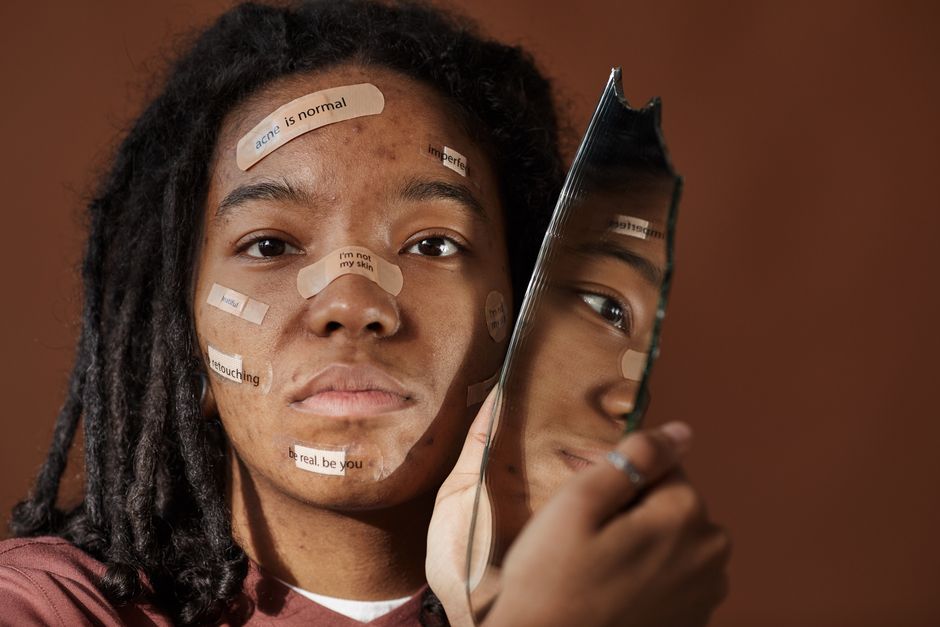
Picking a pimple is one of the most common skincare mistakes, and it often leaves you with a bigger problem than you started with. The moment you break the skin, your body begins a repair process that can end in a dark mark or a permanent scar. Healing fast and avoiding scars comes down to stopping the bleeding, keeping the wound moist, and protecting it from the sun. Your skin repairs itself best in a clean, damp environment, so your job is to create that environment and leave the wound alone.
What Happens To Your Skin When You Pick A Pimple
When you squeeze a pimple, you are not just removing pus. You are tearing the surrounding tissue. This trauma breaks small blood vessels, which causes inflammation. Your immune system sends white blood cells to the area to clean up the damage. This process is necessary, but it is also what causes swelling and redness.
The biggest risk from picking is that you push bacteria deeper into the pore. This can turn a small clogged pore into a larger, infected wound. When the infection spreads, your body has to work harder to heal it. That extra work often means more collagen is produced in a disorganized way, which is exactly how a scar forms.
You also risk damaging the hair follicle itself. If the follicle wall collapses or is destroyed, the skin cannot regenerate normally. That is when you get a depressed scar, which looks like a small pit or dent in the skin. Understanding this process helps explain why the first few minutes after picking matter so much.
How To Heal Picked Acne Fast And Avoid Scars?
The first step is to wash your hands and stop touching the area. Then gently clean the wound with a mild cleanser and cool water. Do not scrub. Scrubbing adds more trauma to already damaged skin. Pat it dry with a clean towel.
Apply light pressure with a clean tissue for a few minutes if it is still bleeding. This helps a clot form, which is your skin’s natural bandage. Once bleeding stops, apply a thin layer of petroleum jelly or an occlusive ointment. Keeping the wound moist is one of the most proven ways to speed up healing and reduce scar formation. Dry wounds form scabs that are thicker and take longer to heal.
Cover the area with a small adhesive bandage or a hydrocolloid patch. Hydrocolloid patches absorb excess fluid while keeping the wound environment moist. They also physically prevent you from picking again. Change the dressing once a day or when it becomes saturated with fluid.
Do not apply benzoyl peroxide or salicylic acid directly to the open wound. These treatments are designed for active pimples with intact skin. On an open wound, they cause irritation and slow down the healing process. Save those products for surrounding breakouts, not the picked area itself.
Why Moist Wound Healing Prevents Scars
Research has consistently shown that wounds heal faster and with less scarring when kept moist. This is not a new idea. Studies dating back decades have compared moist dressings to wounds left open to air. The moist environment allows skin cells to migrate across the wound surface more easily.
When a wound dries out, a hard scab forms. The scab is made of dried serum, dead cells, and debris. It acts as a barrier, but it also slows down the movement of new skin cells. Those cells have to burrow underneath the scab rather than moving smoothly across the surface. This slower process gives inflammation more time to cause damage.
Moisture also reduces the risk of a thick scar. A moist wound produces less collagen than a dry wound. Less collagen means less raised scar tissue. For a picked pimple, which is a shallow wound, keeping it moist is often enough to prevent any visible scar at all.
One non-obvious point: do not use antibiotic ointments unless you see signs of infection. Products like Neosporin are common, but plain petroleum jelly is equally effective at keeping the wound moist. Antibiotic ointments can cause allergic contact dermatitis in some people, which makes the area redder and more irritated.




What To Do If The Area Becomes Infected
Signs of infection include increasing pain, spreading redness, warmth, yellow or green discharge, or red streaks moving away from the wound. If you notice any of these, stop treating the wound yourself. See a healthcare provider. An infected wound needs professional treatment, often with prescription antibiotics.
Do not try to drain an infected pimple yourself. This spreads bacteria and makes the infection worse. A clinician can safely drain the area using sterile technique and prescribe the right medication. Treating an infection early is critical because infections are a major cause of permanent scarring.
If you have a history of severe scarring from minor wounds, or if you have darker skin that is prone to hyperpigmentation, consider seeing a dermatologist early. They may recommend a prescription-strength treatment to minimize marks. Some dermatologists prescribe topical silicone gel or sheets, which have strong evidence for reducing scar formation.
How To Treat Red And Dark Marks After The Wound Closes
Once the wound is closed, you may still see a red or brown mark. This is not a scar. It is post-inflammatory hyperpigmentation or post-inflammatory erythema. These marks are caused by inflammation and pigment changes, not by permanent tissue damage. They can take weeks or months to fade.
Red marks are caused by dilated blood vessels left over from the healing process. They are more common in lighter skin. Brown marks are caused by excess melanin production and are more common in darker skin tones. Both fade over time, but you can speed up the process.
Sun protection is the single most important step. Ultraviolet light darkens hyperpigmentation and makes marks last longer. Use a broad-spectrum sunscreen with SPF 30 or higher on the area every day. If you do not protect the area from the sun, the mark will take much longer to fade.
After the skin has fully healed and there is no open wound, you can introduce treatments like vitamin C serum, niacinamide, or azelaic acid. These ingredients help fade hyperpigmentation. Retinoids can also help by increasing cell turnover. Start with lower concentrations and use them only as directed. Introducing strong actives too early can re-irritate the skin and make the mark worse.
When To See A Dermatologist For Scar Treatment
If a scar has already formed, do not wait months hoping it will disappear on its own. A true scar is permanent tissue change. It will not go away without treatment. Dermatologists can offer options that are not available over the counter.
Laser therapy is one option for treating existing scars. Different lasers target different problems. Some reduce redness, while others stimulate collagen production to fill in depressed scars. Results typically require multiple sessions, and improvement is gradual rather than immediate.
Microneedling is another treatment with evidence for improving acne scars. The procedure creates tiny punctures in the skin, which triggers a controlled healing response. This stimulates collagen production and can smooth out shallow scars. Several sessions are usually needed.
Chemical peels and dermal fillers are additional options. A peel removes the top layer of skin to encourage regeneration. Fillers are injected under a depressed scar to lift it to the level of surrounding skin. A dermatologist can recommend the right approach based on your scar type and skin tone.
No clinical evidence supports the idea that home remedies like lemon juice, toothpaste, or garlic can remove scars. These can actually cause chemical burns and worsen the appearance. If you want professional-grade results, you need professional treatment.
How To Stop Picking Acne In The First Place
Prevention is always better than treatment. Picking is often a habit that happens without thinking, especially when you look in the mirror. One effective strategy is to keep your hands busy. Fidget toys, stress balls, or even holding a pen can redirect the urge.
Make it harder to pick by not studying your face up close. Many people pick when they examine their skin in bright bathroom mirrors. Set a rule to keep a distance from the mirror. Try using a mirror with less magnification.
Hydrocolloid patches are useful here too. If you feel a pimple forming, place a patch on it immediately. The patch covers the pimple, absorbs fluid, and removes the temptation to squeeze. You cannot pick what you cannot see or feel.
If you find yourself picking during moments of stress or anxiety, address the underlying cause. Cognitive behavioral therapy has been shown to help people with skin picking disorder. A mental health professional can teach techniques to break the cycle. There is no shame in seeking this help; it is a recognized condition that responds well to treatment.
Frequently Asked Questions
How long does it take for a picked pimple to heal?
A shallow picked pimple usually heals within 3 to 7 days if kept moist and protected. Deeper wounds or ones that become infected can take several weeks.
Should I put ice on a picked pimple?
Ice can reduce swelling in the first few minutes after picking, but do not apply it directly to the skin. Wrap it in a clean cloth and limit application to 5 to 10 minutes.
Does toothpaste help heal a picked pimple?
No. Toothpaste irritates the skin and can cause chemical burns, which makes healing slower and increases the risk of scarring.
Can vitamin E oil prevent scarring from a picked pimple?
Clinical evidence does not support vitamin E oil for scar prevention. Some research shows it can cause contact dermatitis, so plain petroleum jelly is a safer choice.
