
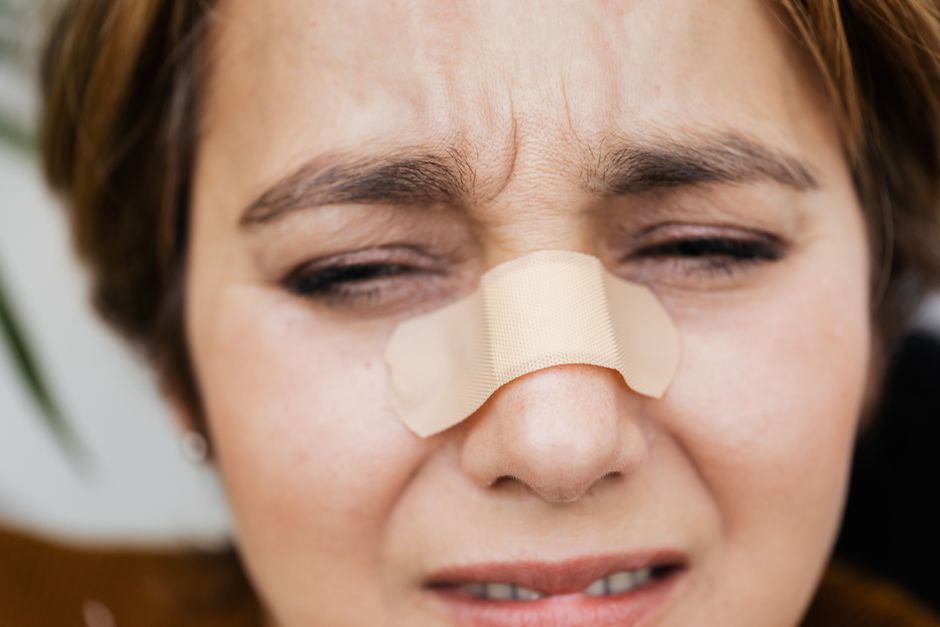
Nose scabs are usually the result of dry nasal tissue, minor trauma from picking or blowing, or healing after a cold. Most heal on their own within a week or two once the tissue stays moist and you stop irritating it. The single most effective step is keeping the inside of the nose moist with a plain saline gel or spray, and the single most important step for prevention is keeping your fingers out of your nose so the scab can finish healing.
That is the short answer. The longer answer involves knowing when a scab is ordinary and when it signals something that needs a doctor. Most nose scabs are harmless. A few are not, and the difference is usually about how long they last and what else is happening.
Why Do Nose Scabs Form In The First Place?
The skin inside your nose is thin and lined with tiny blood vessels close to the surface. When that lining dries out or gets damaged, it bleeds a little and then forms a crust as it heals. That crust is the scab.
The nasal lining is also covered in mucus that keeps it moist and traps dust and germs. When mucus dries up, the tissue underneath becomes fragile. Dry air, winter heating, low humidity, and frequent nose blowing all pull moisture out of that lining. A dry, cracked patch forms, and a scab follows.
There is a detail many people miss. The front of the nose — the part just inside the nostrils — has a rich blood supply and thin skin. That combination means small injuries there bleed easily and crust over quickly. It also means the area is sensitive, so a scab there feels bigger and more irritating than it actually is.
What Causes Nose Scabs Most Often?
Dry air is the most common cause. Heated indoor air in winter, air conditioning, and dry climates all reduce humidity and dry out the nasal lining.
Other frequent causes include:
- Picking or scratching the inside of the nose, which breaks the skin and starts a scab cycle
- Frequent nose blowing, especially forceful blowing during a cold
- Cold and allergy medications that dry up mucus, such as antihistamines and decongestant sprays
- Nasal oxygen from a cannula, which blows dry air directly into the nostrils
- Nosebleeds, which leave a crust as the bleeding point heals
- Allergies and infections that inflame the lining and cause crusting
Some causes are less common but worth knowing. Certain medications, including some blood thinners, make the nasal lining more likely to bleed. A few medical conditions cause recurring nasal crusting, and those are covered further down. Most of the time, though, the cause is simple dryness plus a finger.
How To Heal Nose Scabs And Prevent Them?
Healing a nose scab comes down to two things working together: moisture and hands off. A scab heals fastest when the tissue underneath stays slightly moist and is not repeatedly reopened.
Start with a plain saline gel or saline spray. These are sold in drugstores and are simply salt water in a gel or spray form. A small amount inside each nostril a few times a day keeps the lining from drying out. Saline is safe for most people and does not sting like medicated products can.
A thin layer of plain petroleum jelly applied just inside the front of the nostril can also protect a scab and keep it from cracking. This is a common approach, though it is worth knowing that public health guidance advises against putting petroleum jelly deep into the nose because of a small risk if it is inhaled into the lungs. Keep it to the front edge, in a thin layer, and do not pack it in.
Other steps that help:
- Use a humidifier in your bedroom, especially in winter or dry climates
- Blow your nose gently, one nostril at a time, rather than hard and often
- Drink enough water so your mucus stays thin
- Leave the scab alone. Picking reopens the wound and restarts the healing clock
- Trim fingernails short if you tend to pick without thinking
If a scab keeps coming back in the same spot, the cycle is usually being restarted by picking or by dryness. Breaking that cycle matters more than any single product. For people on nasal oxygen, asking a clinician about humidified oxygen can reduce the drying effect.
What Makes Nose Scabs Worse?
The most common mistake is picking. It feels like it helps, but it tears the new tissue under the scab and the scab forms again. This is why some people have a scab in the same spot for weeks.
Overusing decongestant nasal sprays is another problem. These sprays shrink swollen tissue for a short time, but using them for more than a few days in a row can cause rebound congestion and further irritation of the lining. Saline sprays do not have this problem and can be used freely.
Blowing your nose hard, especially repeatedly during a cold, can also keep the area irritated. So can dry indoor air and not treating allergies that keep the lining inflamed.
When Should A Nose Scab Concern You?
Most scabs heal within one to two weeks. A scab that lasts longer, keeps bleeding, or comes with other symptoms should be checked by a doctor.
See a clinician if you notice:
- A scab or sore that does not heal after a few weeks
- Frequent nosebleeds from the same spot
- A sore that grows, changes, or bleeds easily when touched
- Crusting along with facial pain, fever, or a foul smell
- Numbness or a change in the skin around the nose
Recurring crusting in the nose can also be a sign of a few specific conditions. One is nasal vestibulitis, an infection of the skin just inside the nostril, which is often painful and sometimes causes a small pimple-like sore. Another is a perforated septum, a hole in the wall between the nostrils, which can cause crusting and whistling. Crusting and nosebleeds can also occur with certain inflammatory or autoimmune conditions, but those are far less common and usually come with other symptoms.
The key point: a single scab that heals is not a concern. A sore that persists or keeps bleeding is worth a look, because a small number of nasal sores are more serious. A doctor can tell the difference.
Can You Prevent Nose Scabs Entirely?
You can prevent most of them by keeping the nasal lining moist and not irritating it. For many people, a humidifier in dry months plus a saline gel during colds is enough.
Prevention habits that help:
- Keep indoor humidity reasonable, especially in winter
- Use saline spray before and after air travel or time in very dry air
- Treat allergies so the lining is not chronically inflamed
- Avoid picking, and keep nails short
- Use decongestant sprays only as directed and for short periods
- Ask about humidified oxygen if you use nasal oxygen
No prevention method is guaranteed. Some people are simply prone to dry nasal tissue, and for them a daily saline gel in dry seasons is a reasonable routine. The evidence for these steps rests on the well-established role of moisture in wound healing and on the known drying effects of low humidity and decongestants. Large trials on nose-scab prevention specifically are limited, so these recommendations reflect standard clinical practice more than head-to-head studies.
Frequently Asked Questions
How long does a nose scab take to heal?
Most nose scabs heal within one to two weeks if the area stays moist and is not picked. A scab that lasts longer than a few weeks or keeps bleeding should be checked by a doctor.
What is the fastest way to heal a scab inside the nose?
Keep it moist with a plain saline gel or spray and leave it alone. Moisture supports healing and stopping picking prevents the scab from being reopened.
Can I put Vaseline inside my nose for a scab?
A thin layer of plain petroleum jelly at the front edge of the nostril can protect a scab, but it should not be packed deep into the nose because of a small risk if inhaled. Saline gel is a safer everyday option.
When should I see a doctor for a nose scab?
See a doctor if a scab does not heal after a few weeks, keeps bleeding, grows, or comes with facial pain, fever, or a foul smell. A persistent sore inside the nose is worth an exam.
