
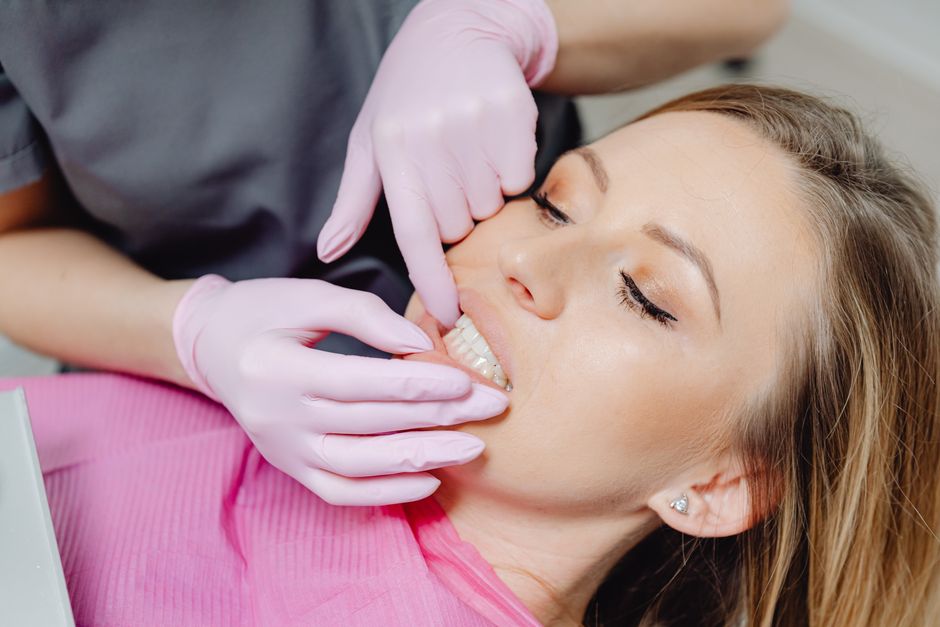
Gum problems are common, but they are not something you should ignore. Bleeding, swelling, or tender gums usually signal inflammation, which is the earliest stage of gum disease. The good news is that at this stage, the damage is often reversible with consistent home care and, when needed, professional treatment. Healing your gums comes down to removing the cause of the inflammation — bacterial plaque — and giving your mouth the conditions it needs to recover.
What Causes Gums to Bleed and Recede?
Gum disease starts with plaque, a sticky film of bacteria that forms on teeth constantly. When plaque is not removed by brushing and flossing, it hardens into tartar, which cannot be removed at home. The bacteria in plaque and tartar trigger an immune response in your body. That response causes the gums to become red, swollen, and prone to bleeding. This condition is called gingivitis.
If gingivitis is left untreated, the inflammation can spread deeper. It can damage the tissues and bone that hold your teeth in place. At this stage, the condition is called periodontitis. Receding gums, where the gum line pulls away from the teeth, can be a sign of this more advanced disease. It can also be caused by brushing too hard or using a toothbrush with stiff bristles.
The key point is that gingivitis is reversible. Periodontitis is not fully reversible, but it can be managed and stopped from getting worse. That distinction matters because it shapes what home care can do and when you need a professional.
How To Heal Gums Home Care And Professional Options
The most effective approach to healing gums combines daily home care with professional cleanings. Neither alone is enough. Home care prevents plaque from building up between visits. Professional care removes tartar that home care cannot touch.
For someone with gingivitis, a consistent routine can often restore gum health within a couple of weeks. For someone with periodontitis, professional treatment is required first. After that, a strict home routine is what keeps the disease from progressing.
This is not about buying expensive products. It is about technique and consistency. The basics — brushing twice a day, cleaning between teeth once a day, and seeing a dentist regularly — are the foundation of every successful gum treatment plan.
Brushing Technique That Protects Gums
How you brush matters as much as how often you brush. Many people scrub their teeth aggressively, thinking harder is better. That habit can wear away enamel and push the gums back. The goal is to remove plaque without injuring the soft tissue.
Use a soft-bristled toothbrush. Hold it at a 45-degree angle where the tooth meets the gum line. Use gentle, circular motions rather than sawing back and forth. Spend about two minutes total, making sure you reach the outer surfaces, inner surfaces, and chewing surfaces of every tooth.
Electric toothbrushes can be helpful because many have pressure sensors that alert you when you are brushing too hard. Some studies suggest they remove plaque more effectively than manual brushes, but the technique still matters. A person who brushes carefully with a manual brush can achieve the same result as someone using an electric one.
Replace your toothbrush every three to four months, or sooner if the bristles look frayed. Frayed bristles do not clean effectively and can irritate the gums.
Why Flossing Is Non-Negotiable
Brushing cleans the surfaces of your teeth, but it cannot reach the tight spaces between them. Plaque that collects in those spaces is a major driver of gum disease. Cleaning between your teeth once a day removes that plaque before it hardens into tartar.
Traditional floss works well if you use it correctly. Curve the floss around each tooth in a C-shape and slide it gently up and down. Do not snap the floss into the gums. That can cause injury and bleeding.
If you find flossing difficult, interdental brushes are an effective alternative. These small brushes come in different sizes and are designed to clean between teeth. Some research suggests they remove plaque more effectively than floss, especially in wider spaces. Water flossers can also help, particularly for people with braces, bridges, or pockets between the teeth and gums. However, water flossers do not remove sticky plaque as effectively as physical contact with floss or interdental brushes.
If your gums bleed when you start flossing, that is a sign of inflammation, not a reason to stop. Bleeding usually decreases within a week or two of consistent flossing as your gums become healthier.
Do Mouthwashes and Natural Remedies Help?
Mouthwash can be a useful addition to your routine, but it is not a substitute for brushing and flossing. Therapeutic mouthwashes containing antibacterial ingredients like chlorhexidine or cetylpyridinium chloride can reduce plaque and gingivitis. Chlorhexidine is available by prescription and is typically used for short periods because it can stain teeth with prolonged use.
Over-the-counter anti-gingivitis mouthwashes are less potent but can still help reduce bacteria in the mouth. Look for products that carry the American Dental Association Seal of Acceptance. That seal means the product has been independently tested and shown to do what it claims.
Saltwater rinses are a common home remedy. Warm salt water can soothe irritated gums and may help reduce inflammation. Some research supports its use as a gentle rinse, but it does not remove plaque. It is best used as a temporary measure or alongside regular brushing and flossing, not as a replacement.
Oil pulling, a practice where you swish oil in your mouth for 15 to 20 minutes, has become popular online. Some studies suggest it may reduce plaque and gingivitis, but the evidence is limited and the studies are small. It does not remove tartar, and it should never replace brushing and flossing.
Be skeptical of any product claiming to “cure” gum disease. No mouthwash, toothpaste, or herbal remedy can reattach gums or rebuild bone lost to periodontitis. Those claims are not supported by clinical evidence.
When Professional Treatment Is Required
If your gums bleed regularly, feel tender, or you notice your teeth looking longer, you need a professional evaluation. A dentist or dental hygienist can determine whether you have gingivitis or periodontitis.
The standard professional treatment for gum disease is scaling and root planing. This is a deep cleaning procedure that removes plaque and tartar from above and below the gum line. It also smooths the tooth roots, which makes it harder for bacteria to reattach. The procedure is typically done with local anesthesia to keep you comfortable.
After scaling and root planing, your gums will need time to heal. You may notice some sensitivity and mild discomfort for a few days. Your dentist may recommend a follow-up visit to check how your gums are responding.
For advanced periodontitis, additional treatments may be needed. These can include antibiotic gels placed directly into the gum pockets, laser therapy, or surgery to reduce pocket depth. These options are case-specific and should be discussed with your periodontist.
Once you have had periodontitis, you are at higher risk for recurrence. Most dentists recommend more frequent cleanings — often every three to four months — to keep the disease under control. This is not optional for people with a history of gum disease. It is part of the maintenance plan.
How Long Does It Take for Gums To Heal?
With consistent home care, gingivitis can improve noticeably within one to two weeks. Bleeding should decrease, and the gums should become firmer and less red. Complete resolution may take a bit longer, depending on how much inflammation and tartar were present.
After professional scaling and root planing, gums typically begin to improve within a few days. Full healing of the deeper tissues can take several weeks. You may need to be patient. Gum tissue is delicate, and it takes time to recover.
Receding gums do not grow back on their own. Once gum tissue has pulled away from the tooth, home care will not restore it. In cases where recession causes sensitivity or affects appearance, a gum graft procedure can cover the exposed root. This is a surgical option done by a periodontist.
Can Gum Disease Affect the Rest of Your Body?
Gum disease is not just a mouth problem. The inflammation and bacteria associated with periodontitis have been linked to other health conditions. Research has found connections between gum disease and cardiovascular disease, diabetes, and pregnancy complications.
The exact nature of these links is still being studied. What is clear is that people with diabetes and gum disease often have worse blood sugar control. Treating the gum disease can improve blood sugar management. For people with heart disease, the relationship is less clear, but the presence of chronic inflammation is a known risk factor for many conditions.
This does not mean gum disease causes heart attacks. It means the two conditions are associated, and managing one may benefit the other. The safest conclusion is that healthy gums are part of overall health, not separate from it.
Preventing Gum Problems From Returning
Gum disease is chronic. Once you have had it, you are more susceptible to getting it again. Prevention is not about doing more but about being consistent.
Stick to a daily routine of brushing twice a day and cleaning between your teeth once a day. Keep your scheduled dental appointments. If your dentist recommends more frequent cleanings, follow that advice even if your gums feel fine. The disease can progress without obvious symptoms.
Diet also matters. A diet high in sugar feeds the bacteria that cause gum disease. Limiting sugary snacks and drinks reduces the fuel for those bacteria. Eating crunchy vegetables and fruits can stimulate saliva production, which helps wash away food particles.
Smoking is one of the strongest risk factors for gum disease. Smokers respond less well to treatment and have higher rates of tooth loss. Quitting smoking is one of the most impactful things you can do for your gum health.
Frequently Asked Questions
Can receding gums grow back?
No, receding gums do not grow back on their own. A gum graft procedure is the only way to cover exposed roots, and it is done by a periodontist.
How long does it take for gums to stop bleeding with flossing?
Bleeding usually decreases within one to two weeks of daily flossing. If bleeding continues beyond that, you should see a dentist for an evaluation.
Is a water flosser as good as regular floss?
A water flosser is a useful tool, but it does not remove sticky plaque as effectively as physical contact with floss or interdental brushes. It works best as an addition to your routine, not a replacement.
Does salt water rinse help gum disease?
A warm salt water rinse can soothe irritated gums and reduce inflammation, but it does not remove plaque or tartar. It is a temporary aid, not a treatment for gum disease.
