
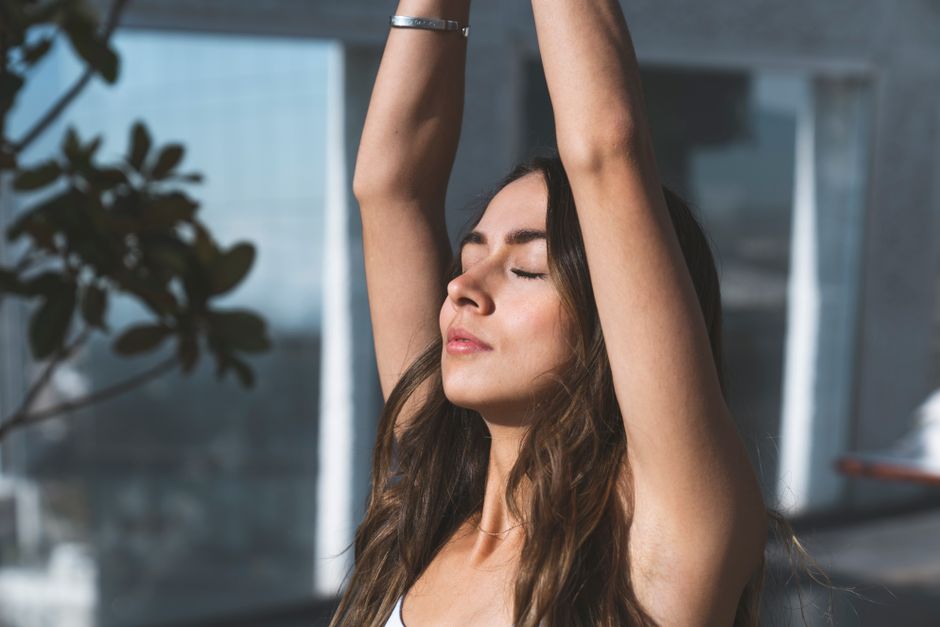
Chronic stress is not just a feeling. It is a physical state in which the body’s stress response system stays switched on long after the original trigger has passed. Healing happens when you interrupt that cycle consistently, and the methods with the strongest evidence behind them are sleep, movement, slow breathing, social connection, and structured psychological therapy. No single fix reverses chronic stress on its own.
What Actually Happens in the Body During Chronic Stress?
The stress response is built for short emergencies. When your brain senses a threat, it signals the adrenal glands to release cortisol and adrenaline. Heart rate rises, blood sugar climbs, digestion slows, and the immune system shifts into alert mode. Once the threat passes, cortisol levels should fall back to normal.
Under chronic stress, that recovery phase does not happen properly. Cortisol stays elevated or its daily rhythm flattens out. The system that is supposed to switch off stays partly on.
Over time this affects real physiology. Blood pressure tends to run higher. Sleep architecture changes, particularly the deep sleep stages that support physical repair. Inflammatory markers often rise. The hippocampus, a brain region involved in memory and in shutting down the stress response, appears sensitive to prolonged cortisol exposure.
This is why chronic stress is linked to cardiovascular disease, type 2 diabetes, depression, and anxiety disorders in large population studies. The link is well established. What varies is how much any one person is affected, which depends on genetics, early life experiences, current support systems, and how long the stress has been running.
How To Heal From Chronic Stress What Works Best?
The methods with the strongest research support share one feature: they directly influence the nervous system or the stress hormone system, and they require repetition. A single session of anything rarely changes much.
Here is what the evidence actually supports.
- Sleep regularity. Going to bed and waking at consistent times anchors the cortisol rhythm. Sleep and stress are bidirectional — poor sleep raises next-day cortisol, and high cortisol disrupts sleep.
- Aerobic exercise. Regular moderate exercise reduces resting cortisol over time and improves mood. The effect on anxiety and depression symptoms is well documented.
- Slow breathing. Breathing at roughly six breaths per minute activates the parasympathetic nervous system. This is one of the few interventions with an immediate, measurable effect.
- Cognitive behavioral therapy. CBT has the most consistent evidence of any psychological treatment for stress-related conditions, including anxiety and insomnia.
- Social connection. Strong relationships buffer the stress response. Loneliness amplifies it.
None of these is exotic. That is the point. The interventions that work are unglamorous and cumulative.
Does Slow Breathing Really Lower Stress Hormones?
Yes, and the mechanism is reasonably well understood. Breathing at around six breaths per minute — roughly a five-second inhale and five-second exhale — increases what is called heart rate variability. Higher heart rate variability reflects stronger parasympathetic (rest-and-digest) activity.
This is not the same as “clearing cortisol from your body.” The effect is on the nervous system’s output, which then influences the hormonal response. Studies measuring cortisol after slow breathing practices show modest reductions, though results vary by population and duration.
What makes breathing useful is speed. You can use it in the moment a stress response starts. That is different from exercise or therapy, which work over weeks.
A simple version: breathe in through your nose for about five seconds, out through your nose or mouth for about five seconds, for five to ten minutes. That is it. No app required.





How Long Does It Take To Recover From Chronic Stress?
There is no fixed timeline, and anyone who gives you one is guessing. Recovery depends on how long the stress has lasted, whether the source is still present, and individual factors like sleep quality and social support.
What can be said honestly: changes in how you feel often show up within a few weeks of consistent practice. Changes in measurable physiology, like resting heart rate or blood pressure, tend to follow over a longer period. Some research on mindfulness-based programs shows benefits emerging over eight weeks, which is a common program length rather than a biological deadline.
If the stressor is ongoing — a difficult job, caregiving, financial insecurity — recovery is harder because the trigger keeps firing. In those cases, the goal shifts from eliminating stress to changing how the body responds to it.
What About Supplements and Adaptogens?
This is where marketing runs far ahead of evidence. Adaptogens like ashwagandha, rhodiola, and holy basil are widely sold for stress. The human trial evidence is limited, often small, and sometimes industry-funded.
Some studies suggest ashwagandha may reduce self-reported stress and cortisol in certain groups. The trials tend to be short and small, and results have not been consistently replicated in large independent studies. That does not mean these substances do nothing. It means the evidence is not strong enough to call them proven.
There is also a safety consideration. Herbal products are not tightly regulated in the United States, and doses can vary between brands. Ashwagandha has been linked to liver injury in a small number of case reports. Anyone with liver conditions, pregnant women, and people taking thyroid or sedative medications should be cautious and talk to a clinician first.
If you want to try one, treat it as a possible add-on, not a replacement for sleep, movement, or therapy.
Why Does Talk Therapy Work for Stress?
Chronic stress is often maintained by thought patterns as much as by external events. The body stays on alert partly because the brain keeps interpreting situations as threatening. Therapy changes that interpretation.
Cognitive behavioral therapy is the most studied approach. It works by identifying automatic thoughts that amplify threat, testing them against evidence, and building alternative responses. For stress-related anxiety and insomnia, CBT has repeatedly shown benefit in controlled trials.
Other approaches with reasonable evidence include mindfulness-based stress reduction, which combines meditation and body awareness, and acceptance and commitment therapy, which focuses on changing your relationship to difficult thoughts rather than eliminating them.
What matters less is the specific brand of therapy. What matters more is that it is structured, that you practice skills between sessions, and that you stick with it long enough to see change.
What Makes Recovery Harder Than It Should Be?
Several things reliably get in the way.
Alcohol. It feels calming in the moment because it depresses the central nervous system. But alcohol disrupts sleep architecture and tends to raise cortisol later in the night. Using it to manage stress usually makes the underlying problem worse.
Caffeine late in the day. Caffeine has a half-life of several hours. Afternoon coffee can still be active in your system at bedtime, and poor sleep raises next-day stress reactivity.
Isolation. Stress pushes people inward. That instinct backfires, because social connection is one of the strongest buffers against the stress response.
All-or-nothing thinking. People often abandon a practice because they missed a few days. Consistency over months matters far more than perfection over weeks.
One clarification worth making: rest is not the same as recovery. Scrolling on the couch is restful in the moment but does not engage the systems that actually restore the stress response. Sleep, movement, and genuine social contact do.
When Should You Get Professional Help?
Chronic stress overlaps heavily with anxiety disorders, depression, and insomnia. When stress has been ongoing and starts affecting work, relationships, or your ability to function, that is a signal to involve a professional.
Warning signs worth taking seriously include persistent low mood lasting more than two weeks, sleep that does not recover with better habits, panic attacks, and thoughts of self-harm. Thoughts of self-harm warrant immediate help — in the US, the 988 Suicide and Crisis Lifeline is available by call or text.
Primary care clinicians can screen for stress-related conditions and refer to therapy. This is routine care, not an overreaction.
Frequently Asked Questions
Can chronic stress actually be reversed?
Yes, the stress response system can normalize, but it usually takes consistent practice over weeks to months rather than a single change. Recovery is harder when the original stressor is still present.
What is the fastest way to calm the stress response in the moment?
Slow breathing at about six breaths per minute is the fastest evidence-supported method because it directly activates the parasympathetic nervous system. It works within minutes, unlike exercise or therapy, which work over time.
Do adaptogens like ashwagandha really work for stress?
The evidence is limited and mixed, with most trials being small and short. Some studies suggest modest benefits, but no large independent trials have confirmed them, so they should not replace sleep, exercise, or therapy.
How much exercise is needed to reduce stress?
General health guidelines recommend at least 150 minutes of moderate aerobic activity per week for adults, and this level is also associated with reduced anxiety and improved mood. The stress benefit appears to come from regular moderate activity rather than intense sessions.
