
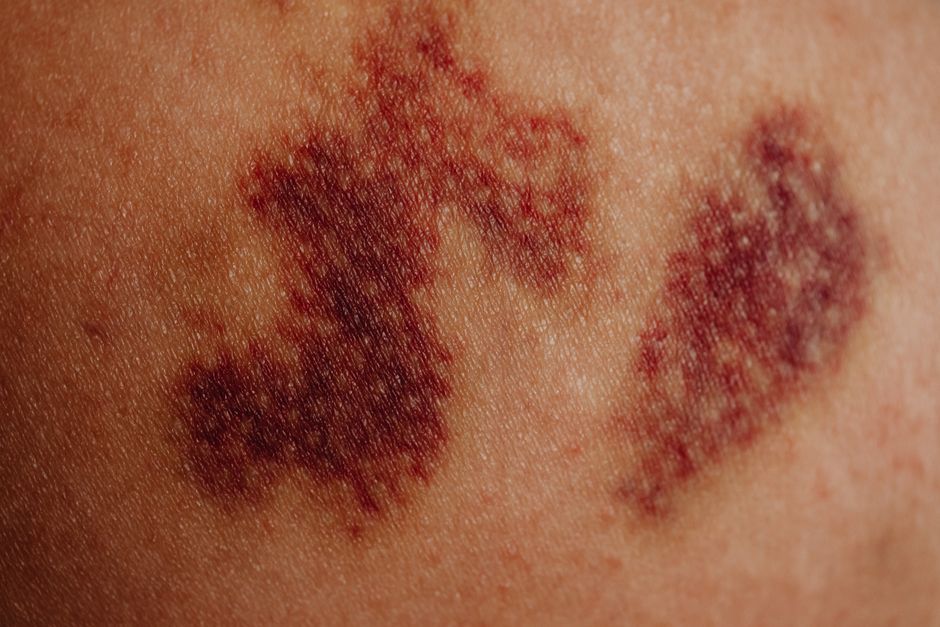
A bruise fades on its own, but the choices you make in the first 48 hours can change how fast it clears and how bad it looks. The core steps are simple: cool the area early, keep it from getting reinjured, and let your body do the repair work it is already designed to do. Most bruises from everyday bumps fade over about two weeks, though larger or deeper ones can take longer.
What follows is a step-by-step look at what actually happens under the skin, what helps, what does not, and when a bruise is telling you something more serious is going on.
What Is Actually Happening Inside a Bruise?
A bruise is bleeding under intact skin. When a small blood vessel breaks, blood leaks into the tissue around it, and that pooled blood is what you see as the mark.
Your body then runs a cleanup process. It breaks down the leaked blood and carries the waste away. The color changes you notice are part of that process, not a sign that something is going wrong.
The color sequence follows a fairly predictable pattern:
- Red or purple in the first hours, from fresh blood
- Blue, black, or deep purple over the next day or two
- Green or yellow after several days, as the blood breaks down
- Light brown or fading back to normal skin tone near the end
Two things drive how fast this plays out: the size and depth of the leak, and how well your circulation moves the waste along. A small surface bruise from a minor knock clears faster than a deep one from a hard impact.
How To Heal From Bruises Quickly: Step by Step
Start cold, then switch to gentle warmth, and protect the area the whole time. That order matters, and getting it backwards can slow things down.
Step 1: Apply cold right away
Cold narrows blood vessels, which can limit how much more blood leaks out. Put an ice pack or a bag of frozen vegetables wrapped in a thin cloth on the area. Do not place ice directly on bare skin.
Some clinicians suggest roughly 15 to 20 minutes at a time, with a break of similar length before repeating. This is common practice rather than a strongly proven schedule, but it is the standard most medical sources describe. Continue for the first day or two.
Step 2: Raise the area if you can
If the bruise is on an arm or leg, propping it up above the level of your heart when you are resting may reduce fluid buildup. This is well established for swelling and is reasonable for a bruise, though the direct evidence for bruising alone is limited.
Step 3: Switch to gentle warmth after a couple of days
Once the bleeding has stopped, warmth can help circulation move the breakdown products along. A warm — not hot — compress for short periods is the usual approach. Do not use heat in the first 24 to 48 hours, because it can increase bleeding.
Step 4: Protect it from another hit
A bruise that gets bumped again starts the whole process over. Padding, a bandage, or simply being careful with that body part gives the tissue time to heal without a fresh leak.
Step 5: Leave it alone
Do not press hard on it, pick at it, or try to drain it. That can cause more bleeding and raise the risk of infection.
Does Ice Really Make a Bruise Heal Faster?
Ice helps most in the early window, and its main job is limiting spread rather than erasing what is already there.
Cold reduces blood flow to the area, so less additional blood leaks from the injured vessel. That can keep a bruise from getting bigger. It does not remove blood that has already pooled, so it will not make an existing bruise vanish.
The evidence for icing bruises specifically is not strong. Cold therapy is widely used for acute soft-tissue injuries, and the reasoning is sound, but large human trials showing it speeds bruise resolution are limited. It is reasonable, low-risk, and standard practice — not a proven shortcut.
One practical point: never apply ice for long stretches without a break. Prolonged direct cold can damage skin and underlying tissue.





What About Creams, Arnica, and Bruise Gels?
Most over-the-counter bruise products have thin evidence behind them. That does not mean every one is useless, but the claims often run ahead of the proof.
Arnica is the most commonly marketed option. Some small studies suggest it may reduce bruising after certain procedures, but results across studies are mixed and the trials are generally small. It is not established as an effective treatment for everyday bruises.
Vitamin K creams are sometimes sold for bruising. There is limited evidence that topical vitamin K helps with ordinary bruises, and results have been inconsistent. Some research has looked at it for bruising related to certain medical procedures, with mixed findings.
If you want to try a topical product, understand that you are working with weak evidence. Nothing applied to the surface will match what your body is already doing from the inside.
Which Foods and Nutrients Support Healing?
No food makes a bruise disappear overnight, but your body needs certain nutrients to repair tissue and build new blood vessels.
Vitamin C is required for collagen formation, which is part of vessel and skin repair. You can find it in citrus, bell peppers, strawberries, and broccoli. Vitamin K plays a role in blood clotting and is found in leafy greens like kale and spinach.
A generally balanced diet supports healing. There is no evidence that loading up on any single nutrient speeds up bruise recovery in a person who is not deficient.
One clarification worth knowing: if you bruise easily and often, the cause is more likely an underlying issue than a diet gap. Repeated unexplained bruising is a reason to see a clinician, not to add a supplement.
When Should You Worry About a Bruise?
Most bruises are harmless. Some are a signal that needs medical attention.
Seek care if you notice any of these:
- A bruise that keeps growing or is very painful and swollen
- Bruising with no clear cause, or bruising that appears often
- Bruises along with bleeding gums, frequent nosebleeds, or blood in stool or urine
- A bruise that is not fading after a few weeks
- Signs of infection — increasing redness, warmth, pus, or fever
- Bruising while taking a blood thinner, which can be more significant
Easy bruising can have many causes, including medication effects, low platelet counts, and other blood or liver conditions. A clinician can sort out which, if any, applies to you. Do not assume a pattern of bruising is normal without checking.
Why Do Some People Bruise More Easily?
Bruising tendency varies a lot from person to person, and several factors are well established.
Age is one. Skin and blood vessels thin over time, so the same bump can cause more leaking in an older adult than in a younger one. Medications are another major factor. Blood thinners, including aspirin and prescription anticoagulants, and some corticosteroids increase bruising.
Alcohol use, certain supplements in high doses, and some medical conditions can also play a role. If you bruise more than you used to, that change is worth mentioning to a clinician.
How Long Do Bruises Normally Take to Fade?
Most everyday bruises fade over roughly two weeks. Larger, deeper, or older-adult bruises can take longer.
The timeline depends on size, location, and your circulation. Bruises on the legs often take longer to clear than those on the face or arms, because blood and fluid move more slowly from the lower body. There is no safe way to force a bruise to clear faster than your body is able to process it.
Frequently Asked Questions
How can I heal a bruise fast?
Apply cold right away, keep the area raised when resting, and protect it from another injury. After a day or two, gentle warmth may help circulation, but no method makes a bruise clear faster than your body can process it.
Does ice make a bruise go away faster?
Ice mainly helps limit how much the bruise spreads by narrowing blood vessels, rather than removing blood already pooled. It is standard early care, but strong evidence that it speeds resolution is limited.
How long does a bruise take to heal?
Most everyday bruises fade over about two weeks, changing from red or purple to green, yellow, then fading. Larger or deeper bruises, and those in older adults, can take longer.
When should I see a doctor for a bruise?
See a clinician if a bruise keeps growing, appears without a cause, comes with other bleeding, or does not fade after a few weeks. Bruising while on a blood thinner is also worth checking.
