
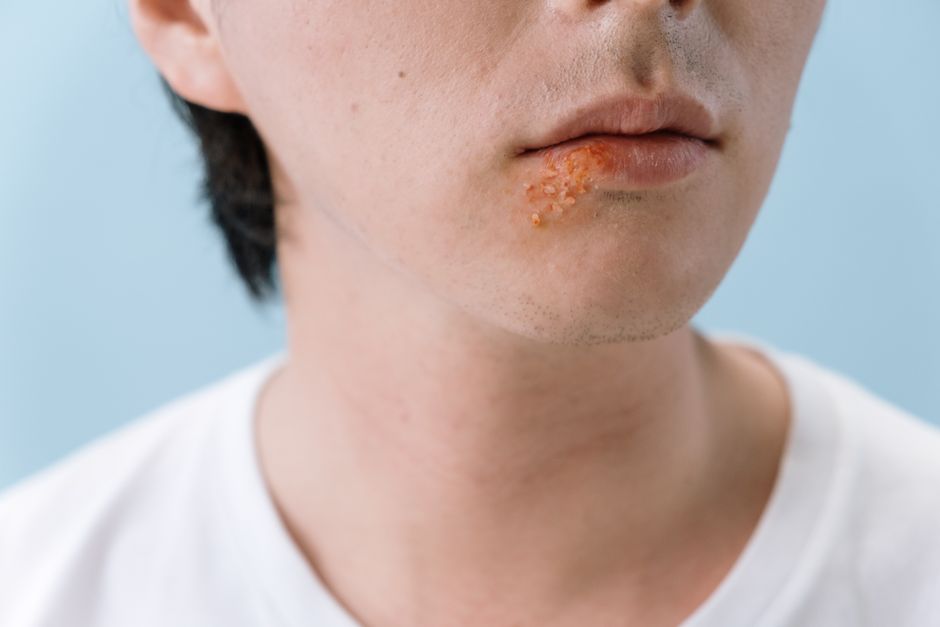
Cold sores cannot be cured, but they can be healed faster with antiviral treatment started within the first day of symptoms. Prescription oral antivirals like acyclovir, valacyclovir, and famciclovir shorten healing time and reduce pain when taken early. Over-the-counter creams ease discomfort but do not speed healing much on their own.
The virus behind cold sores is herpes simplex virus type 1, usually called HSV-1. Once you have it, it stays in your body for life. It hides in nerve cells and reactivates from time to time, often when your immune system is stressed. That is why cold sores keep coming back for many people.
What follows is an honest look at which treatments actually help, which ones only soothe, and which ones have little evidence behind them.
What Actually Causes a Cold Sore to Appear?
HSV-1 infects the skin around the lips and mouth, then travels up a nerve to a cluster of nerve cells called a ganglion, where it stays dormant. Most people pick up the virus in childhood through close contact like kissing or sharing utensils. Many never get symptoms at all.
When the virus reactivates, it travels back down the nerve to the skin. That is when you feel the familiar tingling or itching. A day or two later, a small cluster of fluid-filled blisters appears. The blisters break, crust over, and eventually heal.
Several things can trigger reactivation. These include fever, sun exposure, physical or emotional stress, fatigue, and skin injury. Some people notice cold sores around their menstrual period. Others get them after a cold or flu, which is where the name comes from.
One point worth clearing up: HSV-1 and HSV-2 are different viruses. HSV-2 more commonly causes genital herpes, but both can infect either area through oral or genital contact. A cold sore is not a sign that someone has a sexually transmitted infection in the usual sense.
How Long Does a Cold Sore Usually Last?
A typical cold sore heals in about one to two weeks without treatment. The course usually follows a predictable pattern.
- Tingling stage: itching, burning, or tingling before anything is visible, often lasting a few hours to a day
- Blister stage: one or more small blisters form, usually within a day of the tingling
- Ulcer stage: blisters break open, leaving a shallow sore that can be painful
- Crusting stage: a scab forms as the sore dries out
- Healing stage: the scab flakes off and the skin returns to normal
Antiviral treatment started during the tingling stage can shorten this timeline. The earlier you start, the more it helps. Once the blister has fully formed, antivirals still may reduce pain and shedding, but the effect on healing time is smaller.
How To Heal Cold Sores Fast Treatments That Help?
Prescription oral antivirals are the most effective option. Acyclovir, valacyclovir, and famciclovir all work by blocking the virus from copying itself. Taken at the first sign of a cold sore, they can cut healing time and reduce how long the sore is contagious.
These medicines work best when started within the first 24 hours of symptoms. Some clinicians prescribe a short course for each outbreak. For people who get frequent outbreaks, a daily antiviral may reduce how often cold sores appear. This is called suppressive therapy, and it is a decision made with a doctor.
Topical prescription creams like acyclovir cream and penciclovir cream can help, but the effect is modest. They work better when applied at the very first tingle and may shorten healing by about a day. They are less effective than oral antivirals.
Over-the-counter options are mostly for comfort, not speed. Products containing docosanol may shorten healing slightly if used early. Lip balms, cool compresses, and pain relievers like ibuprofen or acetaminophen ease discomfort but do not change how long the sore lasts.
Here is a comparison of the main treatment categories.
| Treatment | How it works | Effect on healing |
|---|---|---|
| Oral antivirals (prescription) | Blocks virus replication | Shortens healing most when started early |
| Topical antivirals (prescription) | Blocks virus replication at the skin | Modest shortening, best at first tingle |
| Docosanol cream (OTC) | May block virus entry into cells | Small effect if used early |
| Pain relievers, cool compresses | Ease symptoms | No effect on healing time |
No product clears a cold sore overnight. A sore that is already crusted over will not disappear faster no matter what you apply. Be cautious of any product claiming to cure cold sores. There is no cure for HSV-1.





Do Home Remedies and Natural Treatments Work?
The evidence for most home remedies is thin. Some small studies suggest certain options may help, but results vary and few large trials exist.
Lysine is one of the most popular. It is an amino acid sold as a supplement. The idea is that lysine may block the virus from using another amino acid, arginine, to replicate. Some studies suggest lysine may reduce how often cold sores appear, but results are mixed. Evidence that it speeds healing of an active sore is weak.
Zinc applied to the skin has shown some benefit in a small number of studies, but the evidence is limited and the formulations vary. Zinc supplements taken by mouth have not been well studied for cold sores.
Other remedies like tea tree oil, aloe vera, and ice are often used for comfort. There is no strong clinical evidence that they shorten healing. Ice can numb pain and reduce swelling, which is a reasonable reason to use it.
If you try a home remedy, do not delay proven treatment. Starting an antiviral early matters more than anything else you can do.
What Should You Avoid During a Cold Sore Outbreak?
Cold sores are contagious from the first tingle until the sore has fully crusted over and healed. The virus spreads through direct skin contact, so a few habits can protect the people around you.
- Do not kiss anyone, especially babies and young children, whose immune systems are still developing
- Do not share cups, utensils, towels, or lip balm
- Do not touch the sore, and wash your hands if you do
- Avoid touching your eyes after touching the sore
That last point matters more than many people realize. HSV-1 can infect the eye and cause a condition called herpes keratitis, which can damage vision if untreated. If you develop eye pain, redness, or blurred vision during an outbreak, see a doctor promptly.
For people with weakened immune systems, cold sores can be more severe and take longer to heal. This includes people undergoing chemotherapy, organ transplant recipients, and people with advanced HIV. If you fall into this group, contact your doctor at the first sign of a cold sore rather than waiting.
When Should You See a Doctor?
Most cold sores do not need medical care. But some situations call for a doctor’s attention.
See a doctor if the sore is severe, spreads widely, or lasts longer than two weeks. Also seek care if you have frequent outbreaks, since suppressive therapy may help. If you have a weakened immune system, get medical advice early.
A high fever, widespread blisters, or sores inside the mouth that make it hard to eat or drink are reasons to seek care. In newborns, any suspected herpes infection is a medical emergency and needs immediate attention.
If you get cold sores often, it is worth talking to a doctor about a daily antiviral. It will not cure the virus, but it can reduce how often outbreaks happen and how severe they are.
Frequently Asked Questions
How do you get rid of a cold sore fast?
Start a prescription antiviral at the first tingle, since early treatment shortens healing the most. Over-the-counter creams mainly ease pain and do not speed healing much on their own.
Does lysine actually help cold sores?
Some studies suggest lysine may reduce how often cold sores appear, but the evidence is mixed and weak for speeding healing of an active sore. It is not a proven fast treatment.
How long is a cold sore contagious?
A cold sore is contagious from the first tingle until it has fully crusted over and healed, which usually takes one to two weeks. Avoid close contact with others during that time.
Can a cold sore spread to other parts of my body?
Yes, the virus can spread through touch, including to the eyes and fingers. Wash your hands after any contact with the sore and avoid touching your eyes.
