
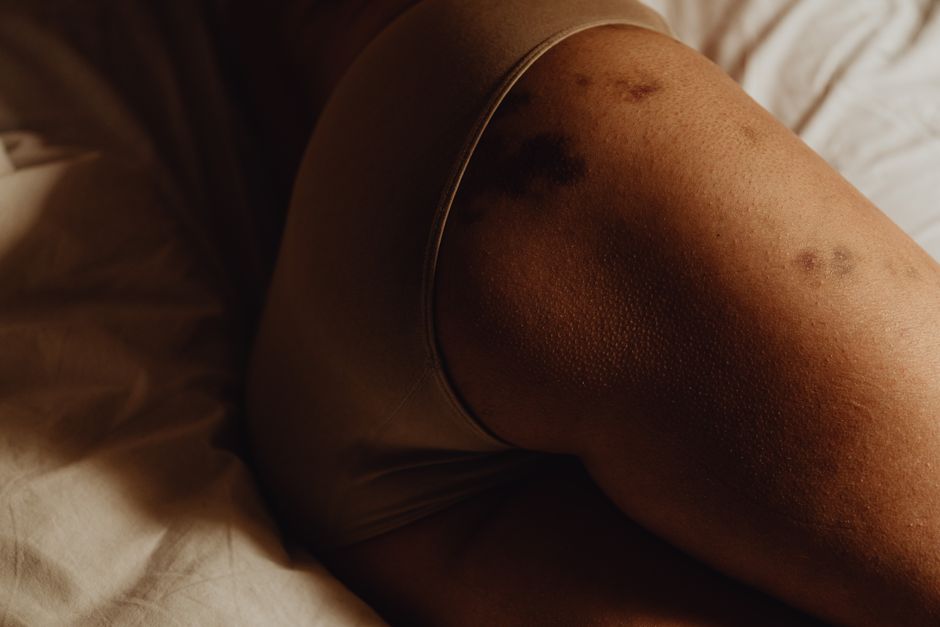
Chafed thighs happen when skin rubs against skin or fabric, and the resulting friction strips away the outer layer of the skin. The fix is straightforward: stop the rubbing, keep the area clean and dry, and protect the skin while it heals. Most mild chafing improves within a few days with basic care, while deeper or infected skin needs a doctor’s attention.
What Actually Happens When Thighs Chafe?
Chafing is a mechanical injury. It is not an allergy, a rash from a product, or a sign that something is wrong with your skin. It is friction damage.
Your skin’s outermost layer, the stratum corneum, is a barrier made of flattened cells packed with proteins and lipids. When two surfaces rub together repeatedly, that barrier gets worn down. Once it thins, the cells underneath are exposed. That is when you feel the sting, see the redness, and sometimes develop raw or broken skin.
Moisture makes this worse. Sweat softens the stratum corneum, which lowers the amount of friction it can absorb before breaking down. This is why chafing shows up most often during exercise, in hot weather, and in people who carry extra weight in the inner thighs. Salt crystals left on the skin after sweat dries can add to the irritation.
Heat compounds the problem. Warm, damp skin in a folded area like the inner thigh is also a good environment for irritation to linger and for bacteria or yeast to take hold once the skin is broken.
What Does Chafed Skin Look Like, and When Is It Something Else?
Typical chafing looks like red, tender skin along the inner thighs, sometimes with a raw or shiny surface where the top layer has worn away. It stings, especially when you move, shower, or apply anything to it.
Several other conditions can look similar, and they need different treatment. This matters because rubbing diaper cream on a fungal infection will not fix it.
- Chafing: redness and rawness exactly where skin meets skin or fabric, worsened by movement.
- Fungal infection (jock itch): a ring-shaped or spreading rash, often with a defined edge, that itches more than it stings. It tends to keep growing rather than staying in the crease.
- Bacterial infection: increasing redness, warmth, swelling, pain, or pus. This needs medical care.
- Intertrigo: inflammation in skin folds that can start as simple irritation but often becomes secondarily infected with yeast or bacteria.
- Eczema or psoriasis: usually part of a broader pattern affecting other parts of the body too.
If the rash is spreading, getting worse over several days, or comes with pus, foul smell, or fever, it is no longer simple chafing. See a clinician.
How To Heal Chafed Thighs: Remedies That Help
The core principle is simple: remove the friction, let the skin dry, and protect it while it rebuilds. Nothing speeds healing faster than stopping the mechanical damage.
Give the area a break. If you can, avoid the activity that caused it for a day or two. For many people that is enough on its own.
Clean gently. Rinse with lukewarm water. Mild, fragrance-free cleanser is fine. Avoid scrubbing, washcloths, and hot water, all of which irritate broken skin. Pat dry rather than rubbing.
Keep it dry. Moisture is what let the chafing happen in the first place. After washing, let the area air dry or pat it dry completely before dressing.
Use a barrier ointment. Petroleum jelly is the standard protective barrier used in wound care and is well established for protecting skin from moisture and friction. Zinc oxide ointment works the same way and is common in skin-fold care. Apply a thin layer to the irritated area.
Consider a mild over-the-counter hydrocortisone cream for a day or two if the skin is inflamed and itchy. This is common practice for short-term irritation. It is not meant for long-term use on thin skin in skin folds, and it should not be applied to broken or infected skin without medical guidance.
Avoid these: alcohol-based products, heavily fragranced lotions, powders that clump when wet, and anything that stings on contact. If it burns going on, it is not helping.
For most mild cases, the skin improves noticeably within a few days. If it is not better after about a week of consistent care, or if it is getting worse, that points toward infection or another cause and warrants a medical visit.
Prevention: What Works Before the Chafing Starts
Prevention is where the real gains are. Once you know what causes chafing, the fixes are mostly about clothing, moisture, and friction barriers.
Choose the right clothing. Moisture-wicking synthetic fabrics move sweat away from skin. Cotton holds moisture against the skin and tends to make chafing worse during activity. Look for seamless or flat-seam shorts and avoid thick seams in the inner thigh area.
Use anti-chafe products. Balms, sticks, and creams designed to reduce friction are widely used by runners and cyclists. Petroleum jelly and zinc oxide are the well-established barrier ingredients. Many commercial anti-chafe products use dimethicone, which is a silicone that reduces friction and is generally well tolerated.
Manage moisture. Change out of wet clothing promptly after exercise. If you sweat heavily, a quick rinse and dry before redressing helps.
Consider compression shorts. Snug-fitting shorts that cover the inner thigh prevent skin-on-skin contact entirely. This is one of the most reliable prevention strategies for people who chafe regularly.
Address body weight if it applies. Extra weight in the inner thighs increases skin-on-skin contact. This is not a moral issue, it is a mechanical one. Any weight change that reduces contact will reduce chafing, but it is not the only solution and not a requirement for managing the problem.
Trim body hair carefully if relevant. Rough stubble can add friction. Shaving can also cause irritation, so this is a trade-off rather than a clear win.
When Chafing Becomes an Infection
Broken skin in a warm, moist fold is easy for microbes to colonize. This is the main reason chafing sometimes does not heal on its own.
Signs that infection has set in include spreading redness, increasing pain, warmth to the touch, swelling, pus, a foul odor, or fever. In those cases, topical or oral treatment prescribed by a clinician is usually needed. Over-the-counter creams alone often will not resolve a bacterial or fungal infection.
People with diabetes, who are immunocompromised, or who have poor circulation should not wait to see whether chafing resolves on its own. Skin infections in these groups can progress faster and need earlier medical attention.
Recurring chafing in the same spot is also worth a medical look, because it can point to a skin condition, a structural issue, or an infection that keeps returning.
Do Home Remedies for Chafed Thighs Actually Work?
Some do, and some are just folklore. It helps to know which is which.
Petroleum jelly: well established as a skin protectant and friction reducer. This is the most reliable simple remedy.
Zinc oxide: well established as a barrier in skin-fold and diaper-area care.
Cornstarch powder: absorbs moisture, which can help in dry conditions. But once it gets wet, it can clump and add to friction. It is not a good choice during heavy sweating.
Aloe vera gel: soothing and cooling, but it is water-based and provides little friction protection. Fine for comfort, not a barrier.
Coconut oil: reduces friction somewhat and is generally well tolerated, but there is no strong clinical evidence that it heals chafed skin better than a standard barrier ointment.
Apple cider vinegar, lemon juice, and other acidic home remedies: these can irritate and damage already-compromised skin. Skip them.
Tea tree oil: has some antimicrobial properties in lab studies, but applying it undiluted to broken skin can cause irritation and allergic reactions. There is no solid clinical evidence supporting it for chafing.
Frequently Asked Questions
How long does chafed skin take to heal?
Mild chafing usually improves within a few days once the friction stops. If it is not better after about a week of consistent care, or if it is getting worse, see a doctor.
What is the fastest way to heal chafed thighs?
Stop the friction, keep the area clean and dry, and apply a barrier ointment like petroleum jelly or zinc oxide. There is no shortcut that works faster than removing the cause.
Can I exercise with chafed thighs?
You can, but it will likely slow healing and may make it worse. If you do, cover the area with a barrier ointment and wear snug, moisture-wicking shorts that prevent skin-on-skin contact.
When should I see a doctor for chafed thighs?
See a doctor if the skin is spreading red, warm, swollen, painful, or has pus or a foul smell, or if you have a fever. People with diabetes or weakened immune systems should seek care earlier.
