
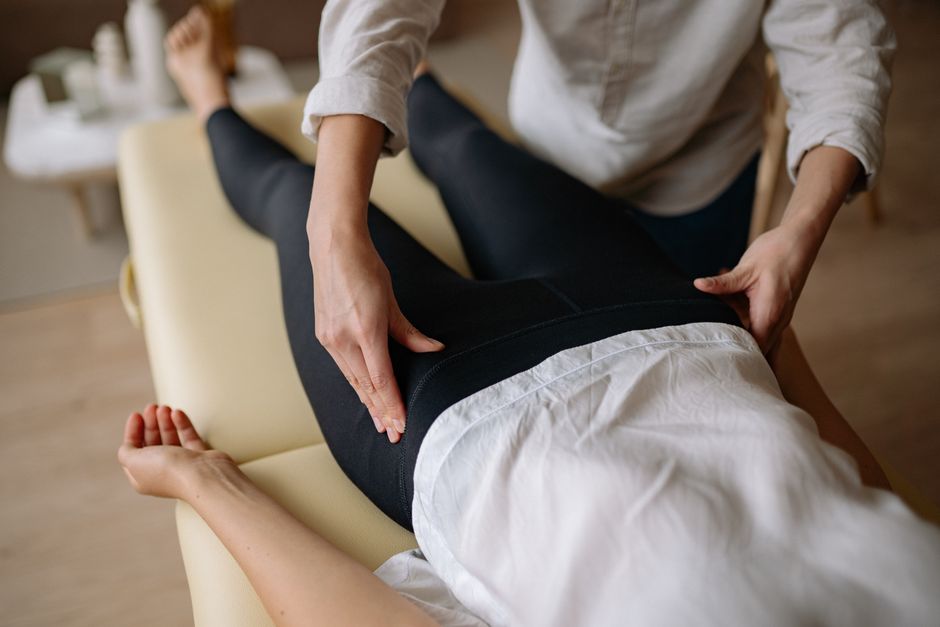
A pulled groin is a strain of one of the adductor muscles on the inner thigh, where they attach to the pubic bone. Most mild strains heal with rest, relative rest, and a gradual return to activity over a few weeks. More severe strains, or pain that lingers or worsens, need a proper assessment because a groin strain can mimic other problems.
Groin strains are common in sports that involve sprinting, sudden direction changes, and kicking — soccer, hockey, and football especially. They also happen to people who simply overdo it in the gym or garden. The healing principles are straightforward, but the details matter, and rushing back too soon is the most common way people end up with a problem that drags on for months.
What Actually Happens When You Pull a Groin Muscle?
A groin strain is a tear in muscle fibers or the tendon that attaches them to bone. The adductor group runs along the inner thigh and pulls the leg inward. When that group is stretched hard or contracted suddenly under load, fibers can overstretch or tear.
Doctors grade strains by how much tissue is damaged. A grade I strain is a minor tear with a few damaged fibers. A grade II is a partial tear with more fibers involved and noticeable weakness. A grade III is a complete tear, which is uncommon but serious. Most everyday groin strains are grade I or grade II.
The immediate response is predictable: sharp pain in the inner thigh, sometimes a sudden “pop,” followed by soreness, swelling, and pain when you squeeze your legs together or lift your knee against resistance. Bruising can appear a day or two later as blood from the tear moves under the skin.
Here’s a point worth knowing: not all groin pain is a muscle strain. Pain in the same area can come from the hip joint, the lower abdominal wall, a sports hernia, or the pubic bone itself. These are different problems with different treatments. If your pain does not fit the pattern of a strain — or if it does not improve in a reasonable time — that distinction matters.
How To Heal A Pulled Groin: The First 48 Hours
Protect the area and calm the acute symptoms. The first two days are about limiting further damage and managing pain, not about pushing through.
Relative rest is the foundation. That means avoiding the movements that hurt — sprinting, kicking, wide lunges, and anything that reproduces the pain. It does not mean lying completely still. Gentle walking within a comfortable range is generally fine and helps maintain circulation.
Ice is widely used for the first day or two to ease pain, though the evidence that it speeds healing is limited. Some clinicians recommend it for short periods, and it is low risk when applied correctly with a cloth barrier between ice and skin. Never leave ice on bare skin for long stretches.
Compression and elevation are commonly used for swelling in limb injuries. Their value for a groin strain specifically is less well studied, and elevation of the groin is not really practical. Use them if they help you feel comfortable, not because they are proven to speed recovery.
Avoid the old advice to “work through it.” Continuing to load a torn muscle during the acute phase is one of the most reliable ways to turn a minor strain into a longer problem.
When Should You See a Doctor for Groin Pain?
See a clinician if you cannot bear weight, if you heard or felt a distinct pop with immediate severe pain, if there is significant bruising or swelling, or if the pain is not improving after a week or two of sensible rest.
Some situations need prompt medical attention rather than watchful waiting. These include:
- Severe pain that stops you walking normally
- Groin pain with fever, or with swelling and redness of the scrotum — this can signal a serious condition and needs urgent care
- A lump in the groin that changes with coughing or standing, which may be a hernia
- Pain that shoots down the leg, or numbness and tingling
- Groin pain in a child or teenager, which warrants assessment
The scrotal swelling point deserves emphasis. Sudden, painful swelling of the testicle is a medical emergency and is not a muscle strain. Do not wait to see if it settles.
A physiotherapist or sports medicine doctor can examine the area, test strength and flexibility, and distinguish a strain from hip, hernia, or pubic bone problems. Imaging is not always needed for a clear-cut mild strain, but it can help when the diagnosis is uncertain or recovery is slow.
How Long Does a Groin Strain Take to Heal?
Recovery time depends heavily on severity. Mild strains often settle within a couple of weeks. Moderate partial tears commonly take several weeks to a few months. Complete tears and cases needing surgery take longer. These are general ranges, and individual recovery varies widely.
The more useful question is not “how many days” but “am I progressing.” A strain that is steadily improving week by week is on track. One that plateaus, or that flares repeatedly when you try to return to activity, needs a different approach.
Returning too early is the main reason groin strains become recurrent. Research on muscle strains in general consistently shows that previous injury is one of the strongest risk factors for a new one. The tissue may feel better before it has regained full strength, and that gap is where re-injury happens.
Rehab Exercises That Help a Groin Strain Heal
Rehabilitation is where most of the real healing work happens, and it should be gradual. The principle is to load the healing tissue progressively — enough to stimulate repair, not so much that you re-tear it.
Early on, gentle isometric contractions are often used. An example is squeezing the knees together against a ball or your own hands while seated, holding briefly, and relaxing. This engages the adductors without much movement. Some clinicians recommend this early approach; it is widely used in sports rehab, though individual programs vary.
As pain allows, range-of-motion work and light strengthening follow. Over time, the exercises progress toward the demands of your actual activity — faster movements, then sport-specific actions like sprinting and kicking.
No single exercise program fits everyone. A physiotherapist can tailor progression to your injury, your sport, and your stage of healing. Generic online routines are a starting point at best, not a prescription.
Pain is a useful guide. Mild discomfort during exercise that settles quickly is generally acceptable. Sharp pain, or pain that lingers into the next day, is a signal to back off.
Can You Prevent a Groin Strain From Coming Back?
Yes, in many cases. Strengthening the adductors and the surrounding hip and core muscles is the most established preventive approach. Programs that include regular adductor strengthening have been studied in athletes and are associated with lower rates of groin injury.
Warm-up matters less than people assume for preventing strains, but progressive loading and adequate recovery between hard sessions do matter. Sudden spikes in training volume or intensity are a common setup for muscle injuries.
If you have had a groin strain before, treat full strength and function — not just the absence of pain — as your green light to return. That usually means completing a graded rehab program rather than stopping when it stops hurting.
The Bottom Line on Groin Strain Recovery
Most pulled groins heal with relative rest, sensible pain management early on, and a gradual, progressive return to strength and activity. The tissue needs time, and it needs to be loaded carefully rather than avoided entirely.
The main risks are doing too much too soon and mistaking another cause of groin pain for a simple strain. If the pain is severe, unusual, or not improving, get it looked at. Honest assessment early usually saves time later.
Frequently Asked Questions
How long does a pulled groin take to heal?
Mild strains often improve within a couple of weeks, while moderate partial tears commonly take several weeks to a few months. Complete tears take longer and may need specialist care.
Should I stretch a pulled groin?
Aggressive stretching early on can aggravate a fresh strain, so gentle movement within a comfortable range is usually preferred at first. A physiotherapist can advise when stretching becomes appropriate.
Can I walk with a pulled groin?
Gentle walking within a comfortable range is generally fine and helps maintain circulation. Stop or reduce it if walking clearly increases the pain.
When can I return to sports after a groin strain?
Return when you have full, pain-free strength and can perform sport-specific movements without discomfort, not simply when the pain fades. A graded rehab program and a clinician’s guidance reduce the risk of re-injury.
