
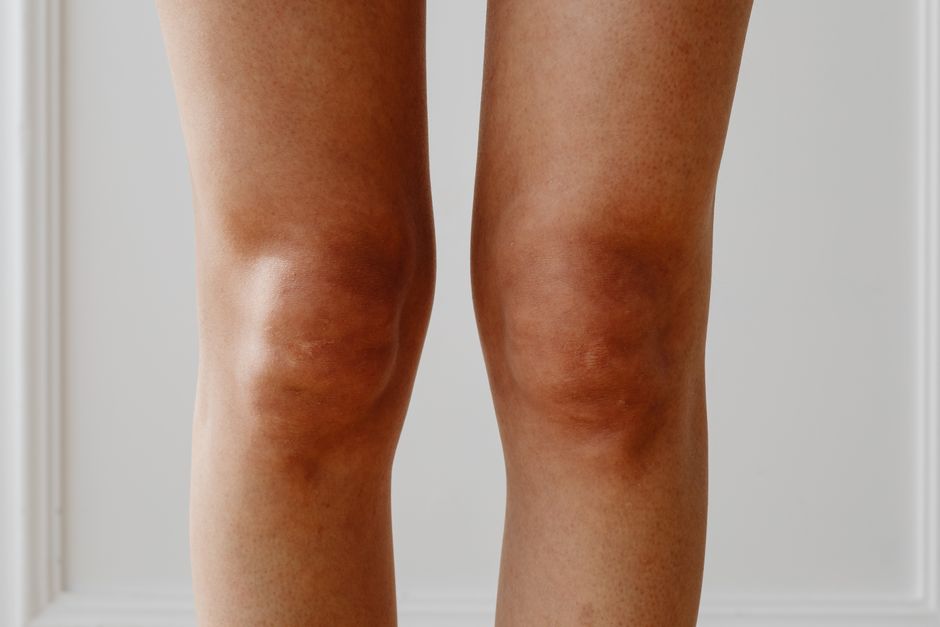
Your knees are built to move, and the muscles around them are what keep them stable. Strong quadriceps, hamstrings, glutes, and calves absorb load and control how your knee joint tracks with every step. Movement keeps the joint lubricated and the surrounding tissue conditioned. The short answer to how to have healthy knees through muscle and movement is this: build strength in the muscles that support the knee, move the joint regularly through its full range, and avoid the extremes of too much load or too little activity.
What Actually Happens Inside a Healthy Knee?
The knee is a hinge joint where the thigh bone meets the shin bone. Between them sit two pads of cartilage called menisci that spread load across the joint surface. The kneecap glides in a groove at the front of the thigh bone.
Unlike your hip, the knee has very little bony stability. The thigh bone and shin bone don’t lock together like a ball and socket. What holds the knee together is soft tissue — ligaments, tendons, and muscle.
That anatomy explains why muscle matters so much. When your quadriceps contract, they pull on the kneecap through the patellar tendon. This helps control how the kneecap tracks in its groove. When your glutes and hamstrings work, they control rotation and side-to-side motion at the knee.
Cartilage has no blood supply of its own. It gets nutrients from synovial fluid, the lubricant inside the joint. That fluid circulates when the joint moves. This is the mechanical reason movement supports joint health — not because motion “wears down” cartilage, but because it feeds it.
How Do Muscles Protect the Knee Joint?
Muscles act as shock absorbers and steering. Every time your foot hits the ground, force travels up through your leg. Well-conditioned muscles absorb a share of that force before it reaches the joint surface.
The quadriceps are the primary shock absorbers at the knee. Research using gait analysis has consistently shown that weaker quadriceps are associated with more load transmitted through the knee joint. The glutes control how your thigh rotates inward or outward during walking and squatting — too much inward rotation is linked to several knee problems.
There’s a non-obvious point here. Muscle strength isn’t just about force. It’s also about timing. Your nervous system coordinates when each muscle fires during a movement. Poor timing can overload the knee even when raw strength is adequate. This is why balance and control training often appears alongside strength work in knee rehabilitation programs.
Strength also changes what activities feel manageable. When stairs, chairs, and curbs stop being a challenge, people move more. More movement means more synovial fluid circulation and better-conditioned tissue. It becomes a cycle in both directions.
Which Exercises Build Knee-Supporting Muscle?
The exercises that build knee-supporting muscle are not exotic. They’re the ones that load your legs through a full range of motion and let you progress over time.
- Quadriceps: Sit-to-stand from a chair, step-ups, leg press, and squat variations. Straight-leg raises are useful when the knee is irritated.
- Hamstrings: Hip hinges like Romanian deadlifts, leg curls, and bridges.
- Glutes: Bridges, hip thrusts, step-ups, and split squats. The gluteus medius (side hip muscle) responds well to side-lying leg lifts and lateral band walks.
- Calves: Heel raises, both seated and standing.
Range of motion matters as much as load. A squat to a comfortable depth trains the knee through more of its arc than a shallow one. If deep bending causes pain, work in the range you can control and build from there.
Progression is what drives adaptation. Muscles get stronger when they’re challenged beyond what they’re used to. Adding repetitions, resistance, or range over weeks is how that happens. Doing the same easy routine for months tends to maintain, not build.
Walking is excellent for joint circulation and general health. It’s less effective on its own for building quadriceps strength, because walking loads the knee relatively lightly. Strength training and walking serve different purposes and work well together.



How Much Movement Does a Knee Need?
Knees do well with regular, varied movement. There’s no single number that fits everyone, but the general pattern is consistent: frequent light activity plus a few sessions of strengthening each week.
General physical activity guidelines for adults in the United States call for at least 150 minutes of moderate-intensity aerobic activity per week and muscle-strengthening activity on two or more days per week. Those guidelines address overall health rather than knees specifically, but they align with what knee-focused programs typically use.
The “varied” part matters. Knees handle walking, climbing, squatting, and pivoting differently. Exposing the joint to different directions and speeds builds resilience that a single repetitive motion doesn’t.
What about rest? Complete rest is rarely the answer for a knee that’s simply sore from use. Prolonged inactivity weakens the muscles around the joint and reduces synovial fluid circulation. Reducing load temporarily while keeping gentle movement going is usually more productive than stopping entirely. If pain is sharp, comes with swelling, or follows an injury, that’s a situation for a clinician rather than a training adjustment.
Does Running Wear Out Your Knees?
The idea that running grinds down knee cartilage doesn’t hold up well against the evidence. Several long-term studies of recreational runners have found no higher rates of knee osteoarthritis compared with non-runners. Some have found lower rates.
That doesn’t mean running is protective for everyone. It means the simple “running destroys knees” claim isn’t supported. The picture is more nuanced.
What does appear to matter is how much load the knee can handle and how quickly that load changes. Sudden increases in training volume, poor recovery, and underlying muscle weakness are common threads in running-related knee pain. Former competitive runners with a history of high-volume training and prior injury do show elevated rates of knee osteoarthritis in some research. So the relationship likely depends on dose, history, and individual factors rather than running itself.
For most recreational runners, the practical takeaway is to build strength alongside mileage and increase training gradually. If you have existing knee osteoarthritis, running may or may not be appropriate — that’s an individual decision worth discussing with a clinician or physical therapist.
What About Stretching and Flexibility?
Stretching feels good and can improve range of motion. Its role in preventing knee problems is less established than strength training’s.
Some studies suggest that regular stretching improves flexibility, but the evidence that it prevents injury or knee pain is mixed. Strength and neuromuscular control have stronger support in the research on knee health.
That said, if tightness in your calves, hamstrings, or hip flexors is limiting how you move, addressing it can help you train more effectively. Flexibility work is a reasonable complement to strength training, not a replacement for it.
What Else Affects Knee Health?
Muscle and movement are the levers you control most directly, but they aren’t the only factors.
Body weight affects the load traveling through the knee with every step. Research has consistently found that higher body weight is associated with higher rates of knee osteoarthritis. How much weight reduction helps is an individual matter, and the relationship isn’t simple.
Previous injury raises risk. A torn ACL or meniscus, even after treatment, is linked to higher rates of osteoarthritis later in life. That makes strength and movement work especially valuable after an injury.
Age matters, but not in the way people often assume. Cartilage does change with age, yet many older adults maintain healthy knees. Muscle mass and activity level tend to decline with age, and those declines are modifiable.
Genetics, occupation, and prior joint surgery also play roles that are largely outside your control. The point isn’t that muscle and movement determine everything. It’s that they’re the factors where consistent effort tends to pay off.
When Should You See a Professional?
Some knee symptoms warrant a medical evaluation rather than a training adjustment. These include:
- Sudden swelling after an injury
- A knee that locks, catches, or gives way
- Pain that wakes you at night or persists at rest
- Inability to bear weight
- Redness, warmth, or fever alongside knee pain
For ongoing knee pain without those features, a physical therapist can assess strength, movement patterns, and load tolerance. That assessment often reveals specific weaknesses that a general routine wouldn’t address.
Surgery and injections exist for certain knee conditions, and their appropriateness varies widely by diagnosis. They aren’t a substitute for the muscle and movement work that supports the joint long-term.
Frequently Asked Questions
Can you strengthen your knees without weights?
Yes. Bodyweight exercises like sit-to-stands, step-ups, bridges, and wall squats can build knee-supporting muscle, especially for beginners. Progress by increasing repetitions, slowing the movement, or adding resistance as it becomes easier.
Is walking good for knee pain?
Walking is generally well tolerated and helps circulate synovial fluid in the joint. It builds less quadriceps strength than resistance training, so pairing walking with strength work is usually more effective than walking alone.
How long does it take to strengthen knee muscles?
Most people notice improved strength within several weeks of consistent training, with more meaningful changes over a few months. Timelines vary based on starting strength, age, and how consistently you train.
Should you rest a sore knee or keep moving it?
Gentle movement is usually better than complete rest for a knee that’s sore from activity. Sharp pain, swelling, or pain after an injury is different — that warrants evaluation before continuing to load the knee.
