
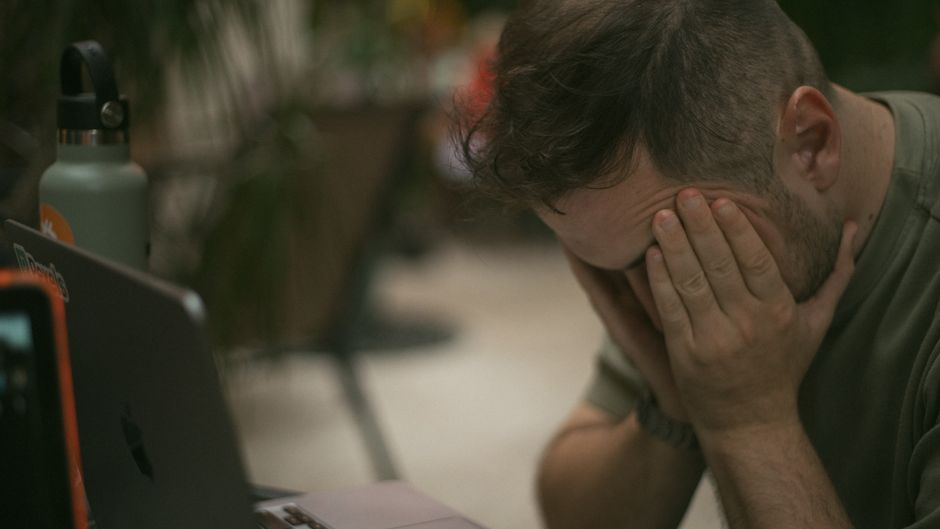
Stressful situations shrink your options if you let them. The techniques that work share one feature: they interrupt the body’s automatic stress response long enough for your thinking brain to re-engage. Slow breathing, brief physical movement, naming what you feel, and narrowing your focus to the next small step are all supported by physiological research and clinical practice. None of them remove the stressor. They change how your body and mind respond to it.
That distinction matters. A technique that helps you feel calmer for ten minutes is not the same as one that changes how you handle pressure over time. Both have value. But the strongest evidence sits with approaches that do both — settle the acute response, then build tolerance for the next one.
What Happens in Your Body During a Stressful Situation?
Your body runs a fast alarm system and a slower recovery system. Understanding both explains why some techniques work quickly and others take practice.
When you perceive a threat — a deadline, a confrontation, a medical waiting room — the sympathetic nervous system activates. Your adrenal glands release adrenaline within seconds. Heart rate rises, blood pressure climbs, breathing quickens, and blood flow shifts toward your muscles. This is the fight-or-flight response, and it is well documented in decades of physiology research.
A second wave follows. The hypothalamic-pituitary-adrenal axis triggers cortisol release, which takes longer to rise and longer to fall. Cortisol keeps your body on alert and mobilizes energy. In an acute situation, this system is doing its job. The problem is when it stays switched on.
The key insight is that this response is not under your conscious control. You cannot decide to stop your heart rate from climbing. But you can influence it through pathways you do control — breathing rate, muscle tension, and attention. That is the entire basis for every technique below.
How To Handle Stressful Situations Techniques That Work
The techniques with the strongest physiological backing are simple and unglamorous. They work because they act on the same nervous system that triggered the stress response.
Slow your breathing
Breathing is the one automatic function you can deliberately override. Slow, extended exhalations activate the parasympathetic nervous system — the branch responsible for rest and recovery. Research consistently shows that breathing at a slower rate, with exhalation longer than inhalation, reduces heart rate and increases heart rate variability.
A practical approach: breathe in through your nose for a count of four, then out through your mouth for a count of six. Repeat for about a minute. The exact counts matter less than the pattern — out slower than in. If counting feels awkward, just lengthen your exhale until it feels natural.
This works within seconds, which is why it is the first tool to reach for in an acute moment.
Move briefly
Physical movement discharges some of the physiological arousal your body has already generated. A short walk, standing up, or shaking out your hands gives the stress response somewhere to go. Some research suggests that even brief bouts of movement can reduce tension and improve mood, though the evidence for specific durations is less settled than the evidence for exercise in general.
This is not about exercise as a long-term habit — that has its own well-established benefits. It is about using movement as an immediate circuit breaker.
Name what you are feeling
Putting feelings into words appears to reduce their intensity. Brain imaging studies have found that labeling an emotion is associated with reduced activity in the amygdala, a brain region central to threat detection. This effect is sometimes called affect labeling.
You do not need to journal. A single sentence — spoken or thought — is enough. “I am overwhelmed because I have too much to do and not enough time.” The act of naming is what seems to help, not the eloquence.
Narrow your focus
Stress makes problems feel global. “Everything is falling apart” is a feeling, not an assessment. Deliberately shrinking your attention to the next single action — one email, one phone call, one five-minute task — reduces the load on your working memory.
This is a cognitive technique rather than a physiological one, but the two interact. A calmer body makes it easier to think in steps. Thinking in steps reduces the sense of threat. Either entry point can start the loop in the other direction.
Why Do Some Coping Techniques Backfire?
Not everything that feels like coping actually helps. Some strategies reduce discomfort in the moment while making the underlying problem worse.
Avoidance is the clearest example. Skipping the difficult conversation or the appointment brings immediate relief. But avoidance teaches your brain that the situation was genuinely dangerous, which strengthens the fear response next time. Research on anxiety consistently shows that avoidance maintains anxiety rather than resolving it.
Alcohol and other substances fall into a similar category. They dull the acute response, but they interfere with sleep and can increase baseline anxiety over time. Using them as a primary stress tool is associated with worse outcomes, not better ones.
Even distraction has limits. Short distraction can be useful for getting through a moment. Used as a permanent strategy, it prevents you from processing what happened. The difference is whether you return to the problem afterward.
One clarification worth making: venting is often recommended and often misunderstood. Expressing frustration to a supportive person can help. But repeated venting without any move toward problem-solving tends to reinforce the emotional response rather than discharge it. Some studies suggest that co-rumination — repeatedly discussing problems in a way that focuses on distress — is linked to higher anxiety over time.
What Works for Long-Term Stress Tolerance?
Acute techniques handle moments. Building tolerance handles the pattern. The evidence here is stronger and more consistent than for most acute strategies.
Regular physical activity has among the best-supported evidence for reducing anxiety and improving stress resilience. Aerobic exercise in particular has been studied extensively. The effect is not immediate, which is why it complements rather than replaces the quick techniques above.
Sleep is the other major lever. Sleep deprivation amplifies the stress response and impairs emotional regulation. Research consistently links poor sleep to greater reactivity to stressors. Protecting sleep is not a soft recommendation — it directly affects how your nervous system responds to pressure.
Mindfulness-based practices have a growing evidence base for reducing stress and anxiety, though results vary by program and population. Some studies show meaningful benefit; others show smaller effects. The honest position is that mindfulness appears helpful for many people, but it is not a universal fix and the quality of evidence varies across studies.
Social connection rounds out the picture. Having people you can rely on is associated with better stress outcomes in a large body of observational research. This is correlation-heavy evidence rather than trial evidence, but the direction is consistent across studies.
When Should You Seek Professional Help?
Stress is a normal part of life. A stress response that interferes with daily functioning is a signal to get support.
Consider talking to a doctor or mental health professional if you notice:
- Persistent worry that is difficult to control
- Sleep problems that last more than a few weeks
- Physical symptoms such as chest pain, shortness of breath at rest, or palpitations
- Avoidance of situations that is narrowing your life
- Reliance on alcohol or other substances to manage stress
- Low mood or loss of interest in things you usually enjoy
Chest pain and shortness of breath should be treated as medical concerns, not assumed to be stress. Get them checked.
Some clinicians recommend structured therapies such as cognitive behavioral therapy for stress and anxiety, and the evidence supporting CBT for anxiety disorders is strong. Medication may be appropriate in some cases and is a decision to make with a clinician, not from an article.
How Do You Build a Stress Toolkit That Fits Your Life?
The best technique is the one you will actually use under pressure. Stress narrows attention, so complex routines tend to fail exactly when you need them.
Pick one physical technique and one cognitive technique. Practice them when you are calm so they are familiar when you are not. A breathing pattern you have used a hundred times is easier to reach for than one you are trying for the first time mid-crisis.
Match the tool to the moment. In an acute spike, use breathing and movement. When the situation is ongoing, use focus-narrowing, sleep protection, and social support. Over weeks and months, invest in exercise and sleep as the foundation.
And accept that no technique eliminates stress. The goal is not to feel calm all the time. It is to respond to pressure in a way that keeps you functional and keeps your options open.
Frequently Asked Questions
What is the fastest way to calm down during a stressful situation?
Slow your breathing, making your exhale longer than your inhale. This activates the parasympathetic nervous system and can lower heart rate within about a minute.
Does deep breathing actually work for stress?
Yes, slow breathing with extended exhalation is well supported by physiological research. It works by increasing parasympathetic activity rather than by distraction.
Why does avoiding stressful situations make anxiety worse?
Avoidance brings short-term relief but teaches your brain the situation was dangerous. Over time this strengthens the fear response instead of reducing it.
When should stress be treated by a doctor?
Seek help when stress interferes with sleep, work, or relationships for more than a few weeks. Chest pain or shortness of breath should always be medically evaluated.
