
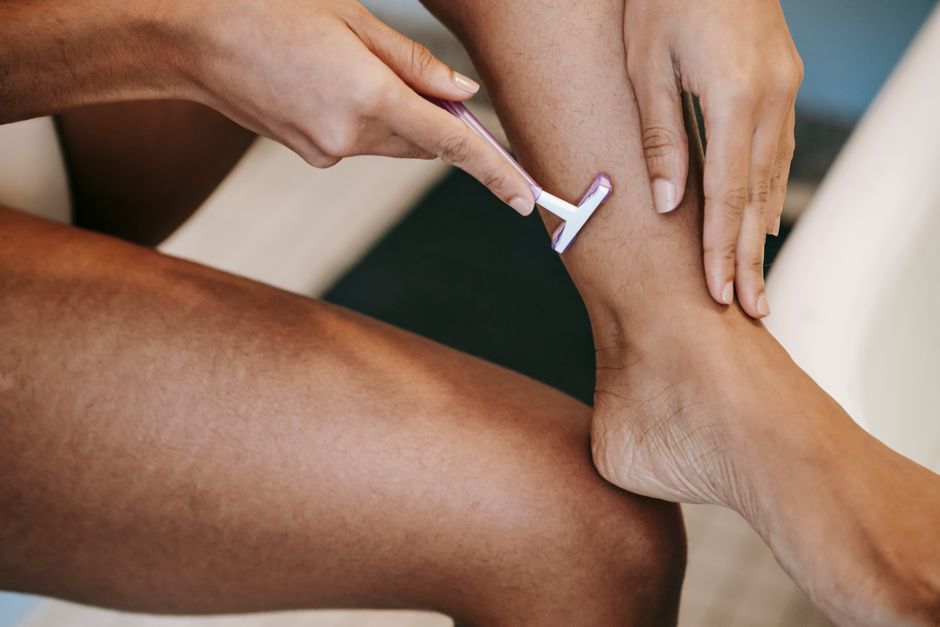
An ingrown hair happens when a hair curls back and grows into the skin instead of up and out. It causes a red bump that may be painful, itchy, or filled with pus. Most ingrown hairs resolve on their own, but the wrong treatment can turn a minor irritation into a real infection or permanent scar. The safest approach is to stop shaving the area, apply a warm compress, and gently encourage the hair to the surface with a sterile needle if it is visible. Never dig, squeeze, or pick at the bump.
What Exactly Causes An Ingrown Hair?
Ingrown hairs occur most often after shaving, waxing, or plucking. When a hair is cut at a sharp angle, the tip can pierce the skin as it grows back. Curly or coarse hair is more prone to this because it naturally bends back toward the skin.
The medical term is pseudofolliculitis barbae when it affects the beard area, but the same process happens on legs, arms, armpits, and the pubic region. Friction from tight clothing can push the hair back into the follicle. Dead skin cells can also block the opening of the follicle, forcing the hair to grow sideways under the skin.
Some people are simply more prone to ingrown hairs than others. Hair texture, shaving technique, and skin type all play a role. This is not a sign of poor hygiene.
How To Handle An Ingrown Hair Without Making It Worse?
Start by stopping any hair removal in the affected area. Shaving over an ingrown hair will irritate it further and can push the hair deeper. Give the area at least a few days of rest.
Apply a warm compress for 10 to 15 minutes, two to three times a day. The heat softens the skin and opens the pore, which often allows the hair to surface on its own. This is the single most effective step you can take at home.
If the hair becomes visible at the surface, you can gently lift it with a sterile needle or tweezers. Clean the needle with rubbing alcohol first. Insert the tip under the loop of the hair and lift it upward. Do not pull the hair out. The goal is to free the trapped tip so it can grow out normally. Removing the hair entirely increases the chance of another ingrown hair forming in the same spot.
Wash the area twice a day with a mild cleanser. Keep it moisturized with a fragrance-free lotion. Avoid heavy creams that can clog the pore further.
What Not To Do: Common Mistakes That Worsen Ingrown Hairs
The most common mistake is squeezing the bump like a pimple. This pushes bacteria deeper into the follicle and can cause cellulitis, a skin infection that requires antibiotics. It also increases the risk of scarring.
Do not dig at the area with unsterile tools. A safety pin, fingernail, or dirty tweezers introduce bacteria and cause unnecessary tissue damage. If you cannot see the hair clearly, you should not be digging for it.
Avoid shaving again until the bump has completely healed. If you must remove hair in that area, use an electric trimmer rather than a razor. Trimmers leave the hair longer, which reduces the chance of the sharp tip re-entering the skin.
Do not apply harsh chemicals like acne treatments with high concentrations of salicylic acid or benzoyl peroxide to the area. These are not designed for ingrown hairs and can cause chemical burns on sensitive skin. Some over-the-counter ingrown hair products contain glycolic acid or salicylic acid in lower concentrations, but they should be used only after the acute bump has settled.

When To See A Doctor About An Ingrown Hair
Most ingrown hairs resolve within one to two weeks with home care. Some take longer, especially in areas with thick or curly hair.
See a doctor if you notice signs of infection. These include increasing redness that spreads beyond the bump, warmth to the touch, swelling, or pain that worsens over time. Pus that is yellow or green and has an odor also suggests an infection. Fever is a more serious sign that requires prompt medical attention.
See a doctor if the ingrown hair does not improve after two weeks of consistent home care, if you have multiple ingrown hairs that keep recurring in the same area, or if you have diabetes or a weakened immune system. In these cases, a doctor can safely remove the hair with a sterile blade and may prescribe a topical antibiotic.
For people with chronic, severe ingrown hairs, a dermatologist can offer treatments that reduce hair growth. Prescription creams like those containing retinoids help by normalizing skin cell turnover. Laser hair removal is the most effective long-term solution because it destroys the hair follicle, preventing the hair from growing back at all.
How To Prevent Ingrown Hairs In The Future
Prevention focuses on changing how you remove hair. The most effective strategy is to stop shaving altogether, but that is not practical for everyone. If you continue to shave, follow these principles.
Shave in the direction of hair growth, not against it. Shaving against the grain gives a closer shave but cuts the hair at a sharper angle, which makes ingrown hairs more likely. Use a sharp, single-blade razor. Multi-blade razors pull the hair up before cutting it, which allows the hair to retract below the skin surface when released.
Exfoliate gently before shaving. This removes dead skin cells that can block the follicle opening. Use a soft washcloth or a mild sugar scrub. Do not scrub aggressively, as this can irritate the skin and make the problem worse.
Use shaving cream or gel and let it sit on the skin for a few minutes before shaving. This softens the hair and skin. Rinse the razor after every stroke to keep it clean and sharp.
After shaving, apply a moisturizer. Some people find that products containing witch hazel or tea tree oil help, but the evidence for these is limited. A simple fragrance-free moisturizer is sufficient.
Consider an electric razor instead of a blade. Electric razors do not cut as close, which leaves the hair long enough that it is less likely to curl back into the skin. For the bikini line and underarms, this trade-off is often worth it.
Do Home Remedies Actually Work?
Several home remedies circulate online, and most have little to no evidence behind them. A warm compress is the one that genuinely helps because it softens the skin and encourages the hair to surface. This is supported by dermatologic practice.
Tea tree oil is sometimes recommended for its antibacterial properties. Some research suggests it may help with skin infections, but no clinical evidence confirms it treats ingrown hairs specifically. If you try it, dilute it with a carrier oil. Undiluted tea tree oil can cause contact dermatitis.
Aspirin masks made from crushed aspirin and water are also popular. Aspirin contains salicylic acid, which is a common acne treatment. However, the concentration in a homemade mask is unpredictable, and it can irritate the skin. Over-the-counter products with a standardized concentration are safer if you want to try this approach.
Aloe vera gel can soothe irritated skin, but it does not release the trapped hair. It is fine as a moisturizer after the acute phase has passed.
How Long Does It Take For An Ingrown Hair To Heal?
With proper care, most ingrown hairs resolve within one to two weeks. The timeline depends on how deep the hair is and how much inflammation has developed.
If the hair is visible at the surface and you gently lift it, the bump usually flattens within a few days. If the hair is deeper and requires the body to push it out naturally, it can take longer. The inflammation may persist for a few days after the hair is released.
Hyperpigmentation, or darkening of the skin, can last for weeks or months after the ingrown hair resolves. This is more common in people with darker skin tones. It fades over time but can be permanent if the area was repeatedly picked or squeezed.
Frequently Asked Questions
Should I pop an ingrown hair like a pimple?
No. Squeezing pushes bacteria deeper and increases the risk of infection and scarring. Let it resolve on its own or gently lift the hair with a sterile needle if it is visible.
Can I shave over an ingrown hair?
No. Shaving irritates the bump and can cut the hair at another sharp angle, causing a new ingrown hair. Wait until the area has fully healed before shaving again.
Does toothpaste help ingrown hairs?
No clinical evidence supports using toothpaste on ingrown hairs. It can dry out and irritate the skin. A warm compress is the only home treatment with real evidence behind it.
How do I know if an ingrown hair is infected?
Signs of infection include spreading redness, warmth, swelling, worsening pain, or pus with an odor. If you develop a fever, see a doctor promptly.
