
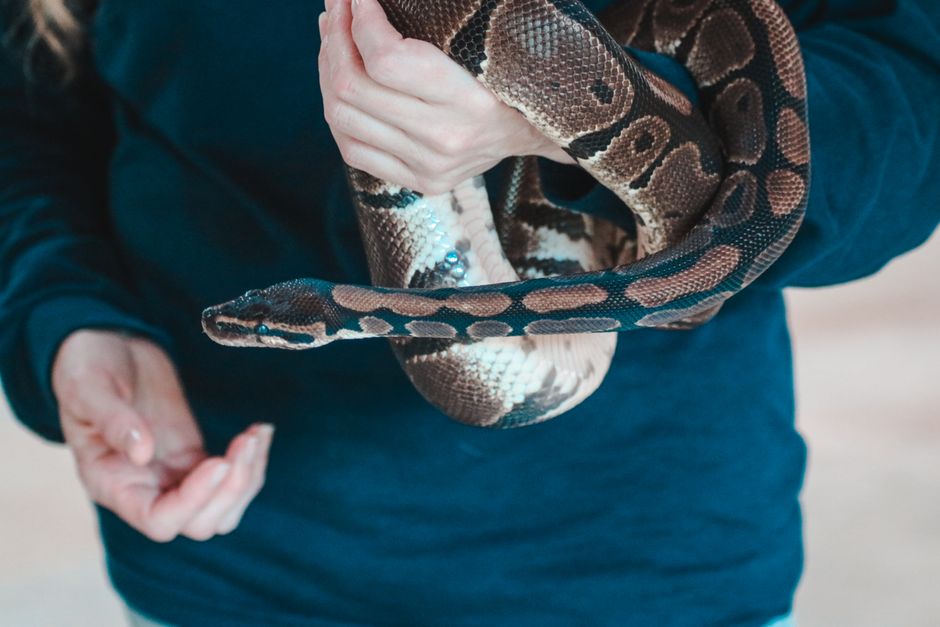
Ball pythons are popular pets, but they are also naturally shy and easily stressed. Learning how to handle a ball python without stressing it is the single most important skill for keeping one healthy and tame. The short answer is to move slowly, support the body fully, keep sessions brief, and read the snake’s body language. You should also wait until the snake has eaten at least twice in your care before handling it at all. With patience and consistency, most ball pythons become calm and tolerant of regular, gentle handling.
Why Do Ball Pythons Get Stressed So Easily?
Ball pythons are ambush predators from West and Central Africa. In the wild, they spend most of their time hidden in burrows or under leaf litter. They are prey animals too. Large birds, monitor lizards, and other snakes eat them. This means their instinct is to hide first and defend only when forced.
When you pick up a ball python, its brain registers a potential threat. A fast movement looks like an attack. Being lifted off the ground feels like being caught by a predator. The snake does not know you are not a hawk. It only knows it is exposed and vulnerable. This triggers a stress response that raises heart rate and releases stress hormones.
This is why slow, predictable handling matters. You are teaching the snake, over time, that being held does not lead to being eaten. That lesson takes repetition and consistency.
How To Handle A Ball Python Without Stressing It?
The first rule is timing. Never handle a ball python within 48 hours after it has eaten. Digestion requires warmth and rest. Handling during this period can cause regurgitation, which is dangerous to the snake. Also avoid handling during shedding. A snake in blue has cloudy eyes and dull skin. It cannot see well and feels vulnerable. Check for these signs before you open the enclosure.
When you are ready to handle, move slowly. Open the enclosure gently. Do not grab from above. This mimics a predator strike. Instead, reach in from the side or below. Place one hand under the front third of the snake’s body, and support the rest with your other hand. Lift smoothly and steadily. Do not squeeze.
Let the snake move through your hands rather than gripping it. Ball pythons feel safer when they have something to hold onto. Your hands and arms become that anchor. Keep the snake close to your chest or lap at first. Being high in the air is stressful. Sitting down while handling is often better than standing.
Keep sessions short. For a new snake, five minutes is enough. As the snake becomes comfortable, you can extend handling to ten or fifteen minutes. Watch the clock. A calm snake can become stressed if handled too long. End the session before the snake shows signs of distress, not after.
Signs Your Ball Python Is Stressed
Ball pythons cannot talk, but they communicate clearly. Learn these signals before you handle.
Hissing is an obvious warning. It means back off. If your snake hisses, return it to the enclosure immediately. Do not push through the hiss. That teaches the snake that hissing does not work, and it may escalate to striking.
Striking is the last resort. A ball python strike is fast and defensive. It rarely hurts badly, but it is a clear sign the snake feels cornered. If your snake strikes, you handled it too soon or too fast. Go back to shorter, slower sessions.
Tensing the body is a quieter sign. A relaxed ball python feels like a heavy, loose rope in your hands. A stressed one feels stiff and coiled. The neck may pull back into an S-shape. This is a pre-strike posture. Put the snake down.
Tail twitching or vibrating is another warning sign. Some snakes also musk, releasing a foul-smelling fluid from their vent. This is a defense mechanism. It means the snake is scared, not being difficult.
A very stressed ball python may also refuse to eat. If your snake has refused food for several weeks, review your handling routine. Too much handling is a common cause of appetite loss in this species.





Building Trust With Regular Handling
Trust is built through repetition, not long sessions. Handle your ball python two to three times per week. Each session should be short and calm. Consistency matters more than duration. A five-minute session every few days is better than one long session per month.
During handling, keep your movements slow and smooth. Do not pass the snake quickly from hand to hand. Do not let other pets near it. Do not let children grab at it. A startled snake will remember the experience and become harder to handle next time.
Some handlers recommend “hook training” for snakes that are defensive. This means gently touching the snake’s body with a snake hook before picking it up. The touch signals that handling is about to begin, not an attack. Over time, the snake learns the touch is not a threat. This technique is widely used by professional keepers and works well for nervous ball pythons.
Never handle a ball python when you are stressed or rushed. Snakes read vibration and movement. If you are tense, your movements will be jerky. The snake will pick up on that. Handle only when you have time to be calm and focused.
What Not To Do When Handling A Ball Python
Several common mistakes stress ball pythons unnecessarily. Avoid them.
Never grab a snake by the tail. This is a major stressor and can cause spinal injury. Always support the body from underneath.
Never wake a sleeping snake to handle it. Ball pythons are often active at dawn and dusk. If the snake is resting deeply, wait. A startled snake is a defensive snake.
Never handle right after feeding. This is non-negotiable. Wait at least 48 hours, and longer for large meals. Regurgitation is a serious medical event for a snake.
Never handle during a shed cycle. The snake’s skin is dry and its eyes are cloudy. It cannot see you clearly. It will be defensive. Wait until the shed is complete and the eyes are clear.
Never handle a sick snake. If your snake is lethargic, has discharge, or is not eating, leave it alone. Handling stresses an already compromised immune system. Consult a veterinarian who treats reptiles.
Do not let the snake wrap around your neck. A calm ball python can still tighten its grip if startled. This is a safety risk, not just a stress issue. Keep the snake below your shoulders.
How Often Should You Handle A Baby Ball Python?
Baby ball pythons are more nervous than adults. They are also smaller and more fragile. Start with very short sessions. Two to three minutes is enough for a young snake. Increase gradually over weeks.
Some baby ball pythons will hiss or strike when first handled. This is normal. Do not punish the snake. Snakes do not learn from punishment. Instead, remain calm and gentle. Most babies outgrow this defensiveness within a few months of regular, positive handling.
Do not handle a baby more than three times per week. Babies need time to eat and digest. They also need undisturbed rest. Overhandling a baby can cause chronic stress that stunts growth and suppresses appetite.
Creating A Low-Stress Environment
Handling is only part of the picture. A ball python that lives in a stressful enclosure will be stressed during handling too. Check your setup.
Ball pythons need at least two hides — one on the warm side and one on the cool side. A hide is a snug, enclosed space where the snake can feel secure. If the snake cannot hide, it will be chronically stressed. This is not optional. It is a basic welfare requirement.
Temperature matters. The warm side of the enclosure should be around 88-92°F (31-33°C). The cool side should be around 78-80°F (26-27°C). A snake that is too cold cannot digest food properly and becomes lethargic. A snake that is too hot becomes agitated. Use a thermostat to regulate heat sources. Never guess with temperatures.
Humidity should stay between 50-60% normally, and higher during shedding. Low humidity causes stuck shed and respiratory irritation. Both are stressful.
Place the enclosure in a quiet room. Do not put it near a television, loud speakers, or high-traffic areas. Ball pythons are sensitive to vibration. A busy household stresses them even when you are not handling them.
Frequently Asked Questions
How long should I handle my ball python each day?
Handle for 5 to 10 minutes per session, two to three times per week. Daily handling is not necessary and can stress the snake.
How do I know if my ball python is stressed?
Hissing, striking, a tense S-shaped neck, tail twitching, and refusing food are all signs of stress. A relaxed snake feels loose and heavy in your hands.
Can I handle my ball python after it eats?
No. Wait at least 48 hours after feeding before handling. Handling too soon can cause regurgitation.
Why does my ball python hiss when I pick it up?
Hissing means the snake feels threatened. Return it to its enclosure and try again later with slower movements and shorter sessions.
Handling a ball python well comes down to patience and respect. Move slowly. Support the body. Keep sessions short. Learn what your snake is telling you. A ball python that trusts you will be a calm, curious companion for many years.
