
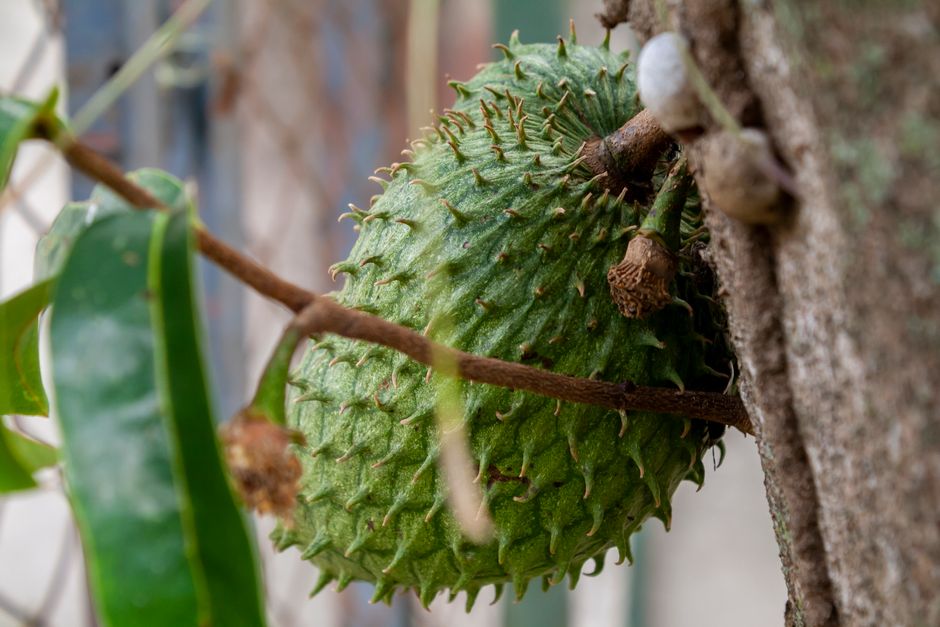
Growing soursop (Annona muricata) indoors from seed to fruit is possible, but rarely quick or guaranteed. The tree needs warmth year-round, bright light, and space — a mature soursop can reach 6 to 10 meters outdoors, though container growing and pruning keep it smaller. Most indoor growers in the US should expect several years before any fruit appears, and many never get fruit at all without greenhouse conditions. This guide explains what the plant actually needs, what to realistically expect, and where the honest limits of indoor growing sit.
What Is Soursop And Why Is It Grown Indoors?
Soursop is a tropical evergreen tree native to Central America, the Caribbean, and northern South America. It produces a large, spiky green fruit with white, fibrous flesh and a flavor often described as a mix between pineapple and strawberry, with a tart citrus edge.
In the US, soursop grows outdoors only in frost-free tropical or near-tropical areas such as parts of southern Florida, Hawaii, and Puerto Rico. Everywhere else, it must live indoors or in a heated greenhouse. That is the main reason people grow it in containers.
The plant is sensitive to cold. Chilling injury and leaf drop can occur when temperatures fall toward the low end of its comfort range, and frost will kill it. This cold sensitivity — not soil or light — is usually what limits indoor growing in most of the country.
How Do You Start Soursop From Seed?
Soursop seeds are relatively easy to germinate if they are fresh. Older or dried-out seeds germinate poorly, so source seeds from ripe fruit or a reputable supplier and plant them soon after harvest.
Here is the practical process:
- Clean the seeds. Remove all pulp, which can encourage mold. Rinse and pat dry.
- Soak briefly. Some growers soak seeds in water for a day before planting. This is common practice but not strongly supported by controlled trials.
- Plant shallow. Sow seeds about 1 to 2 cm deep in a well-draining mix. Deeper planting can slow or prevent emergence.
- Keep warm and moist. Germination is faster in warm conditions. Aim for a consistently warm room or a heat mat, and keep the medium damp but not waterlogged.
- Be patient. Germination can take several weeks and is uneven. Some seeds sprout quickly while others lag.
Freshness matters more than technique. A seed from a fruit picked last week will usually outperform a packet that has sat in storage for a year.
What Light, Temperature, And Soil Does Soursop Need Indoors?
Soursop wants full sun and steady warmth. Indoors, that means the brightest spot you have — ideally a south-facing window plus supplemental grow lighting during short winter days.
Light: A sunny windowsill alone is often not enough, especially in northern latitudes. A grow light running for a good portion of the day helps the plant build the energy it needs to grow and eventually flower. Weak light produces leggy, sparse growth.
Temperature: Soursop is a tropical tree and does not tolerate cold. Keep it in a warm room and away from drafty windows and cold floors in winter. It has no chill requirement — it does not need a cold period to fruit, unlike some temperate fruit trees.
Soil: Use a well-draining potting mix. Soursop dislikes soggy roots, so a mix that holds some moisture but drains freely is better than heavy garden soil. A container with drainage holes is essential.
Water and humidity: Water when the top of the soil begins to dry. Soursop appreciates humidity, which is often low in heated indoor air. A humidifier or grouping plants together can help, though the plant will tolerate average indoor humidity if watering is consistent.




How Big Does Soursop Get In A Container?
Container growing and pruning keep soursop far smaller than its outdoor size, but it is still a substantial plant. Outdoors it can reach 6 to 10 meters. Indoors, expect a tree that needs regular pruning to stay manageable, and plan for a large pot and significant vertical space.
This is the honest constraint most guides skip. Soursop is not a compact houseplant. It is a tree that wants to be big, and a cramped container or a low ceiling will limit both its growth and its odds of fruiting. A container of substantial volume — large enough to support a small tree — is more realistic than a standard houseplant pot.
Repot as the plant grows, stepping up container size gradually rather than jumping to an oversized pot, which can hold excess moisture around undeveloped roots.
How Long Until Soursop Grows Fruit Indoors?
This is where expectations need to be honest. Soursop grown from seed typically takes several years to reach flowering size even in ideal tropical conditions, and indoor growing usually slows that timeline further.
More importantly, flowering and fruiting depend on factors that are hard to replicate indoors: strong light, warmth, adequate plant size, and — in many cases — pollination. Soursop flowers are pollinated by insects outdoors, and indoor plants may need hand pollination to set fruit. Even with careful hand pollination, many indoor growers never see fruit.
No reliable data gives a specific indoor timeline to fruit, because indoor fruiting is uncommon and highly variable. Anyone promising fruit in a fixed number of months indoors is overstating what the evidence supports. Treat indoor fruiting as a long-term project with an uncertain outcome, not a predictable milestone.
How Do You Hand-Pollinate Soursop Flowers?
Soursop flowers are not self-pollinating in a reliable way, and indoor environments usually lack the natural pollinators that do the job outdoors. Hand pollination is common practice among growers trying to set fruit indoors.
The flowers have a timing quirk. They open in stages, and the male and female parts are receptive at different times, which is part of why pollination is finicky. Growers typically collect pollen from one flower and transfer it to another flower at the right stage using a small brush or by hand.
This technique is widely used but not backed by large controlled studies for indoor container growing specifically. It improves the odds; it does not guarantee fruit.
What Pests And Problems Affect Indoor Soursop?
Indoor soursop faces the same pests as many houseplants, plus a few issues tied to its tropical needs.
- Spider mites and scale are common in dry indoor air. Inspect the undersides of leaves regularly.
- Root rot from overwatering or poor drainage is a frequent killer of container soursop.
- Leaf drop can follow cold drafts, sudden temperature swings, or inconsistent watering.
- Poor growth and no flowers usually trace back to insufficient light.
Consistent conditions matter more than any single fix. Soursop dislikes sudden changes, so keep it in a stable spot and adjust gradually.
Is Soursop Fruit Or Leaf Safe To Use?
This is a separate question from growing the plant, and it deserves a clear answer. Soursop fruit is eaten as food in tropical regions. Soursop leaf and other plant parts are marketed as supplements and teas, often with health claims that go well beyond the evidence.
Some laboratory and animal research has examined compounds in soursop, but this is not the same as proven benefit in people. No clinical evidence currently confirms that soursop leaf or fruit treats or prevents any disease. Marketing that presents soursop as a treatment is not supported by human trials.
There are also safety considerations. Some research raises questions about long-term or high-dose consumption of certain soursop preparations, particularly repeated use of leaf extracts. Anyone considering soursop supplements — especially during pregnancy, breastfeeding, or while taking medication — should talk to a healthcare professional first. This article covers cultivation only and is not medical advice.
What Is A Realistic Approach To Growing Soursop Indoors?
If your goal is a healthy, attractive tropical tree, indoor soursop is achievable with bright light, warmth, good drainage, and patience. If your goal is fruit, be honest with yourself about the odds.
The most realistic path to indoor fruit involves a heated greenhouse or a very bright, warm sunroom, a large container, several years of growth, and hand pollination. In an ordinary home, the plant is more likely to be a foliage specimen than a fruiting tree.
None of this means don’t try it. It means go in with accurate expectations. A soursop that thrives indoors is a genuine achievement. Fruit is a bonus that many growers never reach — and that is not a failure of technique so much as the reality of growing a tropical tree outside the tropics.
Frequently Asked Questions
How long does it take to grow soursop from seed to fruit?
Outdoors in the tropics, soursop typically takes several years from seed to fruiting size. Indoors, the timeline is longer and often uncertain, and many indoor plants never fruit at all.
Can soursop grow indoors in a pot?
Yes, soursop can grow indoors in a large container with bright light and steady warmth. It is a tree, not a compact houseplant, so it needs substantial space and regular pruning.
Does soursop need full sun indoors?
Soursop needs very bright light, and a sunny window alone is often not enough in northern latitudes. Supplemental grow lighting helps the plant grow well and supports any chance of flowering.
Do you have to hand-pollinate soursop indoors?
Indoor soursop usually needs hand pollination because natural pollinators are absent. Hand pollination improves the odds of fruit set but does not guarantee it.
