
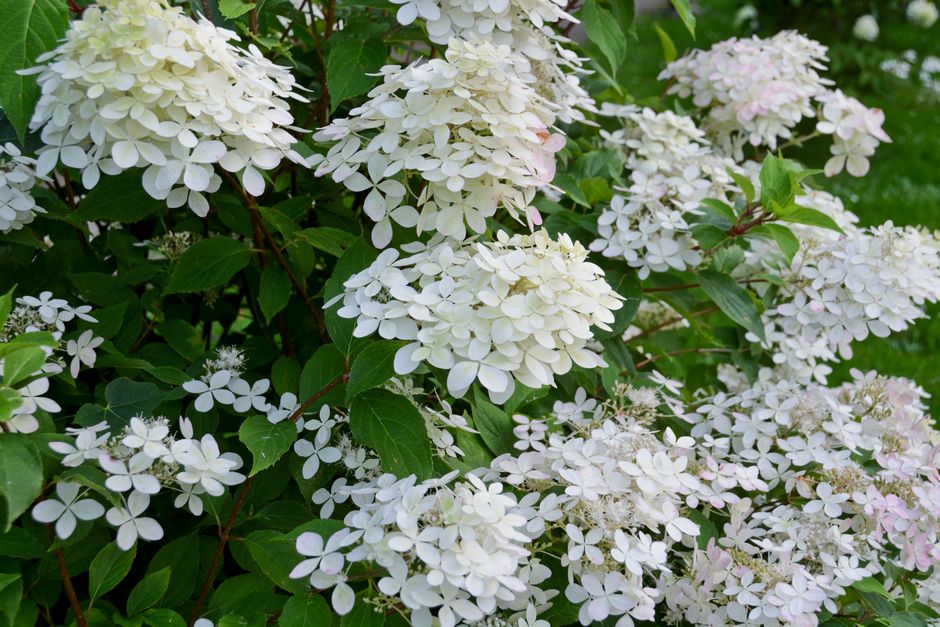
Penny Mac is a reliable, reblooming bigleaf hydrangea known for its large blue or pink flower clusters. It thrives in rich, well-drained soil with morning sun and afternoon shade, and it blooms on both old and new wood, which makes it forgiving even after harsh winters. To grow it successfully, water deeply once or twice a week, prune only in late winter or early spring, and adjust soil pH to control flower color.
What Makes Penny Mac Different From Other Hydrangeas?
Penny Mac belongs to the Hydrangea macrophylla family, the common bigleaf hydrangea. What sets it apart is its ability to bloom on both old wood (last year’s stems) and new wood (this year’s growth). Most bigleaf hydrangeas only bloom on old wood, so a late frost that kills the buds means no flowers that year. Penny Mac regrows and blooms anyway.
This trait makes it one of the most dependable choices for gardeners in colder zones where late spring frosts are common. It was selected in Virginia specifically for its cold hardiness and reliable flowering. If you have lost blooms on other hydrangeas to winter damage, Penny Mac is a practical alternative.
The flower heads are large, rounded mophead clusters that can reach 6 to 8 inches across. They appear from early summer through fall. The plant itself stays compact, usually 3 to 4 feet tall and wide, which fits well in small gardens or foundation plantings.
Where Should You Plant Penny Mac Hydrangea?
Location matters more than almost anything else for this plant. Penny Mac needs morning sun and afternoon shade, especially in warmer climates. Full afternoon sun in hot regions can scorch the leaves and stress the plant. Too much deep shade reduces flowering significantly.
In northern zones, it can handle more sun, even nearly full sun, as long as the soil stays moist. In southern zones, protect it from intense afternoon heat. A spot on the east side of a house or under the dappled shade of tall trees works well.
Soil quality is the next priority. Penny Mac prefers rich, loamy soil that holds moisture but drains well. It does not tolerate heavy clay that stays soggy or sandy soil that dries out quickly. Before planting, work several inches of compost or aged manure into the top 12 inches of soil. This improves both drainage and moisture retention.
Space plants at least 3 to 4 feet apart. They do not spread aggressively, but good air circulation reduces the risk of fungal diseases like powdery mildew and leaf spot.
How Often Should You Water Penny Mac Hydrangea?
Consistent moisture is essential. The name hydrangea comes from Greek words meaning “water vessel,” and these plants live up to it. During the first growing season, water deeply two to three times per week if rain is scarce. Established plants need about 1 inch of water per week, more during hot, dry spells.
Deep watering encourages deep root growth. Shallow, frequent watering keeps roots near the surface, where they dry out faster. Water at the base of the plant rather than overhead. Wet foliage, especially late in the day, increases the risk of fungal problems.
Mulch is not optional with this plant. Apply 2 to 3 inches of organic mulch like shredded bark or pine straw around the base. Keep it a few inches away from the stems. Mulch conserves soil moisture, keeps roots cool, and suppresses weeds. Replenish it each spring.
Watch for wilting leaves on hot afternoons. Some wilting in the heat of the day is normal, even with adequate water. If leaves are still wilted in the morning, the plant needs water. Yellowing leaves often mean too much water or poor drainage, not too little.


How To Grow And Care For Hydrangea Penny Mac Through The Seasons
Spring is the time for light feeding. Apply a slow-release fertilizer formulated for shrubs, or one specifically labeled for hydrangeas, just as new growth begins. A balanced fertilizer like a 10-10-10 or 12-6-6 works fine. Do not overfeed. Too much nitrogen produces lush leaves at the expense of flowers.
Summer care is mostly about water and watching for stress. Keep the mulch layer intact. Remove spent flower heads if you prefer a tidy look, or leave them in place. Dried flower heads provide winter interest and protect the buds below them from extreme cold.
Fall is the time to stop fertilizing. Late-season feeding pushes tender new growth that will not harden off before frost. Keep watering until the ground freezes, especially if autumn is dry. Hydrangeas that go into winter dehydrated are far more likely to suffer dieback.
Winter protection matters in zones 5 and colder. After the ground freezes, mound 6 to 8 inches of mulch, leaves, or straw over the base of the plant. This protects the crown and lower buds. In very cold regions, you can wrap the plant in burlap or surround it with a wire cage filled with leaves. Do not prune in fall. The old stems protect the plant and hold next year’s early buds.
When And How Should You Prune Penny Mac?
Because Penny Mac blooms on old and new wood, pruning is more forgiving than with other bigleaf hydrangeas. You will not lose the entire season’s flowers by pruning at the wrong time. But the best time to prune is still late winter or very early spring, just before new growth starts.
At that point, remove dead or damaged stems completely. Cut them at the base. For the remaining stems, you can shape the plant lightly. Remove no more than one-third of the total stem length. Heavy pruning reduces the number of early-season flowers, though the plant will still bloom later on new growth.
Deadheading spent blooms during the season is optional. If you do it, cut just above the first set of healthy leaves below the flower head. Do not cut long stems in summer. That removes the wood that will produce next spring’s flowers.
Every few years, you can rejuvenate an older, woody plant by cutting about one-third of the oldest stems to the ground in late winter. This encourages fresh, vigorous growth. Stagger this over three years rather than cutting everything at once.
Why Are My Penny Mac Flowers Pink Instead Of Blue?
Flower color in bigleaf hydrangeas depends on soil chemistry, not the plant variety. Penny Mac produces blue flowers in acidic soil and pink flowers in alkaline soil. The active ingredient is aluminum. Plants take up aluminum only when the soil pH is low enough to keep it soluble.
To get blue flowers, the soil pH should be between 5.0 and 5.5. To get pink flowers, raise the pH above 6.0. Soil in the neutral range around 6.0 to 6.5 often produces purple or muddy-colored blooms.
If you want blue flowers, apply an aluminum sulfate solution in early spring according to the package directions. Alternatively, amend the soil with elemental sulfur to lower pH. If you want pink flowers, add dolomitic lime to raise pH. Do this gradually and test soil pH each year, because the effect takes time and can overshoot.
White hydrangeas do not change color. Only the pigmented macrophylla types respond to soil pH. Penny Mac is one of those responsive types.
What Problems Commonly Affect Penny Mac Hydrangeas?
Powdery mildew is the most common fungal issue. It appears as a white, powdery coating on leaves, usually in late summer when days are warm and nights are cool. It rarely kills the plant but looks unsightly. Improve air circulation, water at the base, and remove badly affected leaves.
Leaf spot, another fungal disease, causes brown or purple spots on foliage. It is mostly cosmetic. Cleaning up fallen leaves in autumn reduces the source of infection for the following year.
Pests are less common. Aphids can cluster on new growth and buds. A strong spray of water or insecticidal soap usually controls them. Spider mites appear in hot, dry conditions and cause stippled, yellowing leaves. Keeping the plant well-watered and the area mulched reduces their numbers.
Bud blast, where flower buds form but never open, is usually caused by cold damage or drought stress. Protect plants from late frosts and keep soil consistently moist through the growing season.
Chlorosis, yellowing leaves with green veins, indicates an iron deficiency. This usually happens in alkaline soil where iron is locked up. Lowering soil pH or applying a chelated iron supplement addresses it.
How To Get More Blooms From Penny Mac
If your Penny Mac produces few flowers, the cause is almost always one of three things: too little sun, improper pruning, or too much nitrogen fertilizer. Morning sun is essential for flower production. If the plant sits in deep shade all day, it will grow leaves but produce few blooms.
Pruning at the wrong time removes flower buds. The safest approach is to prune only in late winter or early spring and only remove dead wood. If you must shape the plant, do it immediately after the first flush of blooms fades in early summer.
High-nitrogen fertilizer pushes leafy growth at the expense of flowers. Use a fertilizer higher in phosphorus, the middle number in the N-P-K ratio, to encourage blooming. A fertilizer labeled for flowering shrubs or roses works well. Apply it lightly in spring and again in early summer if needed.
Frequently Asked Questions
Does Penny Mac hydrangea bloom all summer?
Penny Mac blooms from early summer through fall because it flowers on both old and new growth. Deadheading spent blooms encourages repeat flowering.
Can Penny Mac hydrangea grow in full sun?
Penny Mac can tolerate full sun only in cool northern climates with consistently moist soil. In warmer regions, afternoon shade is necessary to prevent leaf scorch.
How big does a Penny Mac hydrangea get?
Penny Mac typically grows 3 to 4 feet tall and 3 to 4 feet wide. It stays compact enough for small gardens and containers.
Is Penny Mac hydrangea cold hardy?
Penny Mac is hardy in USDA zones 5 through 9. Its ability to bloom on new wood makes it more reliable in cold zones than standard bigleaf hydrangeas.
