
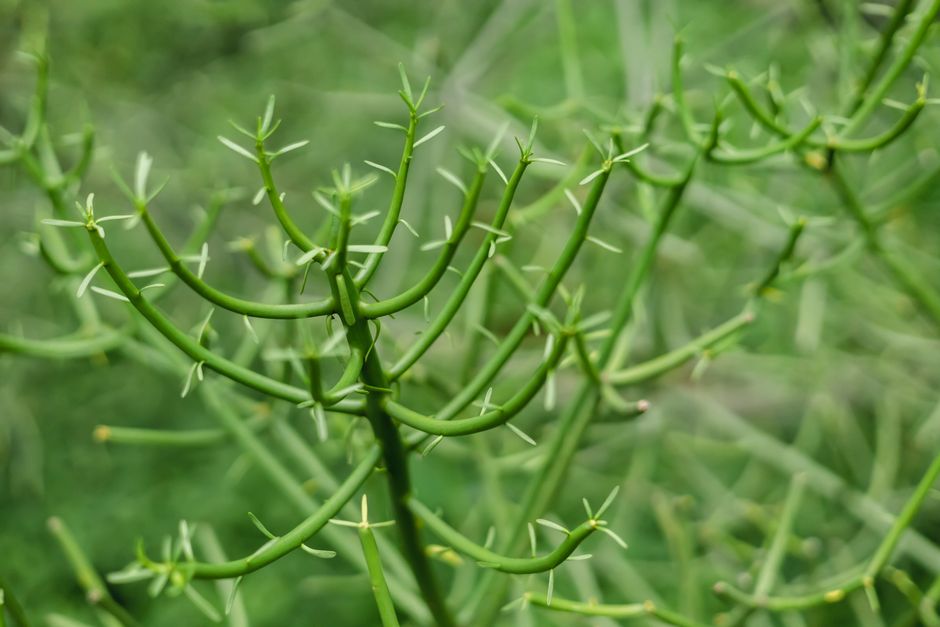
Euphorbia trigona ‘Royal Red’ is a striking succulent known for its tall, upright stems and deep burgundy-red coloration. To grow and care for it successfully, provide bright indirect light, water only when the soil is completely dry, and use a very well-draining cactus or succulent potting mix. Keep it in warm temperatures between 60°F and 80°F, protect it from frost, and handle it with care because the milky sap is toxic and can irritate skin.
What Is Euphorbia Trigona Royal Red?
This plant is a cultivar of Euphorbia trigona, often called African milk tree or cathedral cactus. It is not a true cactus but a succulent from the Euphorbiaceae family. The ‘Royal Red’ variety develops purple-red stems and leaves when given enough light. In lower light the red fades to green. It can grow several feet tall indoors and produces small leaves along the ribs of the stems. The leaves are short-lived and drop as the stem matures, which is normal.
The red color is not a sign of stress or disease. It is a stable genetic trait that becomes more intense in bright light. Some growers call it Euphorbia trigona ‘Rubra’ — both names refer to the same red form. The plant is a hybrid or selection, not a species found in the wild.
How Much Light Does Euphorbia Trigona Royal Red Need?
These plants need at least 4 to 6 hours of bright indirect light daily. A south- or west-facing window works well, but avoid direct midday sun in summer — it can scorch the stems. If the plant turns green or begins to stretch (leggy growth), it is not getting enough light. Slowly increase light exposure to bring back the red color.
Grow lights can supplement natural light in winter or in darker rooms. Full-spectrum LED lights placed 6 to 12 inches above the plant for 12 to 14 hours per day will maintain color and compact growth. Rotate the pot every few weeks so all sides receive equal light.
How Often Should You Water Euphorbia Trigona Royal Red?
Water only when the soil is completely dry. Stick a finger 2 inches into the pot — if it feels dry, water deeply until it runs out the drainage hole. In summer, this may mean watering every 2 to 3 weeks. In winter, reduce to once a month or less. Overwatering is the fastest way to kill this plant. Signs of overwatering include soft stems, yellowing, and root rot.
The plant stores water in its stems, so it tolerates drought well. If you see slight wrinkling on the stems, it is thirsty. Water thoroughly and it will plump up within a day or two. Never let the pot sit in standing water.





What Soil and Potting Mix Is Best?
Use a fast-draining cactus and succulent mix. If you make your own, mix 2 parts regular potting soil with 1 part coarse sand or perlite and 1 part pumice. The goal is a mix that does not hold moisture. A standard potting soil alone is too dense and retains too much water, leading to root rot.
The pot must have at least one drainage hole. Terracotta pots are ideal because they wick moisture away from the soil. Plastic or glazed pots can work if you water carefully. Repot every 2 to 3 years into a pot only one size larger — these plants like to be slightly root-bound. When repotting, wear gloves to protect your skin from the sap.
What Temperature and Humidity Does It Prefer?
Euphorbia trigona ‘Royal Red’ thrives in warm indoor temperatures. The ideal range is 65°F to 85°F. It can tolerate temperatures down to 50°F for short periods, but prolonged cold causes damage. Never expose it to frost — it will die. Keep it away from drafty windows in winter and from air conditioning vents in summer.
Average household humidity (30% to 50%) is fine. These plants do not need extra humidity. In fact, high humidity with poor airflow can encourage fungal issues on the stems. Do not mist the plant.
How To Propagate Euphorbia Trigona Royal Red?
Propagation is done by stem cuttings. Use a clean, sharp knife or pruners. Cut a stem 4 to 6 inches long. The white sap will bleed from the cut — this is normal but toxic. Wear gloves and keep the sap away from eyes and skin. Let the cutting dry and callous over for 5 to 7 days in a warm, dry place out of direct light.
Once the cut end is dry and calloused, insert it into a pot of dry succulent mix. Do not water for the first 2 weeks. After that, water sparingly. Roots will form in 4 to 6 weeks. New growth at the top signals successful rooting. The parent plant will often branch from the cut point, creating a fuller shape.
Is Euphorbia Trigona Royal Red Toxic to Pets or People?
Yes, it is toxic. All Euphorbia species produce a milky latex sap that contains irritant compounds. Skin contact can cause redness, itching, and blistering. Contact with eyes can cause intense pain and temporary vision problems. If sap gets on skin, wash immediately with soap and water. If it gets in eyes, flush with water for 15 minutes and seek medical attention.
Ingestion causes burning in the mouth and throat, drooling, nausea, and vomiting. Keep this plant out of reach of children and pets. Cats and dogs that chew on it may experience severe oral irritation and gastrointestinal upset. If you suspect ingestion, contact a poison control center or veterinarian.
Common Pests and Problems
Mealybugs and scale are the most common pests. They appear as white, cottony clusters or small brown bumps on stems and leaf joints. Treat by wiping with a cotton swab dipped in rubbing alcohol. For larger infestations, use insecticidal soap or neem oil. Check new plants carefully before bringing them home.
The biggest problem is root rot from overwatering. If the stems feel soft or mushy at the base, the plant is rotting. Cut away healthy parts above the rot, let them callous, and propagate as cuttings. Adjust your watering schedule. Soft, pale stems can also indicate insufficient light. Move the plant to a brighter spot.
Leaf drop is normal on older stems, but sudden leaf loss on new growth usually signals underwatering or a sudden temperature change. Adjust conditions gradually.
Frequently Asked Questions
Why is my Euphorbia trigona Royal Red turning green?
It is not getting enough bright indirect light. Move it closer to a window or add a grow light to restore the red color.
How tall does Euphorbia trigona Royal Red grow indoors?
It can reach 4 to 6 feet tall indoors under good conditions, but growth slows as it fills the pot.
Can I put Euphorbia trigona Royal Red outside in summer?
Yes, if nighttime temperatures stay above 55°F. Acclimate it gradually to outdoor sun over 7 to 10 days to prevent sunburn.
Does Euphorbia trigona Royal Red produce flowers?
It rarely flowers indoors. The flowers are small, yellow, and not showy. Outdoors in its native habitat it may bloom in summer.
