
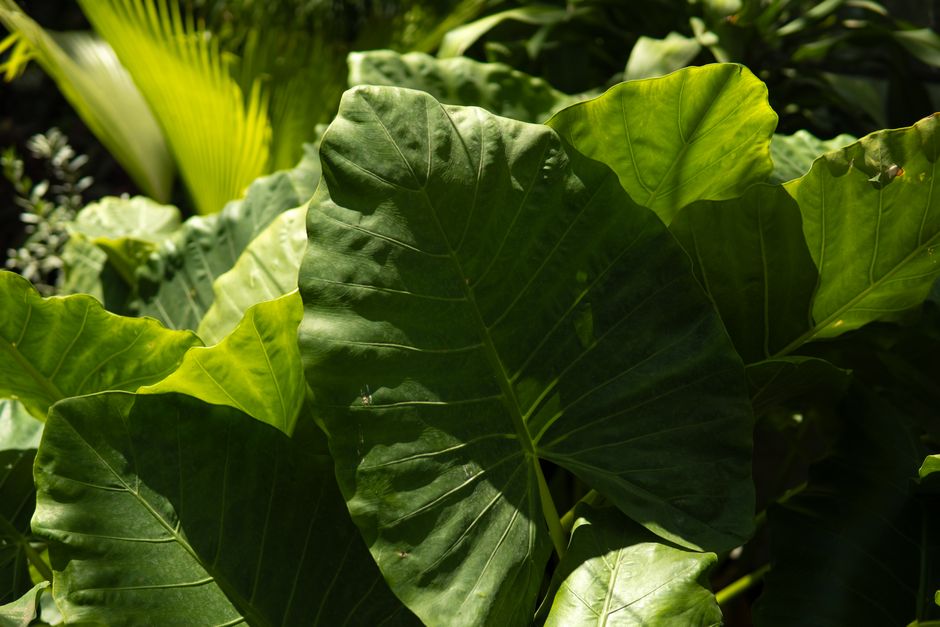
Colocasia Pharaoh’s Mask is a striking elephant ear plant with deep purple-black leaves and bright green veins that look almost painted on. It grows from a tuber and thrives in warm, humid conditions with consistent moisture. Give it bright, indirect light, keep the soil evenly damp, and protect it from temperatures below 50°F, and this plant will reward you with dramatic foliage through the growing season.
What Is Colocasia Pharaoh’s Mask?
Colocasia Pharaoh’s Mask is a hybrid elephant ear developed for its distinctive leaf coloration. The leaves are a deep burgundy to near-black, with vivid chartreuse-green veins radiating from the center. Each leaf can reach 12 to 18 inches long, and mature plants grow 3 to 4 feet tall.
Like all colocasias, it is a tropical plant native to Southeast Asia. It grows from a corm — a swollen underground stem that stores energy. In the right conditions, it grows quickly and can fill a large container or garden bed within one season.
This plant is sometimes confused with alocasias, but the two are different. Colocasia leaves point downward with the tip of the leaf facing the ground. Alocasia leaves point upward. That is the fastest way to tell them apart.
How To Grow And Care For Colocasia Pharaohs Mask
Start with a healthy tuber or an established plant from a nursery. If you have a tuber, plant it in spring after the last frost has passed. Place it with the pointed end facing up, about 2 to 3 inches deep in the soil.
Choose a location with bright, indirect light. A spot near an east-facing window or a few feet back from a south or west window works well indoors. Outdoors, morning sun with afternoon shade is ideal. Too much direct afternoon sun can scorch the dark leaves, which absorb more heat than green leaves do.
Colocasia Pharaoh’s Mask is not a low-maintenance plant when it comes to water. It wants consistently moist soil at all times. In warm weather, that may mean watering every day or two. Do not let the soil dry out completely. Some growers keep potted colocasias in a saucer with a shallow layer of water during the hottest months. This works for colocasias specifically because they are true bog plants in the wild.
Feed the plant every 2 to 4 weeks during active growth with a balanced liquid fertilizer diluted to half strength. Stop feeding in fall when growth slows. The plant does not need fertilizer during dormancy.
What Kind of Soil Does It Need?
Use a rich, well-draining potting mix that still holds moisture well. A standard potting soil amended with compost or peat moss works well. The goal is soil that stays damp but does not become waterlogged to the point of rot.
If you are planting in the ground, amend heavy clay soil with compost before planting. Colocasias tolerate wet soil better than most plants, but they still need some drainage. A location that stays soggy all winter will likely rot the corm.
Container planting gives you more control over soil conditions. Choose a pot at least 12 to 14 inches wide for a single plant. Colocasias are heavy feeders and fast growers, so a larger pot means less frequent repotting and more room for root development.





Temperature and Humidity Requirements
Colocasia Pharaoh’s Mask is a true tropical plant. It grows best when daytime temperatures stay between 70°F and 85°F. It will tolerate warmer conditions if the soil stays moist.
Temperatures below 50°F cause stress. Frost will kill the foliage and can damage the corm. If you grow your plant outdoors in a cooler climate, bring it inside before nighttime temperatures drop into the 50s.
Humidity matters more indoors than outdoors. Average household humidity is often too dry for colocasias, especially in winter. You will see brown, crispy leaf edges when the air is too dry. A room humidifier nearby helps. Grouping plants together also raises local humidity slightly. Misting the leaves provides brief relief but does not meaningfully change humidity levels.
How Often Should You Water?
Check the soil daily during the active growing season. The top inch of soil should feel moist, not dry. If it feels dry to the touch, water thoroughly until water runs from the drainage holes.
In hot summer weather, outdoor container plants may need water every day. In cooler or overcast conditions, every 2 to 3 days may be enough. The plant will tell you — leaves that droop or wilt are a sign of underwatering. Leaves that turn yellow at the edges may indicate overwatering or poor drainage.
Reduce watering significantly in fall and winter when the plant goes dormant. During dormancy, the soil should be barely moist. Many growers stop watering entirely once the leaves die back and store the corm dry.
Does It Go Dormant?
Yes. Colocasia Pharaoh’s Mask is a seasonal plant that naturally goes dormant. In tropical climates it may stay evergreen, but in most home environments it will die back in fall or winter.
When leaves yellow and die back, reduce watering gradually. Once the foliage has died completely, you have two options for storage. If growing in a container, you can move the pot to a cool, dark location and keep the soil barely moist. Or you can dig up the corm, remove excess soil, let it dry for a few days, and store it in peat moss or paper bags at temperatures around 50°F to 60°F.
In spring, replant the corm in fresh soil and resume watering. New growth typically appears within a few weeks when temperatures warm up.
Common Pests and Problems
Spider mites are the most common pest on indoor colocasias. These tiny pests thrive in dry, warm air. You will notice fine webbing on the undersides of leaves and a stippled or dusty appearance on the leaf surface. Regular misting or higher humidity helps prevent infestations. If you see them, wash the leaves with insecticidal soap.
Aphids can also appear on new growth. They cluster on stems and leaf undersides, sucking sap and excreting sticky honeydew. A strong stream of water or insecticidal soap usually controls them.
Root rot is the most serious disease risk. It happens when the corm sits in cold, waterlogged soil. The leaves turn yellow, and the plant collapses. Prevention is straightforward — never let the pot sit in standing water during dormancy, and ensure the soil has adequate drainage.
How To Propagate Colocasia Pharaohs Mask
Division is the most reliable method. When you lift the corm in fall or early spring, look for smaller offset corms attached to the main one. Gently separate these with a clean knife. Each offset needs at least one growing point to survive.
Pot each offset in moist soil and keep it warm and bright. New leaves should appear within a few weeks. Do not divide a plant while it is actively growing unless it has become severely root-bound — the stress can set back growth significantly.
Growing from seed is possible but impractical. Hybrid plants like Pharaoh’s Mask do not come true from seed, meaning the offspring will not look like the parent. Division is the only way to get identical plants.
Frequently Asked Questions
Is Colocasia Pharaoh’s Mask poisonous to pets?
Yes, all colocasias contain calcium oxalate crystals that are toxic to cats and dogs if ingested. Keep this plant out of reach of pets and contact a veterinarian immediately if you suspect your pet has chewed on it.
Can Colocasia Pharaoh’s Mask grow indoors?
Yes, it grows well indoors with bright indirect light and high humidity. Place it near a bright window away from cold drafts and heat vents, and keep the soil consistently moist.
Why are the leaves of my Colocasia turning yellow?
Yellow leaves usually mean overwatering or poor drainage, but they can also signal underwatering or natural dormancy. Check the soil moisture first and adjust your watering routine before assuming a disease is present.
How big does Colocasia Pharaoh’s Mask get?
Mature plants typically reach 3 to 4 feet tall with leaves 12 to 18 inches long. Container-grown plants may stay slightly smaller, while in-ground plants in warm climates can grow larger.
