
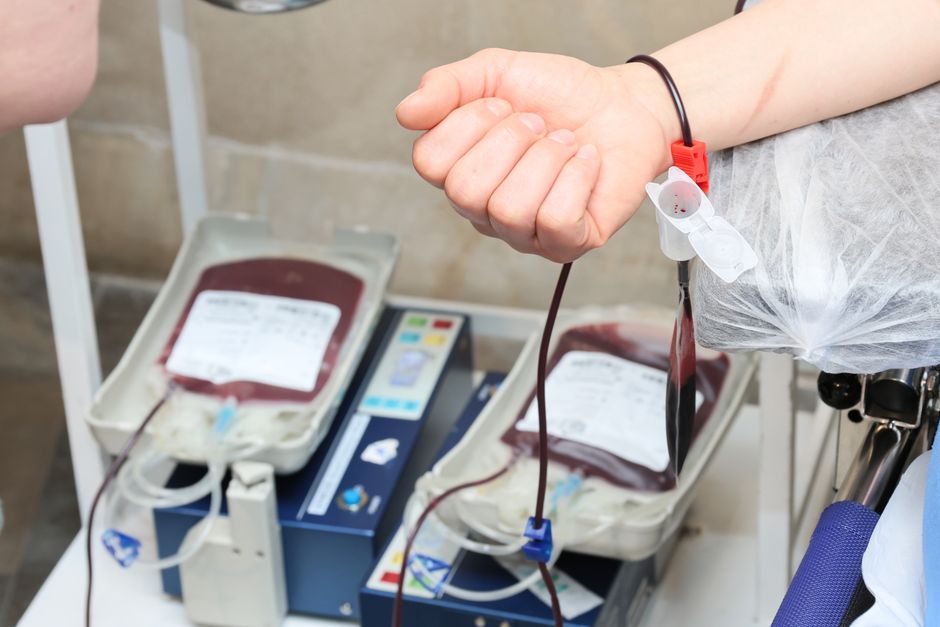
Giving platelets is one of the most safety-sensitive tasks a nurse performs. The process follows a fixed sequence: verify the order and consent, confirm the patient’s identity and blood type compatibility at the bedside, check baseline vital signs, prime the tubing with the correct filter, infuse at the ordered rate while watching for reactions, and monitor the patient throughout and after the transfusion. Each step exists because platelet transfusions carry real risks, and skipping a step can turn a routine procedure into an emergency.
Platelets differ from red blood cells in ways that change how you give them. They are stored at room temperature, they have a short shelf life, and they are usually given faster than red cells. Understanding why those differences exist makes the steps easier to remember and harder to rush.
What Do You Need to Check Before Starting a Platelet Transfusion?
Every platelet transfusion begins with verification, and the verification is not a formality. It is the step most likely to prevent a fatal error.
Start with the order. Confirm the product, the dose, and the indication. Platelets may be ordered to prevent bleeding when the count is very low or to treat active bleeding. The order should specify the rate and any premedication. If anything is unclear, clarify before you begin.
Confirm informed consent according to your facility’s policy. Then perform the bedside identity check. Two qualified staff members, or one staff member plus an electronic barcode system where available, verify:
- The patient’s full name and a second identifier such as date of birth or medical record number
- The blood bank label and the patient’s blood type
- The product type, volume, and expiration date and time
- That the label matches the order
Platelet products are not matched to the patient the same way red cells are. ABO compatibility matters for platelets, but the rules are different, and Rh status matters for some patients, particularly women of childbearing age, because platelet products can carry a small amount of red cells. Follow your blood bank’s compatibility guidance rather than assuming red cell rules apply.
Check baseline vital signs and document them. This gives you a reference point. A temperature taken before the transfusion also matters because fever can be a sign of a reaction, and you need to know whether it was already present.
How Do You Set Up the Tubing and Filter Correctly?
Platelets require a filter, but not the same one used for red cells. Standard blood administration sets contain a filter designed for red cell transfusion. Platelet products need a filter appropriate for platelets, and many facilities use a specific platelet administration set or an in-line filter designed for the product. Follow your blood bank and facility policy on which set to use.
Prime the tubing with the platelet product or with compatible fluid as your policy directs. Normal saline is compatible with platelets. Do not use lactated Ringer’s or any solution containing calcium with blood products, because calcium can cause clotting in the tubing.
Never add medications to a platelet bag. Never infuse anything else through the same line while platelets are running unless your policy specifically allows it and the line has been cleared appropriately.
Use a large-bore IV catheter appropriate to the patient’s veins. Platelets are usually given through a standard peripheral line, and a central line can be used if it is a multilumen catheter with a dedicated lumen. Confirm patency before you start. A line that infiltrates during a transfusion wastes a scarce product and puts the patient at risk.
What Is the Correct Infusion Rate for Platelets?
Platelets are typically infused faster than red blood cells, and this is one of the clearest differences between the two products. A standard adult dose of platelets is usually given over a short period, often around 15 to 30 minutes, though the exact rate depends on the order, the patient’s size, and their ability to tolerate the volume.
Start slowly for the first several minutes and stay at the bedside. Most severe transfusion reactions, including acute hemolytic reactions and severe allergic reactions, show signs early. Watching the patient during the first minutes is not optional.
If the patient is a child, has heart failure, or has a condition that makes fluid overload dangerous, the rate may need to be slower and the order should reflect that. Do not adjust the rate on your own. Clarify with the ordering provider.
Complete the transfusion within the timeframe your facility sets. Platelets do not have the same post-spike storage limits as red cells, but once a product is spiked it should be infused within the period defined by your blood bank policy. Do not let a unit sit.
What Should You Monitor During and After the Transfusion?
Monitor vital signs at the intervals your policy requires, and more often if anything changes. A common approach is to check vitals before starting, shortly after the infusion begins, at intervals during the transfusion, and after it ends. Follow your facility’s specific schedule.
Watch for the signs of a transfusion reaction:
- Fever, chills, or rigors
- Hives, itching, or flushing
- Shortness of breath or wheezing
- Drop in blood pressure or rise in heart rate
- Back pain, chest pain, or a sense of impending doom
- Dark urine or decreased urine output
If you suspect a reaction, stop the transfusion immediately, keep the IV line open with normal saline using new tubing, and notify the provider and blood bank. Recheck vitals and follow your facility’s reaction protocol. Do not restart the product unless specifically directed.
After the transfusion, continue monitoring. Some reactions, including delayed ones, can appear hours later. Document the outcome, the volume infused, and the patient’s response. A post-transfusion platelet count is often ordered to assess whether the transfusion raised the count as expected.
Why Do Platelets Sometimes Fail to Raise the Count?
A platelet transfusion does not always produce the expected rise in platelet count. When the count fails to increase adequately, it is called platelet refractoriness, and it has several causes.
One common cause is immune. The patient may have developed antibodies against human leukocyte antigens (HLA) or against platelet-specific antigens from prior transfusions or pregnancies. When that happens, the transfused platelets are cleared quickly. Blood banks can test for these antibodies and may provide HLA-matched or crossmatched platelets.
Non-immune causes are also common. Fever, infection, enlarged spleen, bleeding, and certain medications can all shorten platelet survival. Disseminated intravascular coagulation consumes platelets rapidly. Distinguishing immune from non-immune causes matters because the response differs.
This is why a post-transfusion count is useful. It tells you whether the product worked. A count that does not rise should prompt a conversation with the provider and the blood bank rather than simply repeating the transfusion.
What Are the Key Safety Points Nurses Sometimes Miss?
The most consequential errors in platelet transfusion are identity errors and delayed recognition of reactions. Both are preventable with discipline.
Do not spike the product until you are at the bedside and ready to begin. Platelets have a short shelf life and are stored at room temperature, which means bacterial contamination is a real, if uncommon, risk. Starting promptly and completing the infusion on schedule reduces that window.
Do not premedicate routinely unless ordered. Some patients receive acetaminophen or an antihistamine before transfusions, but routine premedication is not universally recommended and can mask a fever that would otherwise signal a reaction. Follow the order.
Document everything: the consent, the verification, the product identifiers, the start and stop times, the vital signs, and the patient’s response. Good documentation is part of safe care, not paperwork after the fact.
Finally, remember that platelets are a limited resource. Using them appropriately, and not transfusing when the indication is unclear, matters for the patient in front of you and for every patient who needs them next.
Frequently Asked Questions
How fast should platelets be transfused?
A standard adult dose is usually infused over roughly 15 to 30 minutes, starting slowly while the nurse stays at the bedside. The exact rate depends on the order, the patient’s size, and their ability to tolerate the volume.
Do platelets need a special filter?
Yes. Platelets require a filter appropriate for platelet products, which may differ from the standard red cell administration set. Follow your blood bank and facility policy on which set and filter to use.
What is the first thing to do if a patient reacts to platelets?
Stop the transfusion immediately, keep the IV line open with normal saline using new tubing, and notify the provider and blood bank. Then follow your facility’s transfusion reaction protocol.
Why did the platelet count not go up after transfusion?
The count may fail to rise because of immune antibodies against HLA or platelet antigens, or because of non-immune causes like fever, infection, bleeding, or an enlarged spleen. A post-transfusion count helps identify whether the product worked and should prompt a discussion with the provider and blood bank.
