
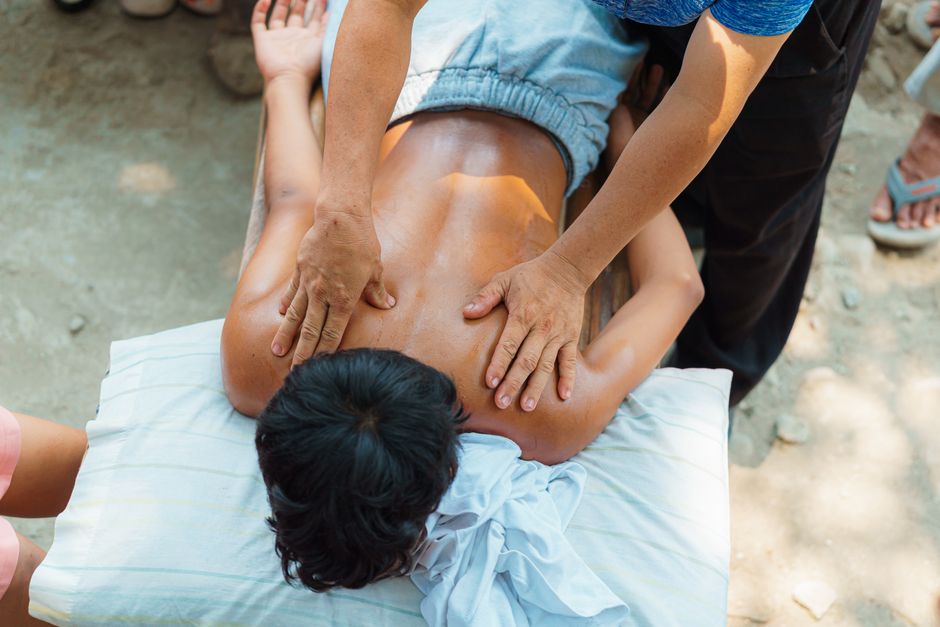
A back massage can ease tight muscles, improve blood flow, and help someone relax deeply. You do not need special training to give a good one. You need a flat surface, some lotion or oil, and a basic understanding of how the back works. This guide covers the techniques that matter, the pressure to use, and the safety rules to follow.
What Do You Need Before Starting a Back Massage?
Set up the space before you touch anyone. A comfortable environment makes the massage more effective because relaxation is partly physical and partly mental.
Use a firm, flat surface. A massage table is ideal, but a bed works if it is not too soft. A soft bed absorbs your pressure and makes it harder to reach deep muscles. A padded floor mat or a table with a pillow works well too.
Have the person lie face down. Place a pillow under their chest and another under their hips. This keeps the spine in a neutral position and prevents neck strain from turning the head for too long.
Warm lotion or massage oil in your hands before applying it. Cold oil on bare skin causes a flinch response that tightens the very muscles you are trying to relax. Coconut oil, jojoba oil, or a simple unscented lotion all work fine.
Ask about injuries first. If the person has a recent back injury, unexplained pain, numbness, or a known spinal condition, check with a doctor before massaging. Massage is not appropriate for every back problem.
How To Give A Back Massage: The Basic Strokes
Start with light, broad strokes to warm up the tissue. This is called effleurage, and it prepares the muscles for deeper work.
Place your hands flat on either side of the lower spine. Glide upward along the back toward the shoulders. Use firm, even pressure. When you reach the shoulders, slide your hands outward and glide back down the sides of the back. Repeat this for several minutes until the skin feels warm.
Keep your hands relaxed. Stiff hands create jerky movements. Let your palms and fingers mold to the shape of the back rather than pressing flat like a board.
Do not press directly on the spine. The vertebrae are bony and sensitive. Work the muscles alongside the spine instead. This is one of the most common mistakes beginners make.
Use your body weight, not just your arm muscles. Lean forward slightly to apply pressure through your palms. This reduces fatigue in your arms and gives a steadier pressure.
How Much Pressure Should You Use?
Pressure is the most common question people have about giving a back massage. The answer depends on the person receiving it.
Start light and ask for feedback. A good rule is to begin with pressure that feels pleasant, then gradually increase until the person says it feels strong but comfortable. The goal is never to cause pain.
Some people like deep pressure. Others find it uncomfortable. Communicate constantly. Ask “Is this pressure okay?” or “Do you want it firmer or lighter?” every few minutes.
Deep pressure should target muscle, not bone or organs. The kidneys sit behind the lower back muscles, and pressing hard directly over them is not safe. Stay on the muscular areas and avoid the very low back near the waistline unless you are certain of the anatomy.
If the person tenses up, holds their breath, or flinches, you are pressing too hard. Back off immediately. A massage should never feel like a struggle.





Techniques for the Upper Back and Shoulders
The upper back holds a lot of tension for most people. This area responds well to focused techniques.
Use your thumbs to make small circles along the muscles beside the shoulder blades. Work slowly. These muscles are often tight and tender, so start with light pressure and build gradually.
The trapezius muscle runs from the base of the skull across the top of the shoulders. Gently squeeze and lift this muscle between your thumb and fingers. This is called petrissage, and it helps release tension in a way that gliding strokes cannot.
For the area between the shoulder blades, use your knuckles or the heel of your hand in slow circles. Ask the person to breathe deeply. Exhaling helps muscles release.
Do not dig your elbow into the shoulder blades without asking. Some people enjoy deep elbow work, but many find it painful. Start with hands and fingers, then ask if the person wants more pressure.
Techniques for the Lower Back
The lower back requires more caution than the upper back. The muscles here are thick, but the area also contains the kidneys and the lower spine.
Work the large muscles on either side of the lower spine with slow, gliding strokes. Use the heel of your hand for broader pressure. Move in an upward direction, from the hips toward the ribs.
Use your thumbs to make small circles along the muscles beside the lower spine. Stay at least two finger-widths away from the vertebrae. This targets the erector spinae muscles without putting pressure on the spine itself.
Avoid pressing directly over the kidneys. These organs sit deep in the lower back, roughly at the level of the lowest ribs. Deep, forceful pressure in this area is not appropriate.
If the person has lower back pain that radiates into the leg or foot, stop the massage. This pattern can indicate a nerve problem such as sciatica, and massage may not be appropriate without medical guidance.
How Long Should a Back Massage Last?
A good back massage does not need to be long. Ten to fifteen minutes of focused work is enough for most people.
Longer is not automatically better. A 45-minute massage that uses poor technique is worse than a 10-minute massage done well. Quality matters more than duration.
If you are giving a full-body massage, spend about a third of the time on the back. The back is a large area with large muscles, so it benefits from more attention than smaller areas like the arms or feet.
End the massage gradually. Slow your strokes and lighten your pressure for the final minute. A sudden stop can feel jarring. Finish by placing your hands flat on the back for a few seconds, then lift them slowly.
What Should You Avoid During a Back Massage?
Several techniques and situations require clear caution.
Never massage over open wounds, rashes, sunburn, or skin infections. Massage can spread infection or worsen irritation. Skip the area entirely or postpone the massage.
Avoid massaging areas with visible swelling, redness, or warmth. These can be signs of a blood clot or inflammation. Massaging a blood clot is dangerous because it can dislodge and travel to the lungs.
Do not massage someone who has a fever, feels unwell, or has an untreated medical condition without checking with their doctor first. Massage increases circulation, which can affect how the body handles certain conditions.
Never use a heating pad during or immediately after a massage unless a doctor recommended it. Heat increases blood flow, and combining it with massage can overdo the effect on already-inflamed tissue.
Do not crack or twist the spine during a massage. That is a job for a trained professional, and even then, it is not appropriate for everyone. Your role is to work the muscles, not adjust the spine.
How To Tell If the Massage Is Working
Watch the person’s body for signs of relaxation. Breathing slows. The shoulders drop. The face softens. These are good signs.
Ask how it feels. Some people are quiet during a massage, but that does not mean it is working. Check in periodically with simple questions.
After the massage, the person should feel relaxed and loose. Some mild soreness the next day is possible, similar to what happens after exercise. Sharp pain, numbness, or tingling after a massage is not normal and should be evaluated by a doctor.
Muscle relaxation often lasts for several hours after a massage. The person should drink water afterward to help flush metabolic waste from the muscles.
When To See a Professional Instead
Home massage is wonderful for general relaxation and everyday muscle tension. Some situations call for a licensed professional.
If the person has chronic back pain that does not improve, see a doctor or physical therapist. A massage therapist can help with muscle tension, but they cannot diagnose or treat underlying conditions.
If the pain follows an accident, fall, or injury, get medical evaluation first. Massage is not the right first step for a potentially serious injury.
If the person has cancer, heart disease, or a bleeding disorder, talk to their doctor before any massage. Some conditions require modified techniques or complete avoidance of massage.
Pregnant women should check with their healthcare provider before receiving massage. Certain pressure points and positions are not recommended during pregnancy, especially in the first trimester.
Professional massage therapists complete hundreds of hours of training in anatomy, physiology, and technique. Their training allows them to work safely with conditions that a home massage cannot address.
Frequently Asked Questions
How long should a back massage last?
Ten to fifteen minutes of focused work is enough for most people. Quality of technique matters more than duration.
Is it safe to massage someone with back pain?
General muscle tension often responds well to gentle massage. If the pain is sharp, follows an injury, or radiates into the legs, stop and seek medical advice first.
Should I press directly on the spine during a back massage?
No. Press on the muscles beside the spine, not on the vertebrae themselves. The spine is bony and sensitive, and direct pressure can cause pain or injury.
What oil should I use for a back massage?
Coconut oil, jojoba oil, or unscented lotion all work well. Warm the oil in your hands first so it does not shock the skin.
