
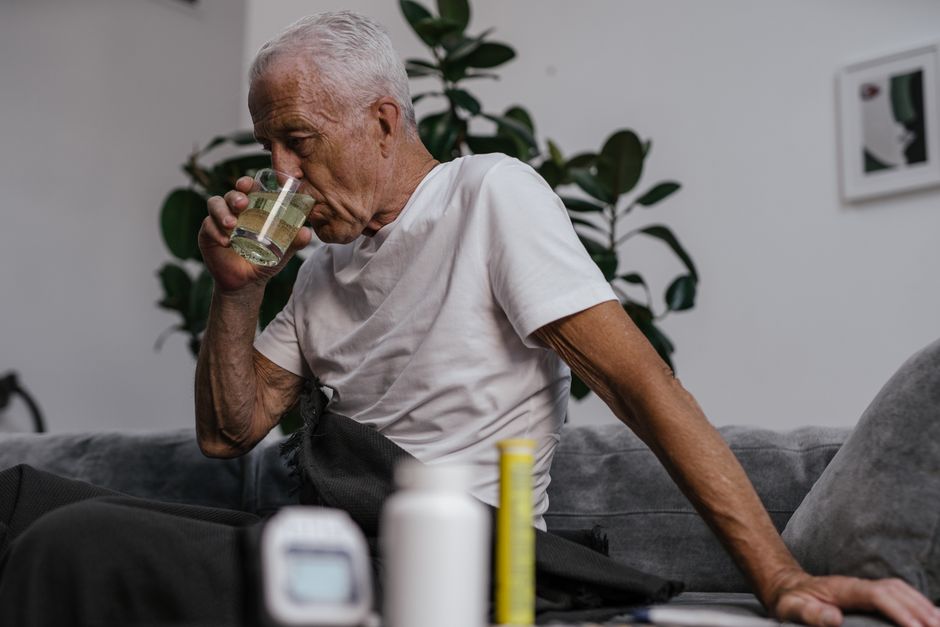
Losing your sense of taste when you’re sick is common, temporary, and usually not a sign of anything serious. For most people, taste returns on its own within one to two weeks after the illness passes. There is no proven shortcut that forces taste back faster, but there are sensible steps that support recovery and a few habits that may slow it down.
Why Does Being Sick Make Food Taste Like Nothing?
Most of what you call “taste” is actually smell. Your tongue detects a small set of basic tastes — sweet, salty, sour, bitter, and savory. Everything else, from the aroma of coffee to the flavor of garlic, comes from your nose.
When you have a cold, flu, sinus infection, or COVID-19, the lining of your nose and throat swells. That swelling blocks air from reaching the smell receptors high inside your nasal cavity. Food still touches your tongue, but without the smell signal, it registers as bland or flat. This is why a stuffy nose so often comes with dulled taste.
Sometimes the problem is more direct. Viruses can temporarily damage the taste buds themselves or the nerves that carry taste signals to the brain. In that case, the issue is true taste loss rather than smell loss. Many people can’t tell the difference, and honestly, it doesn’t change much about what you do.
One clarification worth knowing: true taste loss and smell loss are not the same thing, even though they feel identical. If you can still tell that a lemon is sour but can’t tell it’s lemon, your smell is the problem. If you can’t detect sourness at all, your taste system is involved.
How To Get Your Taste Back When You’re Sick
There’s no proven method that reliably speeds up the return of taste. What you can do is remove obstacles, support the tissue that needs to heal, and give it time. Here’s what makes sense based on how the system works.
Clear the congestion
If a blocked nose is the cause, reducing that blockage helps air reach your smell receptors. Saline nasal rinses are widely used and generally considered low risk when prepared and used correctly. Steam from a hot shower or a bowl of hot water may offer short-term relief, though the evidence for steam is not strong.
Over-the-counter decongestants can open nasal passages, but they are not a treatment for taste loss itself. They may help you breathe better while your body recovers. Follow the label, and check with a pharmacist or doctor if you take other medications or have high blood pressure.
Stay hydrated and eat what you can
When food tastes like cardboard, eating becomes a chore. That’s a real problem because your body needs energy and fluids to heal. Drink water throughout the day. If plain water tastes odd, try it cold or with a slice of lemon.
You don’t need to force down foods you normally love. Eat what you can tolerate. Texture and temperature often matter more than flavor when taste is dull. Cold or room-temperature foods tend to have stronger smells than hot ones, which can help you perceive more.
Try stronger flavors
Many people find that adding acid, salt, or heat makes food more noticeable. A squeeze of lemon, a dash of hot sauce, or extra herbs can give your brain something to work with. This doesn’t restore taste, but it can make eating less unpleasant.
Be careful with salt if you have high blood pressure or heart or kidney conditions. Talk to your doctor before increasing your intake.
Give it time
The most important factor is time. Your smell and taste receptors regenerate. The cells that detect odors are replaced roughly every few weeks in healthy people. When a virus damages them, that turnover is part of how you recover.
For most respiratory illnesses, taste and smell return within one to two weeks. Some people take longer. Recovery after COVID-19 has been studied more than most, and the pattern is similar: most people recover within a few weeks, while a smaller number take months.
Does Smell Training Actually Work?
Smell training is the most studied approach for persistent smell loss. It involves sniffing a small set of distinct scents — often rose, lemon, clove, and eucalyptus — twice a day for several weeks or months.
The evidence is strongest for smell loss after a viral infection, including COVID-19. Some studies suggest it can help, though results vary and the effect is usually modest. It is not a cure, and it does not work for everyone. But it is low risk, and many clinicians recommend it when smell loss lasts more than a couple of weeks.
Here’s how it’s typically done:
- Choose four scents that are easy to tell apart.
- Sniff each one for about 20 seconds, focusing on what you remember it smells like.
- Repeat twice a day.
- Keep going for at least several weeks before judging whether it helps.
Smell training is not the same as taste training, because no equivalent protocol exists for taste buds. But since smell drives most of what you taste, improving smell often improves how food tastes.



What Makes Taste Loss Last Longer?
Most people recover. A minority do not, at least not quickly. Several factors are linked to slower recovery.
The cause matters. A mild cold usually clears faster than a severe sinus infection or a case of COVID-19 that caused significant smell loss. Age plays a role too — smell and taste function naturally decline with age, and older adults tend to recover more slowly.
Underlying conditions can also affect recovery. Chronic sinus problems, nasal polyps, allergies, and some neurological conditions can interfere with smell and taste. If your taste hasn’t returned after several weeks, or if it disappeared without any congestion or illness, that’s worth discussing with a doctor.
Some medications can dull taste as a side effect. If you started a new medication around the time your taste changed, mention it to your prescriber. Don’t stop a medication on your own.
What Doesn’t Help (And What to Avoid)
A lot of advice online doesn’t hold up. Here’s what to be skeptical of.
There is no evidence that zinc supplements restore taste after a viral illness. Zinc has been studied for the common cold, with mixed results, but not as a taste recovery treatment. High-dose zinc can cause nausea and, over time, other problems. Some clinicians suggest zinc for taste loss, but the evidence is weak and not consistent.
Steroid nasal sprays and oral steroids are sometimes prescribed for smell loss. Results have been mixed, and oral steroids carry real risks. This is a decision for a doctor, not something to try on your own.
Home remedies like burning sugar or eating strong spices do not restore taste. They may make a meal more interesting, but they don’t fix the underlying problem.
One thing to avoid: don’t assume your taste will never come back. Most people recover. If you’re worried, that’s a reason to check in with a doctor, not to panic.
When to See a Doctor
See a doctor if your taste or smell hasn’t improved after several weeks, if it disappears without any other symptoms, or if it comes with other neurological signs like weakness, confusion, or vision changes. Those are not typical of a simple cold and need evaluation.
Also see a doctor if you have ongoing sinus pain, a persistent headache, or symptoms that keep getting worse instead of better.
Frequently Asked Questions
How long does it take for taste to come back after being sick?
For most people, taste and smell return within one to two weeks after a cold, flu, or similar illness. Some people take longer, especially after COVID-19 or a severe sinus infection.
Does smell training really help get your taste back?
Some studies suggest smell training can help with smell loss after a viral infection, though results vary and the effect is usually modest. It is low risk and often recommended when smell loss lasts more than a couple of weeks.
Can zinc help you get your taste back faster?
There is no consistent evidence that zinc restores taste after a viral illness. Some clinicians suggest it, but study results are mixed, and high doses can cause side effects.
When should I worry about losing my sense of taste?
See a doctor if taste or smell hasn’t improved after several weeks, or if it appears without other symptoms or with neurological signs like weakness or confusion. Most cases are temporary, but persistent loss deserves evaluation.
