
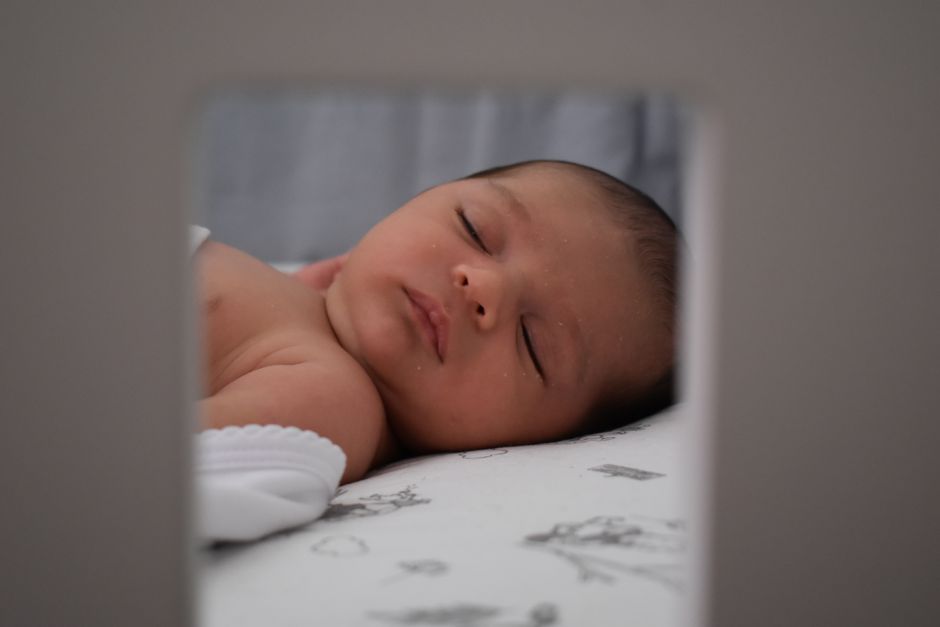
Getting a baby to sleep in a crib comes down to two things: making the sleep space safe, and helping your baby get used to it. Safe sleep means following the guidelines that have been shown to reduce the risk of sleep-related infant death. That means a firm, flat mattress with a fitted sheet, no loose bedding, and your baby on their back for every sleep. Getting your baby used to the crib is a separate skill, and it takes time and consistency.
The most important safety advice is simple. The American Academy of Pediatrics recommends babies sleep on their backs, on a firm, flat surface, in the same room as parents but on a separate surface, for at least the first six months of life. This one practice has strong evidence behind it. The crib itself is not the hard part. The hard part is helping a baby who prefers your arms learn to settle on a flat mattress.
How To Get Your Baby To Sleep In A Crib Safe Tips?
The crib should be bare. A firm mattress with a tightly fitted sheet is all your baby needs. No pillows, no blankets, no stuffed animals, no bumper pads, and no sleep positioners. Each of these has been linked to suffocation risk, and none of them are needed. The crib bars should be no more than 2 3/8 inches apart so a baby’s head cannot slip through. Check that the crib meets current safety standards and has not been recalled.
Place your baby on their back every time they sleep, including naps. Once your baby can roll both ways on their own, you do not need to keep flipping them back if they roll during sleep. But you should still put them down on their back to start.
Keep the room at a comfortable temperature and dress your baby in a sleep sack or fitted sleep clothing instead of a blanket. A general guide is to dress your baby in one more layer than you would wear to be comfortable. Overheating is a known risk factor for sleep-related infant death, so avoid heavy bundling and hats during sleep.
The crib should be in your room, near your bed, for at least the first six months. The evidence for room-sharing without bed-sharing is strong. Bed-sharing, especially on a soft surface or with pillows and blankets, carries real risk, particularly for babies under four months.
Why Does My Baby Hate Sleeping In The Crib?
Your baby is not being difficult. Newborns are wired to want closeness. For most of human history, babies slept against a caregiver’s body. A flat, still, cool mattress is a very different experience from the warmth and movement of your arms. This is normal biology, not a sign you are doing something wrong.
Some babies also startle easily. The Moro reflex, that sudden arm-flinging motion, is present from birth and usually fades by around four to six months. That reflex can wake a baby the moment you set them down. It is one reason the “drowsy but awake” approach does not work for every baby early on.
There is also a practical issue. A mattress that feels fine to you can feel cold and unfamiliar to a baby who was just in a warm pair of arms. Warming the sheet slightly before you lay your baby down, or placing a hand on their chest for a minute after setting them down, can help some babies settle. These are common practices, not proven methods. The evidence for any single settling trick is limited.
How Do I Help My Baby Get Used To The Crib?
Start with daytime naps. Babies are often more willing to try a new sleep space during the day when they are not overtired. Put your baby down in the crib for the first nap of the day when they are calm and sleepy, not already asleep in your arms.
Use a consistent wind-down routine before sleep. A short sequence, like a feed, a diaper change, a song, and dim lights, signals to your baby that sleep is coming. The routine itself does not need to be long. What matters is that it happens in the same order each time.
Try putting your baby down drowsy but awake some of the time. This is often recommended because it gives babies a chance to practice falling asleep on their own. It does not work for every baby, and it is not a requirement. Many babies need to be fully asleep before being laid down, especially in the early months.
If your baby wakes the moment you set them down, try a slower transfer. Lower them feet first, then bottom, then head. Keep your hands on them for a moment. Some parents find that a gentle rocking motion while lowering helps. Again, these are practical strategies, not proven interventions.





What If My Baby Only Sleeps When Held?
This is common, especially in the first few months. It does not mean you are creating a bad habit. Young babies do not form habits the way older children do. They are responding to what feels safe.
That said, holding your baby for every sleep is not sustainable for most parents, and it carries its own risks if you fall asleep while holding them. If you are exhausted and worried about falling asleep with your baby in your arms, it is safer to put them in the crib and step away for a moment than to risk a fall or an unsafe sleep situation.
You can work toward the crib gradually. Try one nap a day in the crib at first. If your baby protests, comfort them and try again later. The goal is not to force it. It is to give your baby repeated, calm exposure to the crib so it starts to feel familiar.
When Should I Stop Worrying About Safe Sleep?
The safe sleep guidelines apply for the first year of life. After your baby’s first birthday, the risk of sleep-related death drops significantly, and the rules loosen. You still want a safe sleep environment, but you no longer need to be as strict about a bare crib or back-sleeping.
Some parents relax the rules earlier, once their baby can roll. That is a personal decision, but the official guidance is to follow safe sleep practices through the first year. The evidence for the first year is strong. The evidence for relaxing earlier is not.
If your baby has reflux, breathing problems, or any medical condition, talk to your pediatrician about sleep positioning. Do not change sleep position on your own based on what you have read online.
What About Sleep Training And The Crib?
Sleep training is a broad term. It can mean anything from gentle check-ins to letting a baby cry for longer stretches. The evidence on sleep training is mixed. Some studies suggest it can improve sleep for parents and babies in the short term. The long-term effects are less clear, and the research has limits.
What matters for the crib is consistency. Whatever approach you choose, the crib should be the place where sleep happens. If you sometimes use the crib and sometimes use a swing, a car seat, or your bed, your baby gets mixed signals. That does not mean you can never use other sleep surfaces. It means the crib should be the default.
One clarification worth knowing: a car seat, swing, or bouncer is not a safe sleep surface for unsupervised sleep. These are fine for short periods when your baby is awake and you are watching. They are not a substitute for a crib.
What Should I Do If My Baby Keeps Waking In The Crib?
Frequent waking is normal in the first year. Babies wake often, and many need help getting back to sleep. The crib is not the problem. Night waking is part of normal infant sleep development.
Check the basics first. Is your baby hungry? Too warm or too cold? Is the room dark enough? Is there a sound or light waking them? Sometimes a small change, like a white noise machine or heavier curtains, makes a difference. The evidence for white noise is limited, but many parents find it helpful, and it is generally considered safe at a low volume.
If your baby is waking because they are used to being fed or held to sleep, you can gradually change that association. Try feeding a little earlier in the bedtime routine so your baby does not fall asleep at the breast or bottle. Then put them down drowsy. This takes time and does not work for every baby.
If your baby is older than six months and still waking many times a night, or if you are worried about their sleep, talk to your pediatrician. There can be medical reasons, like reflux or sleep apnea, that need attention.
Frequently Asked Questions
Can I put my baby in a crib with a blanket?
No. Blankets, pillows, and loose bedding increase the risk of suffocation and are not recommended in a crib during the first year. Use a sleep sack or fitted sleep clothing instead.
How long should my baby sleep in my room?
The American Academy of Pediatrics recommends room-sharing for at least the first six months, and ideally up to one year. Room-sharing means your baby sleeps on a separate surface near your bed, not in your bed.
Is it safe to let my baby cry in the crib?
Crying is not dangerous, and brief periods of fussing are normal. The evidence on sleep training is mixed, so the approach you choose should fit your family and your baby. If you are unsure, talk to your pediatrician.
What if my baby rolls onto their stomach in the crib?
Once your baby can roll both ways on their own, it is generally safe to leave them in the position they choose during sleep. You should still place them on their back to start.
