
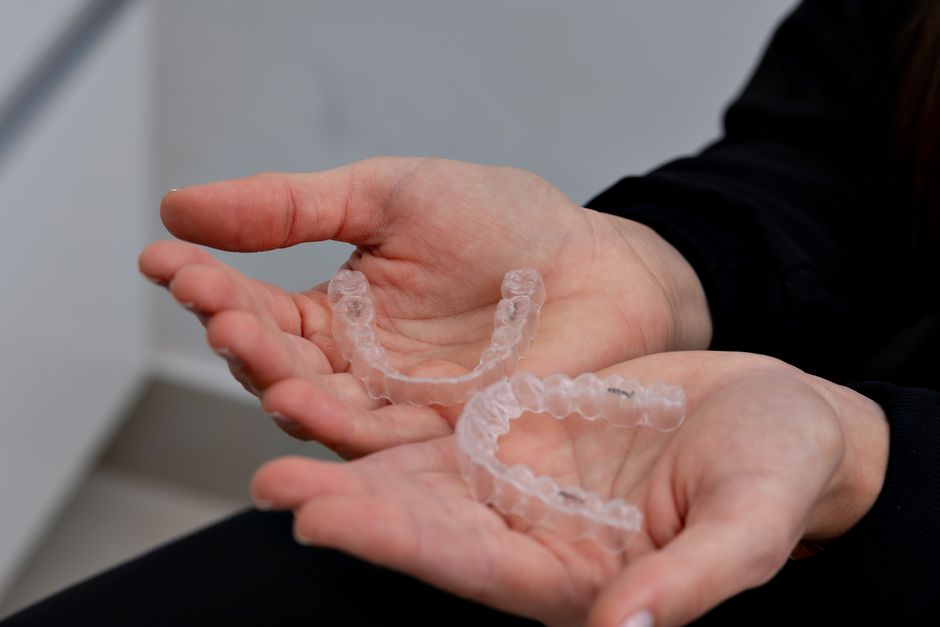
Getting used to Invisalign during the first week is mostly about managing three things: soreness, extra saliva, and the new habit of removing and cleaning your aligners. Most people find the first three to five days are the hardest, and that the aligners start to feel normal within one to two weeks. The discomfort is temporary, and there are practical steps that make the adjustment easier.
What Actually Happens to Your Teeth During the First Week?
Invisalign works by applying continuous, gentle force to move teeth. Each set of aligners is shaped slightly differently from the last, and that shape puts pressure on specific teeth. The pressure is what triggers the biological process of tooth movement.
When force is applied to a tooth, the periodontal ligament — the thin layer of tissue between the tooth root and the bone — gets compressed on one side and stretched on the other. Cells called osteoclasts break down bone on the compressed side, while osteoblasts build new bone on the stretched side. This is the same process that happens with traditional braces. It is normal, and it is supposed to happen.
What you feel in the first week is the result of this process getting started. Teeth may ache, feel loose, or be tender when you bite down. This is not a sign that something is wrong. It is a sign the aligners are doing their job.
One thing that surprises people: the soreness is often worst on day two or three, not day one. That delay is normal and does not mean the aligners have stopped working.
How Can I Manage Soreness and Pressure in the First Few Days?
Soreness during the first week is expected and usually manageable without medication. If your orthodontist or dentist has approved a pain reliever, an over-the-counter option may help. Ask before taking anything, especially if you have other health conditions or take prescription medications.
Some clinicians suggest avoiding aspirin for aligner-related discomfort because it can affect blood clotting, though the evidence for this specific concern with Invisalign is not strong. Acetaminophen is often the preferred option among dental professionals for orthodontic pain, but this is a general practice pattern rather than a firm rule. Follow whatever your provider recommends.
Practical steps that help:
- Put in new aligners at night, right before bed. You will sleep through the first few hours of pressure.
- Use the chewies your provider gives you. These are small soft devices you bite on to seat the aligners fully. They also help distract from the soreness.
- Stick to soft foods for the first two or three days: yogurt, eggs, mashed potatoes, smoothies, soup.
- Avoid very cold or very hot drinks if your teeth feel sensitive.
- Rinse with warm salt water if your gums feel irritated.
If the pain is sharp rather than a dull ache, or if it lasts beyond the first week without improving, call your provider. That is not typical.
Why Do I Have So Much Saliva and a Lisp?
Increased saliva is one of the most common complaints in the first week. Your mouth treats the aligner as a foreign object and produces more saliva in response. This usually settles within a few days to a week as your mouth adapts.
A slight lisp or change in speech is also normal. The aligner adds a thin layer of plastic behind your teeth, which changes how your tongue makes certain sounds — particularly “s” and “th.” Most people adjust within a week or two. Reading aloud for a few minutes a day can speed up the adjustment.
If you have a presentation or important meeting in the first few days, you might notice the lisp more. It is usually far less noticeable to others than it feels to you.





How Do I Handle Eating, Drinking, and Cleaning?
Aligners must come out for anything other than water. That includes coffee, tea, juice, and snacks. Hot drinks can warp the plastic. Sugary or acidic drinks trapped under the aligner can increase the risk of tooth decay.
This means your eating habits change in the first week. Many people find they snack less because removing and cleaning the aligners feels like a hassle. That is a common experience and often fades as you get faster at it.
Cleaning routine that works:
- Rinse the aligners every time you take them out. Do not let saliva dry on them.
- Brush and floss your teeth before putting aligners back in. Trapping food or plaque under an aligner for hours is a real risk factor for cavities.
- Clean the aligners with lukewarm water and a soft toothbrush. Hot water can distort them.
- Use the cleaning crystals or tablets your provider recommends if you want extra cleaning. Plain soap and water is also acceptable.
Do not use denture cleaner unless your provider says it is fine. Some products can scratch or cloud the plastic.
How Many Hours a Day Do I Need to Wear Them?
Invisalign aligners are generally worn 20 to 22 hours a day. That leaves about two to four hours for eating, drinking, and cleaning. This is the standard recommendation from the manufacturer and is widely followed in clinical practice.
Missing hours does not just slow things down. It can cause the aligners to not fit properly, which may mean going back a set or needing a new scan. In the first week, it is worth being strict about wear time. Once the habit is built, it becomes automatic.
A useful trick: set a timer or use the Invisalign app if your provider recommends it. Tracking wear time in the first week helps you build the habit faster.
What Should I Avoid in the First Week?
Certain habits make the first week harder or risk damage to the aligners.
- Do not smoke or vape with aligners in. Heat and chemicals can stain and warp them.
- Do not chew gum with aligners in. It can stick and distort the plastic.
- Do not use hot water to clean them.
- Do not leave them out for long stretches. Even a few hours can let teeth shift back slightly.
- Do not ignore a sharp edge or rough spot. Your provider can smooth it or give you a new set.
If you play contact sports, ask your provider about a mouthguard. Standard mouthguards do not fit over aligners well, and custom options exist.
When Does It Start to Feel Normal?
Most people report that the aligners feel noticeably more comfortable by the end of the first week. The soreness fades, saliva production drops, and speech returns to normal. By the second or third set of aligners, many people barely notice them during the day.
Each new aligner set can bring a mild return of pressure for a day or two. That is expected. It usually is not as intense as the first set.
If after two weeks you are still in significant pain, still have a pronounced lisp, or the aligners do not seem to fit well, contact your provider. Those are not typical and may mean the aligners need adjustment.
Frequently Asked Questions
How long does it take to get used to Invisalign?
Most people feel comfortable within one to two weeks. The first three to five days are usually the hardest.
Is it normal for Invisalign to hurt the first week?
Yes. Mild soreness and pressure are expected as teeth begin to move. Sharp pain or pain lasting beyond the first week is not typical and should be checked by your provider.
Can I drink coffee with Invisalign in?
No. Aligners should be removed for anything other than water. Hot coffee can warp the plastic, and sugary or acidic drinks trapped under the aligner raise the risk of tooth decay.
How do I stop lisping with Invisalign?
Practice reading aloud for a few minutes each day. Most people adjust within one to two weeks as the tongue adapts to the aligner’s thickness.
