
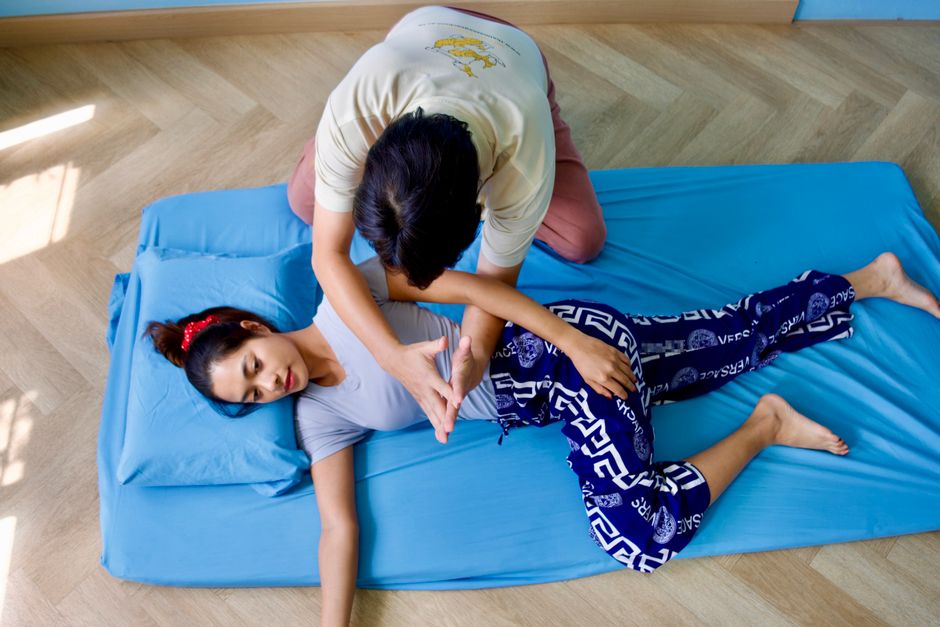
Getting up from the floor safely comes down to one principle: move your center of gravity over your feet before you try to stand. The safest method is to roll onto your side, push up onto hands and knees, then bring one foot forward and use your hands and legs together to rise. Rushing this — or pulling yourself straight up from your back — puts unnecessary strain on your knees, hips, and lower back.
For most healthy adults, getting up from the floor is simple and automatic. For people with knee pain, balance problems, arthritis, or those recovering from surgery, it’s a skill worth practicing deliberately. Falls and injuries during the process of getting up are more common than many people realize, especially in older adults.
What follows is a step-by-step breakdown of safe technique, plus what to do if you’re on the floor after a fall and can’t get up right away.
Why Does Getting Up From the Floor Matter More as You Age?
The ability to get up from the floor without help is a meaningful measure of physical function. Clinicians sometimes use it as part of assessing mobility and fall risk in older adults.
Here’s why it matters. When you’re on the floor, your muscles, joints, and balance system all have to work together to bring you upright. If any of those systems are compromised — by arthritis, muscle weakness, neuropathy, or a prior injury — the process becomes harder and riskier.
Difficulty getting up from the floor is also associated with a higher risk of falls. That’s partly because the same factors that make rising difficult — weak leg muscles, poor balance, stiff joints — also make falls more likely in the first place. It becomes a cycle: a fall leads to fear of falling, which leads to less movement, which leads to weaker muscles, which makes both falling and getting up harder.
Practicing safe floor-to-standing technique can help break that cycle. It builds confidence and keeps the movement pattern familiar.
What Is the Safest Step-by-Step Way To Get Up From the Floor?
The safest approach uses your whole body, not just your legs. It distributes effort across your arms, hips, and legs, and keeps your spine in a neutral position throughout.
Here is the sequence for getting up from lying on your back:
- Roll onto your side. Bend your knees and turn your head in the direction you’re rolling. Keep your movements slow. This protects your back and lets you use your arms more effectively.
- Push up onto hands and knees. Use your top arm to push your upper body up while your bottom arm supports you. You’ll end up on all fours.
- Bring one foot forward. Slide one knee forward and plant that foot flat on the floor. You’re now in a half-kneeling position — one foot forward, one knee down.
- Place your hands on your front thigh. Both hands rest on the thigh of the forward leg. This gives you a stable base to push from.
- Push up to standing. Lean your weight forward over your front foot and push through that leg to stand. Use your hands on your thigh for support as needed.
- Steady yourself. Once upright, pause and find your balance before walking. Hold onto a stable surface if one is nearby.
The key is the half-kneeling position. It’s the transition point where most injuries happen if people try to skip it and go straight from all fours to standing. That shortcut puts a sudden load on the knees and lower back.
How Do You Get Up From the Floor If You Have Knee Pain?
Knee pain changes the equation. Kneeling directly on a painful knee is uncomfortable and can make you hesitant, which increases fall risk during the movement.
One option is to use a sturdy chair or firm surface as an anchor. Sit on the edge of the chair from the floor, then push up from there. This removes the kneeling phase entirely.
Another approach is to keep more weight on your arms during the push-up phase. Place both hands on a stable surface — a chair seat, a low step, or the edge of a bed — and push up from a seated or half-kneeling position with your arms doing more of the work.
For people with significant knee arthritis, some physical therapists recommend practicing the movement on a padded surface first, and using knee pads if kneeling is part of the technique. The goal is to find a version you can do reliably, not to force a technique that causes pain.
If knee pain is severe enough that you cannot get up from the floor without help, that’s worth discussing with a doctor or physical therapist. It may indicate a level of joint or muscle impairment that needs assessment.
What Should You Do If You Fall and Can’t Get Up?
This is a serious situation and one that older adults in particular should plan for in advance.
If you fall and cannot get up, the first step is to avoid further injury. Don’t keep trying to force yourself up if it isn’t working. Repeated failed attempts can cause muscle strain or worse.
If you have a phone within reach, call for help. If you don’t, try to get the attention of someone nearby — call out, or if you can safely reach an object, tap it against a wall or floor to make noise.
If you’re not injured and the floor is safe, try to get to a more comfortable position while you wait for help. Rolling onto your side and staying warm is better than lying flat on your back for an extended period.
Prolonged time on the floor carries real risks, especially for older adults. These include pressure injuries, dehydration, and hypothermia. That’s why having a plan — a phone within reach, a medical alert device, or a trusted person to check in regularly — matters for anyone at elevated fall risk.
After any fall where you couldn’t get up, see a doctor. Even if you feel fine, a fall that leaves you stranded may point to an underlying issue — low blood pressure on standing, a balance disorder, a medication side effect — that needs evaluation.
Can You Practice Getting Up From the Floor Safely?
Yes, and for many people it’s worth doing. Practicing the movement on a padded surface, with a sturdy chair nearby, builds both strength and confidence.
The practice itself is simple. Start from a seated position on the floor with your back against a wall or a piece of furniture. Work through the sequence slowly. Repeat it a few times. As it becomes easier, you can practice from lying down.
This kind of practice is a form of functional training. It uses the same muscles and movement patterns you’d need in a real fall situation. Some physical therapists use floor-to-stand practice as part of fall prevention programs for older adults, though the evidence on how much it reduces actual fall injuries is still developing.
What is well established is that leg strength and balance training reduce fall risk in older adults. Practicing getting up from the floor is one way to work on both.
What Makes Getting Up From the Floor Harder Than It Should Be?
Several factors can make the movement harder. Some are temporary. Others point to something worth investigating.
Muscle weakness in the legs, hips, and core is the most common reason. If your thighs and glutes can’t generate enough force to lift you from a half-kneeling position, the movement becomes a struggle.
Balance problems make the transition from kneeling to standing feel unstable. This can come from inner ear issues, neuropathy in the feet, vision problems, or medication side effects.
Joint stiffness or pain — particularly in the knees, hips, and lower back — limits how far you can bend and how much weight you can put through a joint.
Being overweight increases the load your muscles need to move. That doesn’t mean getting up is impossible, but it may require more strength and a modified technique.
Fear of falling is underappreciated. People who have fallen before often tense up during the movement, which makes it harder and less stable. Relaxed, practiced movement is safer than tense, hesitant movement.
If getting up from the floor has become noticeably harder over time, that’s a signal worth paying attention to. It may reflect changes in strength, balance, or joint health that a clinician can assess.
When Should You Ask for Help With Floor-to-Stand Technique?
If you’ve fallen more than once in the past year, or if you’ve had a fall where you couldn’t get up without help, talk to a doctor. These are recognized markers of elevated fall risk and warrant a proper assessment.
A physical therapist can evaluate your strength, balance, and movement patterns and teach you a technique matched to your specific limitations. Some clinicians recommend this for anyone who has had a fall or who feels unsteady getting up from the floor.
Occupational therapists can also assess your home for fall hazards and recommend equipment — grab bars, raised seating, medical alert devices — that makes both preventing falls and getting up after one safer.
There’s no single technique that works for everyone. The steps above are a starting point. A clinician who can see how you move can tailor the approach to your body.
Frequently Asked Questions
What is the safest way to get up from the floor?
Roll onto your side, push up onto hands and knees, bring one foot forward into a half-kneeling position, then push up to standing using your hands on your front thigh for support. This sequence distributes effort across your arms and legs and keeps your spine neutral.
How do elderly people get up from the floor safely?
The same sequence works, but a sturdy chair or nearby surface should be used as an anchor whenever possible. Practicing the movement regularly with support nearby builds strength and confidence, and anyone who has fallen and couldn’t get up should be assessed by a doctor.
Is it bad to get up from the floor quickly?
Moving too fast increases the risk of losing balance mid-movement and can strain the knees and lower back. Slow, controlled movement through each phase is safer than rushing to stand.
What should I do if I fall and can’t get up?
Stop trying to force yourself up, call for help if you have a phone within reach, and try to get attention from someone nearby. If you’re not injured, roll onto your side to stay comfortable while you wait, and see a doctor afterward.
