
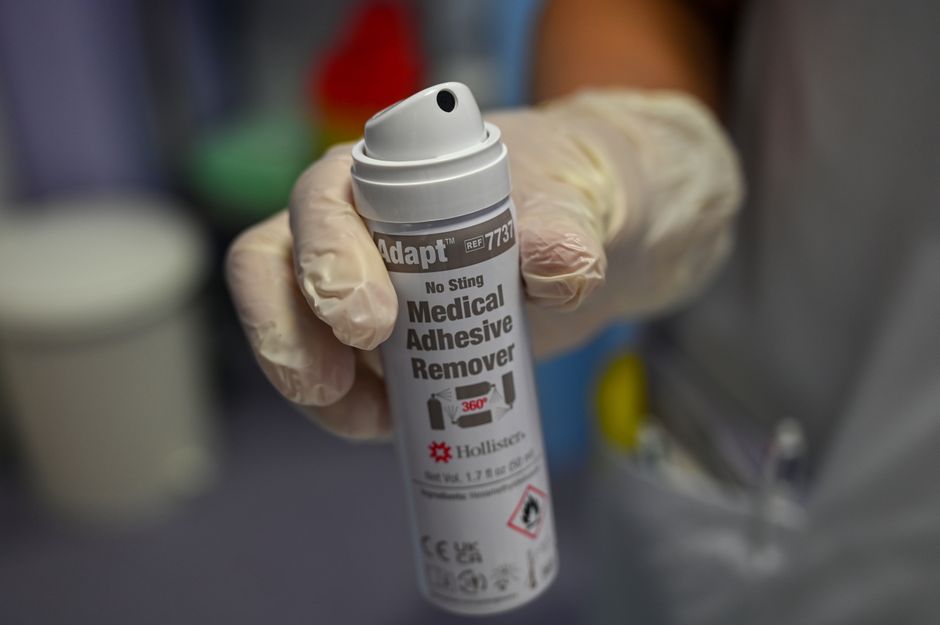
Spray adhesive bonds fast and holds tight, which is exactly what makes it useful — and exactly what makes it frustrating when it lands on your fingers instead of your project. The safest way to get spray adhesive off skin is to let the adhesive dry completely, then soften it with warm soapy water or a small amount of cooking oil and peel it away gently. Never use acetone, paint thinner, or other harsh solvents on your skin, and never pull at adhesive that is still wet and tacky. Most water-resistant spray adhesives come off with oil or warm water alone.
What Is Spray Adhesive and Why Does It Stick So Well?
Spray adhesive is a contact adhesive delivered as an aerosol mist. The propellant carries the glue out of the can as fine droplets, and those droplets land on your skin, your project, and sometimes the floor.
Most spray adhesives fall into two chemical families. Solvent-based formulas use organic solvents as the carrier. Water-based formulas use water. Both rely on polymers — often synthetic rubber or acrylic compounds — to create the bond.
Here is the part that explains why it holds on so well. Contact adhesives are designed to stick to themselves. When two coated surfaces touch, the polymer chains interlock and form a strong bond almost instantly. Your skin has natural oils, tiny ridges, and hair follicles that give the adhesive plenty of surface to grab onto. That combination of a self-bonding polymer and a textured surface is why spray adhesive can feel almost welded to your fingers.
Water-based formulas are generally easier to remove because they stay water-soluble until fully cured. Solvent-based formulas cure faster and resist water, which makes them harder to remove once dry. Neither type requires harsh chemicals to get off skin.
How To Get Spray Adhesive Off Skin Safely: Step by Step
The method depends on whether the adhesive is still wet or already dry. Check the tackiness first before you do anything else.
If the adhesive is still wet
- Blot — do not wipe. Wiping spreads the adhesive and pushes it into your skin.
- Use a clean cloth or paper towel and press gently to lift the excess.
- Wash with warm water and mild soap. Rub your hands together to work up lather.
- Repeat if needed. Most wet adhesive comes off in one or two washes.
If the adhesive is dry
- Soak your hands in warm soapy water for several minutes to soften the film.
- Rub the adhesive with your fingertips or a soft cloth. The edges should start to lift.
- If water alone does not work, apply a small amount of cooking oil, mineral oil, or petroleum jelly.
- Massage the oil into the adhesive for a minute or two, then peel the softened film away.
- Wash with soap and warm water to remove the oil afterward.
The oil method works because most adhesive polymers are oil-soluble even when they resist water. The oil works its way under the film and breaks the bond between the adhesive and your skin. It takes a few minutes, so patience matters more than force.
If a thin residue remains after the main film comes off, a second round of oil or warm soapy water usually clears it. Repeated gentle cycles work better than one aggressive attempt.
What You Should Never Use on Skin
Solvents that dissolve adhesive quickly also dissolve the oils your skin needs to stay intact. That is the core problem with the aggressive methods people find online.
Avoid these on skin:
- Acetone and nail polish remover
- Paint thinner, mineral spirits, and turpentine
- Gasoline and lighter fluid
- Adhesive removers and industrial solvents sold for surfaces, not skin
- Rubbing alcohol in large amounts or on broken skin
These chemicals strip the skin’s protective barrier. That can cause redness, burning, cracking, and in some cases a chemical burn. Acetone and petroleum distillates are also flammable, and using them near the project you just sprayed adds a real fire risk.
Some people reach for alcohol because it is a common household solvent. Small amounts of isopropyl alcohol can help loosen some adhesive residue, but it dries out skin quickly and should not be poured or scrubbed over a large area. If you try it, use a small amount on a cotton ball and wash your hands right after. It is not necessary for most spray adhesives.



Does It Matter Which Spray Adhesive You Used?
Yes, but less than you might think. The removal method is nearly the same for most products. What changes is how stubborn the adhesive is.
| Adhesive Type | Water Removal | Oil Removal | Notes |
|---|---|---|---|
| Water-based | Works well, especially before fully cured | Works | Easiest to remove overall |
| Solvent-based | Limited once dry | Works well | Cures fast and resists water |
| High-strength permanent | Limited | Works, may need repeats | Allow more soaking time |
| Repositionable | Works well | Works | Designed to release and re-stick |
Check the product label for the manufacturer’s own removal guidance. Many brands publish specific instructions, and following those is the most reliable approach. If the label says to use a particular solvent, that guidance is usually written for hard surfaces, not skin — so treat it as a starting point for the surface, not your hands.
When To Get Medical Help
Most spray adhesive on skin is a nuisance, not an emergency. Certain situations are different.
Seek medical care if:
- The adhesive is bonded to skin that cannot be separated, such as fingers stuck together or eyelids stuck shut
- You have an allergic reaction — swelling, spreading rash, or hives
- Skin is blistered, burned, or broken
- Adhesive got into an eye
- You inhaled a large amount of spray in a closed space and feel dizzy, nauseated, or short of breath
Do not force stuck skin apart. Pulling can tear the skin. A clinician can use appropriate medical-grade removal methods safely.
If adhesive gets in your eye, flush with clean water and get medical attention. Do not try to peel it off the eye yourself.
If you have swallowed spray adhesive or inhaled a significant amount, contact Poison Control right away. In the US, the Poison Help line is 1-800-222-1222, available 24 hours a day.
How To Prevent Skin Contact Next Time
Prevention is simpler than removal. A few habits keep most of the adhesive off your hands.
- Wear disposable nitrile gloves. Latex and vinyl do not resist solvents as well.
- Spray in a well-ventilated area, away from your body.
- Hold the can at the distance the label recommends to reduce overspray.
- Cover nearby surfaces with drop cloths or paper.
- Keep a container of warm soapy water nearby so you can wash promptly if you do get sprayed.
Washing your hands soon after contact makes removal much easier. Adhesive that has been curing on skin for hours is harder to remove than adhesive you address within a few minutes.
Does Vinegar or Other Home Remedies Work?
Some people report success with white vinegar, and it is worth understanding why it might help in some cases.
Vinegar is mildly acidic. It can soften some water-based adhesives and loosen the surface layer of a film. For light residue, a vinegar soak followed by gentle rubbing may help. For a fully cured solvent-based adhesive, vinegar is unlikely to do much on its own.
Other remedies people try — butter, mayonnaise, peanut butter — work on the same principle as cooking oil. The fat content loosens the adhesive. They are not harmful, but they are messier than plain oil and no more effective.
There is no evidence that any home remedy removes spray adhesive faster than warm soapy water and a little oil. The oil-and-water approach is the standard for a reason: it works without damaging skin.
Does Removing Spray Adhesive Damage Your Skin?
Gentle removal does not damage skin. Aggressive removal can.
Skin has an outer layer called the stratum corneum that holds in moisture and blocks irritants. Solvents, harsh scrubbing, and pulling at adhesive all disrupt that layer. The result is dry, cracked, red skin that stings and takes days to recover.
If your skin is irritated after removal, wash with mild soap, pat dry, and apply a plain moisturizer. Avoid alcohol-based products and exfoliants until the skin settles. If irritation spreads or does not improve within a few days, see a clinician.
People with eczema, psoriasis, or sensitive skin should be especially careful. Their skin barrier is already compromised, and solvents or heavy rubbing can trigger a flare.
Frequently Asked Questions
Can I use acetone to remove spray adhesive from my skin?
No. Acetone strips the skin’s protective oils and can cause burning, cracking, and irritation. Use warm soapy water or cooking oil instead.
How long does it take to get spray adhesive off skin?
Most water-based adhesive comes off in a few minutes with warm soapy water. Cured solvent-based adhesive may take several minutes of soaking in oil or warm water before it peels away.
What if my fingers are stuck together with spray adhesive?
Do not pull them apart, because that can tear the skin. Soak your hands in warm soapy water or apply oil and wait for the adhesive to loosen, and seek medical care if it does not release.
Is spray adhesive dangerous if it gets on my skin?
Brief skin contact is usually not dangerous for most people. The main risks are irritation from harsh removal methods, allergic reactions, and adhesive bonding skin together.
