
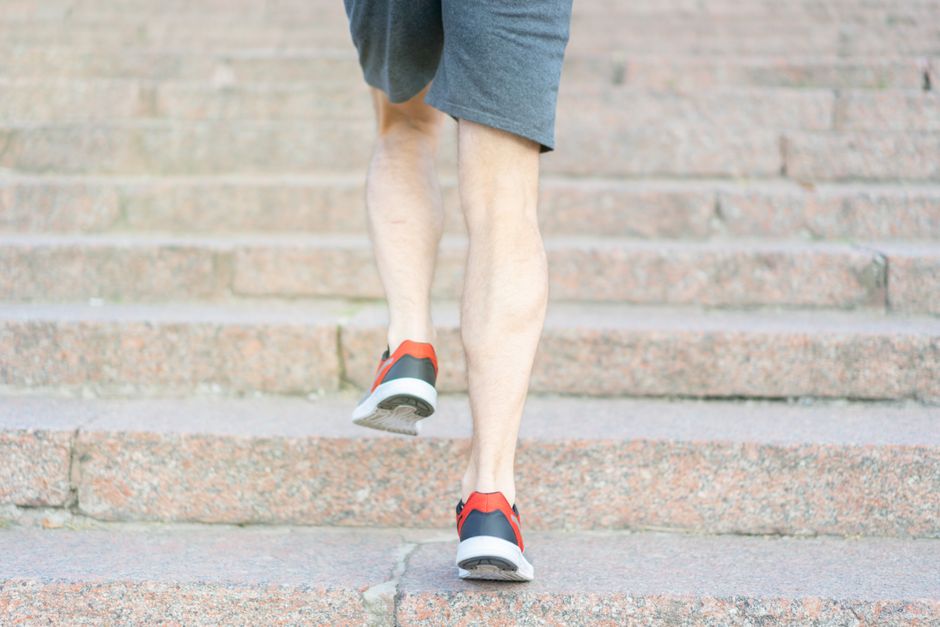
You cannot train your way to visible abs without lowering your body fat first. The muscles already exist in almost everyone — what hides them is subcutaneous fat. Getting six-pack abs means reducing that fat through a calorie deficit while training the abdominal muscles so they stay firm as you lose weight. No exercise burns fat off your belly specifically, and no supplement does it either.
Why You Already Have Abdominal Muscles
The rectus abdominis is the muscle people mean when they say “six pack.” It runs from your breastbone down to your pelvis. Bands of connective tissue cross it, creating the segmented look.
That structure is present in nearly every healthy adult. A person with a high body fat percentage has the same muscle as someone with visible abs. The difference is what covers it.
Visible abs are mostly a body fat story, not a muscle-size story. This is why some people train their core for years without seeing definition. The muscle grew. The fat layer on top did not shrink.
What Body Fat Percentage Do You Need for Visible Abs?
Most men start to see abdominal definition somewhere around 10 to 14 percent body fat. Women usually see it closer to 16 to 20 percent.
These are general ranges, not fixed rules. Fat distribution is partly genetic. Some people store more fat around the abdomen and less elsewhere. Two people at the same body fat percentage can look quite different.
There is a real trade-off here worth naming. Getting below these ranges takes sustained effort, and going very low can work against you. Extremely low body fat can disrupt hormone function, menstrual cycles in women, and immune health. For most people, a lean and athletic look is a better goal than the lowest possible number.
How To Get Six Pack Abs? Step By Step
Here is the order that matters. Skipping steps does not speed things up.
- Step 1: Establish a calorie deficit. Eat fewer calories than you burn. This is the only reliable way to lose fat. A deficit of roughly 300 to 500 calories per day is a common starting point, though the right number depends on your size and activity.
- Step 2: Prioritize protein. Protein helps preserve muscle while you lose fat. General guidance for active adults is often cited in the range of 1.2 to 2.0 grams per kilogram of body weight per day. Individual needs vary, and people with kidney conditions should talk to a doctor first.
- Step 3: Train the core with resistance. The abs are a muscle group. They respond to resistance training like other muscles. Bodyweight and weighted core exercises both work.
- Step 4: Train the whole body. Full-body strength training helps you keep muscle during a deficit. It also raises daily calorie burn modestly.
- Step 5: Manage sleep and stress. Poor sleep and chronic stress are linked to higher appetite and poorer food choices. They do not block fat loss directly, but they make the deficit harder to hold.
- Step 6: Be patient. Fat loss happens at a rate your body controls, not your willpower. Sustainable loss is generally slow.
Notice what is not on this list: detoxes, waist trainers, fat-burning creams, and “ab belts.” None of these have been shown to reduce abdominal fat in controlled human studies.




Do Ab Exercises Burn Belly Fat?
No. This is one of the most persistent myths in fitness.
Doing crunches or sit-ups strengthens and builds the abdominal muscles. It does not remove the fat sitting on top of them. The idea that working a muscle burns fat from that specific area is called spot reduction, and research has not supported it.
Studies comparing people who trained one limb heavily against those who did not have generally found no meaningful difference in fat loss over the trained muscle versus the rest of the body. Fat is released from stores across the whole body, driven by an overall energy deficit.
So core training is worth doing — for strength, posture, and the look of the muscle once fat is lower. It just is not a fat-loss tool on its own.
Which Core Exercises Actually Build the Abs?
The rectus abdominis responds to the same principles as any muscle: resistance, progressive overload, and enough recovery. A handful of well-chosen movements covers it.
Effective options include:
- Hanging leg raises or knee raises
- Cable or machine crunches with added resistance
- Weighted decline sit-ups
- Planks and their variations for the deeper core muscles
- Ab wheel rollouts
Two or three sessions a week is generally enough for most people. More is not automatically better, and the abs recover like other muscles.
A common mistake is treating core work as a daily high-rep burnout. That builds endurance more than size. If visible, thick abs are the goal, some of that work should be challenging enough to build strength.
What About Diet Quality Beyond Calories?
Calories decide whether you lose fat. Food quality decides how you feel and how well you perform while doing it.
A diet built around whole foods tends to make a calorie deficit easier to hold. Protein and fiber both increase fullness. Highly processed foods tend to be calorie-dense and less filling, which makes overeating more likely.
That said, no specific food burns fat. There is no food that targets belly fat. Claims about apple cider vinegar, green tea, or particular spices melting abdominal fat are not supported by strong human evidence. Some small studies have looked at these, but the effects, when found at all, have been minor and inconsistent.
Alcohol deserves a mention because it is easy to overlook. It adds calories and, for many people, loosens food choices. Cutting back often helps more than people expect.
Can You Get Abs Without Losing Weight?
Sometimes, but only if the fat over the muscle is already low.
If someone is already lean and has never trained their core, adding muscle can make the abs more visible without much weight change. This is more common in younger people and those with favorable genetics for fat distribution.
For most people carrying extra fat, though, training alone will not reveal the abs. The fat has to come down. This is why two people can do identical workouts and get very different results — the starting body fat is different.
How Long Does It Take To Get Six Pack Abs?
There is no honest single answer. It depends almost entirely on how much fat you need to lose and how consistently you hold a deficit.
Someone already lean might see changes in a few weeks of consistent training. Someone with more fat to lose may need many months. The rate of fat loss your body allows is not something you can force safely.
Be skeptical of any program promising visible abs in a set number of days. Fat loss does not follow a fixed schedule, and aggressive timelines usually lead to muscle loss, rebound weight gain, or both.
The realistic path is unglamorous. Hold a modest deficit. Keep protein high. Train the core and the whole body. Sleep. Repeat. The abs show up when the fat is low enough, and not before.
Frequently Asked Questions
Can I get six pack abs just by doing crunches?
No. Crunches build the abdominal muscles but do not remove the fat covering them, and spot reduction has not been supported by research.
What body fat percentage do you need for visible abs?
Most men see definition around 10 to 14 percent body fat and most women around 16 to 20 percent, though genetics affect where each person stores fat.
How long does it take to get six pack abs?
It varies widely based on how much fat you need to lose and how consistently you hold a calorie deficit, so there is no fixed timeline.
Do I need supplements to get abs?
No. No supplement has been shown to reduce abdominal fat, and results come from a calorie deficit, protein, and training.
