
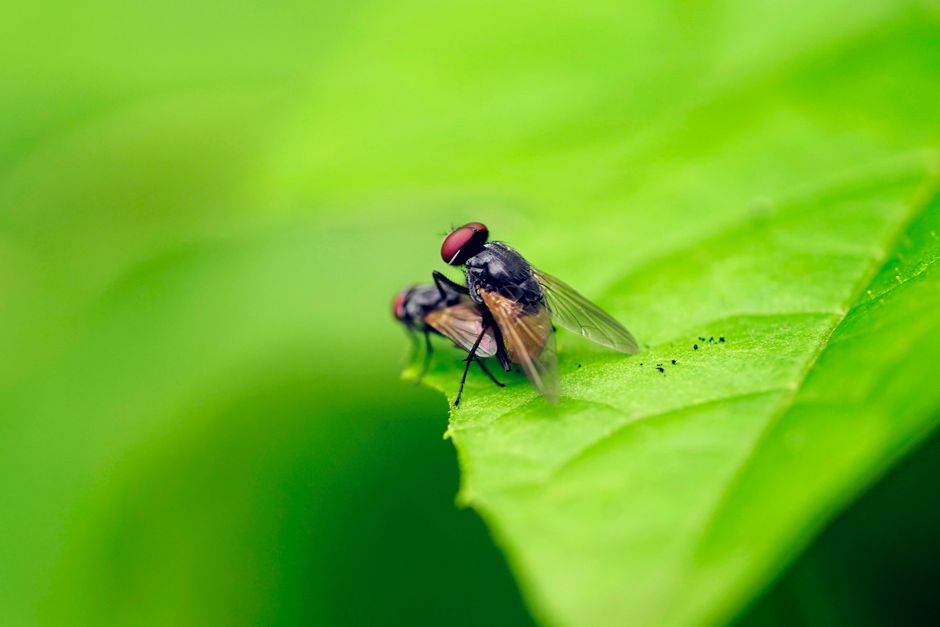
Small flies inside the house are almost always one of three things: fruit flies, fungus gnats, or drain flies. Each one comes from a different place and needs a different approach. The fastest way to get rid of them is to find the source, remove it, and then trap the adults. Most infestations clear up within a week once you stop new flies from breeding.
What Kind of Small Fly Is In Your House?
Before you can solve the problem, you need to know what you are dealing with. The three most common indoor flies look similar but behave differently.
Fruit flies are tiny, tan or brown, with red eyes. They hover around ripening fruit, open drinks, and trash cans. They breed in fermenting organic matter. A single overripe banana can support hundreds of them.
Fungus gnats are small, dark, and delicate-looking. They fly slowly and often sit on soil or windowsills. They breed in damp potting soil that contains fungus or decaying plant matter. Overwatered houseplants are the usual source.
Drain flies look like tiny moths with fuzzy bodies. They gather near sinks, showers, and floor drains. They breed in the slimy film that builds up inside drain pipes. Their larvae feed on that organic sludge.
Identifying the fly matters because the treatment is different for each. If you treat for fruit flies when you actually have fungus gnats, the problem will not go away.
How To Get Rid of Small Flies Inside the House: Remove the Breeding Source
The single most important step is removing what the flies are breeding in. Traps catch adults, but if the breeding site stays, new flies keep emerging.
For fruit flies, go through your kitchen and find anything fermenting. Throw out overripe fruit, empty recycling bins, wipe down counters, and take out the trash. Check hidden spots like the back of a pantry shelf or a forgotten potato bag. Fruit fly eggs are laid on the surface of fermenting material and hatch within 24 to 30 hours, so speed matters.
For fungus gnats, stop overwatering your plants. Let the top inch or two of soil dry out between waterings. Fungus gnat larvae need consistently moist soil to survive. You can also replace the top layer of soil with dry sand or gravel, which keeps adults from laying eggs in the top inch of dirt.
For drain flies, clean the drains. The organic film inside pipes is their food and nursery. Pour boiling water down the drain once a week. Then scrub the inside of the drain opening with a stiff brush. A mixture of baking soda and vinegar followed by hot water can help break up the film, though the physical scrubbing is what actually removes it.
Homemade Traps That Actually Work
Once the breeding source is gone, traps catch the remaining adults. You do not need to buy anything special.
The classic fruit fly trap is a small bowl or jar with apple cider vinegar and a drop of dish soap. The vinegar attracts them, and the soap breaks the surface tension so they sink instead of landing. Cover the jar with plastic wrap and poke small holes in it. The flies get in but cannot easily get out.
Fungus gnats are less attracted to vinegar. Yellow sticky traps work better for them. The gnats are drawn to the yellow color and get stuck. Place the sticky traps near the base of affected plants. These traps catch adults but do not kill larvae, so you still need to dry out the soil.
For drain flies, tape a piece of clear packing tape over the drain opening overnight, sticky side down. In the morning, if drain flies are stuck to it, you have confirmed the source. Then clean the drain as described above. You can also leave a bowl of apple cider vinegar near the drain, but cleaning the pipe is the real solution.





Why Vinegar and Dish Soap Traps Work
The apple cider vinegar trap is effective because it targets the specific biology of fruit flies. Fruit flies are strongly attracted to the smell of fermenting fruit. Vinegar is fermented liquid, so it mimics their natural food source.
The dish soap is not a repellent. It changes the surface tension of the liquid. Water and vinegar have enough surface tension that a small fly can land on top. Adding soap makes the liquid denser at the surface, so the fly breaks through and drowns.
This trap catches many adults but does not address eggs or larvae. That is why you must combine trapping with source removal. If you only set traps, you will catch flies for weeks as new ones hatch.
How To Prevent Flies From Coming Back
Prevention is about removing the conditions flies need to breed. Each fly type has a specific weakness you can exploit.
For fruit flies, store fruit in the refrigerator or in sealed containers. Take out the trash regularly, especially in warm months. Rinse recyclable containers before putting them in the bin. Clean up spills immediately, especially juice or alcohol.
For fungus gnats, adjust your watering habits. Most houseplants need less water than people give them. Let the soil dry out between waterings. Avoid leaving standing water in saucers under pots. If you buy new potting soil, check that it is not already damp and infested.
For drain flies, clean drains weekly with hot water. This is especially important in bathrooms that are not used daily. A drain that sits unused for a week can develop enough organic film to support a small breeding population. Run water in infrequently used sinks and showers for a few seconds each week.
Flies can also enter from outside. Check window screens for tears and make sure doors close tightly. But remember, indoor flies that persist are almost always breeding indoors. Sealing the house does not help if the breeding source is inside.
When To Consider Professional Pest Control
Most fly infestations resolve with the steps above. But some situations need professional help.
If you have cleaned every drain, removed all rotting fruit, dried out your plants, and flies still appear after two weeks, you may have a hidden source. Flies can breed in unusual places like a garbage disposal, a refrigerator drip pan, or a wall void where organic material has accumulated.
Phorid flies are a less common type that also breeds in decaying organic matter, including dead animals in walls or attics. They are small and can be mistaken for fruit flies. If you cannot find a breeding source and flies keep appearing, a pest control professional can locate it.
Professionals also have access to gel treatments for drains and residual sprays that are not available to consumers. These products are effective but should be applied by someone trained to use them safely.
Frequently Asked Questions
How long does it take to get rid of small flies?
Most infestations clear within 5 to 7 days once you remove the breeding source and trap the adults. If flies persist beyond two weeks, you likely missed a breeding site.
Does bleach kill drain flies?
Bleach can kill adult flies on contact but does not break down the organic film where larvae live. Physical scrubbing with a brush followed by hot water is more effective than bleach alone.
Why do fruit flies appear even when there is no fruit out?
Fruit flies breed in any fermenting organic matter, including empty bottles, trash can residue, compost bins, or a forgotten piece of produce in a cabinet. They can also come in on store-bought fruit as eggs or larvae.
Are small house flies dangerous?
Fruit flies and fungus gnats are not known to bite or transmit disease, but they can contaminate food by landing on it. Drain flies can carry bacteria from drains, so keeping them out of kitchens is advisable.
