
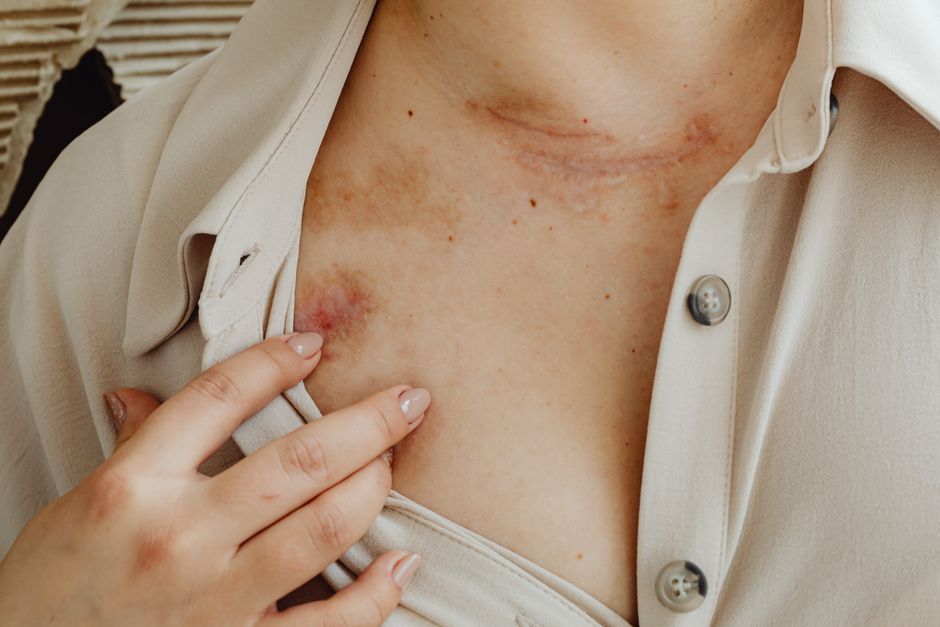
Scar tissue inside the cheek usually comes from a bite, a burn, a dental procedure, or a habit of chewing the same spot over and over. Most small patches of scar tissue inside the cheek do not need to be removed. They often flatten and fade on their own within weeks to a few months. Larger, raised, or painful scars may need a dentist or oral surgeon to look at them and decide whether treatment is worthwhile.
What Causes Scar Tissue Inside the Cheek?
The lining of your mouth heals fast, but it does not always heal smoothly. When the tissue is injured, the body lays down collagen to close the gap. Sometimes that collagen builds up in a denser, thicker pattern than the original tissue. That patch is what people feel as a bump, ridge, or firm area inside the cheek.
Common triggers include:
- Accidental biting of the cheek, especially during meals
- Repeated chewing on the same spot, often without realizing it
- Burns from hot food or drinks
- Dental work, including injections, extractions, or ill-fitting dentures
- Braces, retainers, or sharp edges on a tooth
- Oral piercings
- Lip or cheek biting habits linked to stress
One cause that gets overlooked is chronic friction. A sharp tooth edge or a rough filling can rub the same spot hundreds of times a day. The tissue responds by thickening. Until the source of friction is removed, the scar keeps getting irritated and may never settle down.
Less commonly, scar-like changes inside the cheek can be linked to conditions such as oral lichen planus or, in rare cases, oral cancer. This is why any patch that does not heal, keeps growing, bleeds, or changes color should be checked by a dentist or doctor rather than treated at home.
How Do You Get Rid Of Scar Tissue Inside Cheek?
There is no single home remedy that removes scar tissue inside the cheek. The honest answer is that most small scars do not need removal at all. They gradually soften and flatten as the body remodels the collagen over time. For scars that stay raised, tender, or bothersome, a few options exist, and each has limits.
What you can reasonably do at home:
- Stop the friction. If a tooth edge or denture is rubbing, see a dentist to smooth or adjust it. Nothing else will work while the irritation continues.
- Stop chewing the spot. This is harder than it sounds. Habits like cheek chewing often happen during stress or concentration. Being aware of it is the first step.
- Keep the mouth clean. Gentle brushing and rinsing with warm salt water can reduce irritation. This does not remove scar tissue, but it lowers the chance of the area becoming inflamed.
- Avoid irritants. Very hot, spicy, or acidic foods can make an already sensitive patch feel worse.
What does not have solid evidence behind it:
- Rubbing the scar with vitamin E oil or other creams. Some studies suggest these make little difference for scar appearance, and in the mouth they are quickly washed away by saliva.
- Cutting or picking at the tissue yourself. This risks infection and can create a larger scar.
- Most over-the-counter “scar removal” products. No clinical evidence currently confirms these work inside the mouth.
The key point: home care can reduce irritation, but it does not erase established scar tissue. If the scar is truly a problem, that is a conversation for a clinician.
When Should a Dentist or Doctor Look at It?
Any patch inside the cheek that lasts more than two to three weeks without improving should be examined. That timeline is a widely used rule of thumb in oral medicine, and it exists for a reason. Most minor injuries to the mouth heal well within that window. A sore that lingers beyond it needs a closer look.
See a dentist or doctor promptly if you notice:
- A sore or patch that has not healed after two to three weeks
- Any area that is growing, thickening, or changing shape
- Bleeding that is not from a known injury
- Pain that is getting worse rather than better
- A white, red, or mixed-color patch
- Difficulty chewing, swallowing, or opening your mouth
- Numbness or a lump you can feel from the outside of the cheek
These signs do not automatically mean something serious. Most turn out to be benign. But a clinician can tell the difference in a way that a mirror and a phone flashlight cannot. A biopsy, when needed, is the only way to know for certain what a persistent patch is made of.





What Treatments Can Remove or Reduce Cheek Scar Tissue?
For scar tissue that is genuinely causing problems, a clinician may offer one of several approaches. None of these are guaranteed, and results vary from person to person.
| Treatment | What it does | Typical use |
|---|---|---|
| Removing the source of friction | Smooths a sharp tooth or adjusts a denture | First step when friction is the cause |
| Surgical excision | Cuts out the scar tissue and closes the area | Larger, raised, or bothersome scars |
| Laser therapy | Removes surface tissue layer by layer | Selected superficial scars |
| Steroid injections | Can soften thickened scar tissue | Some raised scars, decided case by case |
A few honest notes on these options. Surgical removal can leave a new scar, since cutting tissue always starts the healing process again. Laser treatment may need more than one session and is not right for every type of scar. Steroid injections are used for some raised scars, but their effect inside the mouth is not well studied, and clinicians decide case by case. No treatment here is guaranteed to restore the cheek to its original smooth lining.
For most people with a small, painless patch, the best plan is simply to leave it alone and remove whatever is irritating it.
Can Scar Tissue Inside the Cheek Go Away On Its Own?
Yes, often. Small scars from a single bite or a minor burn usually fade over weeks to a few months as the body breaks down and rebuilds the collagen. The tissue may never look exactly as it did before, but it typically becomes flatter and less noticeable.
Scars that keep getting re-injured behave differently. If you keep biting or chewing the same spot, the healing restarts again and again. That is why breaking the cycle matters more than any product. A scar that is constantly irritated may stay raised for as long as the irritation continues.
Some scar tissue is permanent. A firm, pale patch that has been there for years and is not changing is usually just settled scar. If it is not causing pain or other symptoms, there is often no medical reason to remove it.
How Can You Prevent Scar Tissue From Forming in the First Place?
You cannot prevent every cheek injury, but you can lower the odds of a scar forming or getting worse.
- Fix sharp teeth, rough fillings, or loose dentures so they stop rubbing.
- Be mindful of cheek chewing, especially during stressful periods.
- Let burns and bites heal without poking or picking at them.
- Chew carefully if you have a habit of biting the inside of your mouth.
- Keep up with dental visits so small problems get caught early.
If you have a condition like oral lichen planus that causes ongoing irritation, follow the plan your clinician gives you. Managing the underlying condition is the main way to limit repeated damage.
What If the Scar Keeps Coming Back?
A scar that returns after treatment usually means the original cause was never fully removed. The most common culprits are a sharp tooth edge, a habit of chewing the area, or an ongoing condition irritating the lining of the mouth.
If a scar keeps recurring, ask your dentist to check for any source of friction you might not be able to see. Sometimes a small sharp point on a back tooth is doing the damage. Once that is smoothed, the tissue often settles. If no clear cause is found and the area keeps changing, a referral to an oral medicine specialist or oral surgeon is reasonable.
Frequently Asked Questions
Can scar tissue inside the cheek go away without treatment?
Yes, small scars from a bite or burn often flatten and fade over weeks to a few months on their own. Scar that keeps getting re-injured may stay raised until the irritation stops.
How long should a cheek sore last before I see a dentist?
See a dentist or doctor if a sore or patch inside the cheek has not healed after two to three weeks. That timeline is a common rule of thumb in oral medicine.
Does vitamin E or scar cream remove scar tissue inside the mouth?
No clinical evidence currently confirms that vitamin E or over-the-counter scar creams remove scar tissue inside the cheek. Saliva washes these products away quickly, and studies on skin scars suggest little benefit.
Can cheek scar tissue be removed surgically?
Yes, a dentist or oral surgeon can remove larger or bothersome scar tissue, but the procedure can leave a new scar since cutting tissue restarts healing. Results vary, and removal is usually reserved for scars that cause real problems.
