
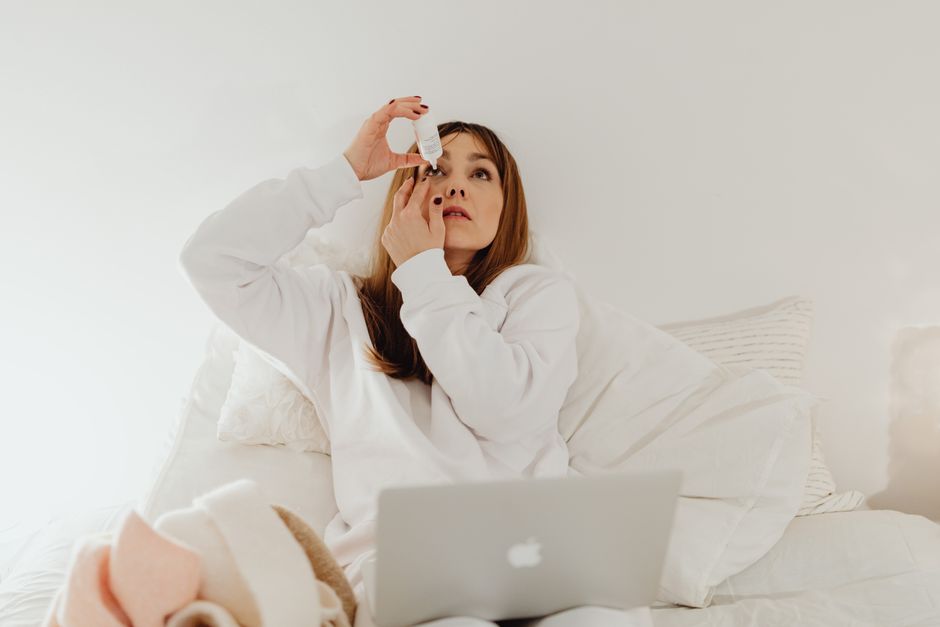
Red eyes usually mean the blood vessels on the surface of your eye are swollen and more visible than normal. That happens when the eye is dry, irritated, infected, or short on sleep. The fastest relief comes from preservative-free artificial tears, a cool or warm compress depending on the cause, and removing whatever is irritating the eye in the first place. “Get rid of” is the tricky part, because how fast redness clears depends almost entirely on why it started.
Redness from tiredness or mild dryness can fade within an hour or two of resting the eyes and using lubricating drops. Redness from infection or injury can take days to weeks and may need a doctor. Decongestant eye drops shrink visible vessels quickly but do not treat the cause, and using them for more than a few days can make redness worse when you stop.
What Actually Causes Red Eyes?
The white of your eye, the sclera, is covered by a thin clear layer called the conjunctiva. That layer holds tiny blood vessels. When they dilate, the eye looks pink or red. This is a normal response to irritation, not a disease by itself.
Common triggers include dry eye, allergies, smoke or dust, chlorine, screen strain from reduced blinking, contact lens problems, and lack of sleep. Infections cause redness too. Viral conjunctivitis is the most common form, and bacterial conjunctivitis is less frequent. Some causes are more serious, including inflammation inside the eye, a scratched cornea, or acute angle-closure glaucoma, which is a medical emergency.
One thing worth knowing: redness is a symptom, not a diagnosis. Two people with equally red eyes can need completely different care. That is why the most useful first step is figuring out which pattern fits you.
How Do You Use Eye Drops to Get Rid of Red Eyes Fast?
Choose the right drop for the cause. Lubricating artificial tears are the safest starting point for most everyday redness because they address dryness and wash away irritants. Preservative-free single-use vials are gentler on eyes that are sensitive or used often.
Decongestant drops containing a vasoconstrictor shrink the surface vessels and reduce visible redness within minutes. They are not a treatment for the underlying problem. Using them for more than a short period can lead to rebound redness, where the eye becomes redder when the drop wears off. That cycle is well documented in clinical practice. If you find yourself reaching for them daily, that is a signal to stop and look at the cause instead.
Antihistamine drops help allergic redness. Some of these are available over the counter and some require a prescription. Antibiotic drops only help bacterial infection and do nothing for viral or allergic redness. Using them without a diagnosis does not help and carries downsides.
- Wash your hands before touching your eyes or the dropper tip.
- Do not let the tip touch your eye, eyelashes, or any surface.
- One drop is enough. More does not work faster and just runs down your cheek.
- Wait about five minutes between different drops so the first does not wash out the second.
- Remove contact lenses unless the drop is labeled for use with them.
If you wear contacts, take them out first. Contacts trap fluid and irritants against the eye and can make redness worse or set up an infection.
Do Warm or Cool Compresses Work Better?
It depends on the cause. Warm compresses help when the problem is blocked oil glands along the eyelid, which contribute to dry eye and styes. The warmth softens the oils so they flow better. Cool compresses help with allergy, irritation, and general puffiness because cold narrows blood vessels and calms itching.
Use a clean cloth soaked in water, wring it out, and hold it gently over closed eyes. For a warm compress, test the temperature on your inner wrist first so it is comfortably warm, not hot. A typical approach is a few minutes at a time, repeated a few times a day, though there is no single standard duration that fits everyone. Stop if it feels uncomfortable.
Never put anything hot directly on a closed eyelid without testing it first. The skin around the eye is thin and burns easily.





What Else Helps Red Eyes Clear Faster?
Removing the trigger does more than any drop. If smoke, dust, or fumes are the cause, get away from them. If screens are the issue, remember that people blink less when looking at a screen, and blinking spreads the tear film that keeps eyes comfortable. Deliberate blinking and regular breaks help.
Sleep matters more than most people expect. Tired eyes look red because the surface is drier and the vessels are more visible. Rest, hydration, and avoiding rubbing all support recovery. Rubbing is worth calling out specifically: it irritates the surface and can introduce germs or, in rare cases, worsen certain eye conditions.
For allergies, reducing exposure helps. Shut windows when pollen counts are high, shower after time outdoors, and wash bedding regularly. Cool compresses and artificial tears can rinse allergens away.
When Should You See a Doctor Instead of Self-Treating?
Some red eyes need medical care and self-treatment can delay it. Seek prompt care if you have eye pain, sensitivity to light, blurred or decreased vision, a feeling that something is stuck in your eye, or redness in only one eye that keeps getting worse.
Also see a doctor if you have a discharge that is thick or colored, if redness follows an injury or a chemical splash, or if you wear contact lenses and develop redness with pain or light sensitivity. Contact lens wearers are at higher risk of a serious corneal infection, and that needs urgent attention.
Get emergency care for sudden severe eye pain, sudden vision loss, seeing halos around lights with a red eye, or a red eye after a chemical exposure. These can signal conditions where delay causes lasting harm.
For a red eye with no pain, normal vision, and no contact lens use, watching for a day or two while using artificial tears and compresses is reasonable for most adults. If it is not improving, get it checked.
Which Drops Should You Avoid?
Avoid “get the red out” drops as a long-term habit. They are fine for occasional cosmetic use, but they mask the problem and can cause rebound redness with regular use. If your eyes are red every day, the drop is not the answer.
Be cautious with any product not meant for the eye. Do not use homemade salt solutions, tap water as a rinse, or drops made for other purposes. Tap water is not sterile and can carry organisms that cause serious eye infections, particularly with contact lens use.
Check labels if you have allergies or sensitivities. Preservatives in multidose bottles can irritate some eyes, which is why preservative-free options exist. If a drop stings badly or makes redness worse, stop using it.
How Long Does It Take for Red Eyes to Clear?
Mild redness from dryness or tiredness often improves within hours of resting and lubricating the eyes. Allergic redness can ease within an hour or two of antihistamine drops or a cool compress, though it may return with continued exposure. Viral conjunctivitis typically clears on its own over one to two weeks, and it is contagious during that time. Bacterial conjunctivitis often improves within a few days of antibiotic treatment, but some cases clear without antibiotics.
These are general patterns, not guarantees. Recovery depends on the cause, your overall health, and whether the trigger is removed. If redness is not improving on the expected timeline, or is getting worse, that is your cue to get it looked at.
Frequently Asked Questions
What is the fastest way to get rid of red eyes?
Preservative-free artificial tears plus removing the trigger, such as dryness, smoke, or allergens, is the fastest safe approach for most everyday redness. Decongestant drops shrink visible vessels within minutes but do not treat the cause and can cause rebound redness if used regularly.
Can I use redness-relief eye drops every day?
No, daily use of decongestant “get the red out” drops is not recommended because it can lead to rebound redness when the effect wears off. If your eyes are red most days, the cause needs to be identified rather than masked.
Is a warm or cold compress better for red eyes?
Warm compresses help blocked eyelid oil glands and styes, while cool compresses help allergies, irritation, and puffiness. Match the compress to the cause, and test the temperature on your inner wrist first.
When is a red eye an emergency?
Sudden severe eye pain, sudden vision loss, halos around lights with a red eye, or a red eye after a chemical splash are emergencies that need immediate care. Eye pain, light sensitivity, or vision changes also warrant prompt medical attention.
