
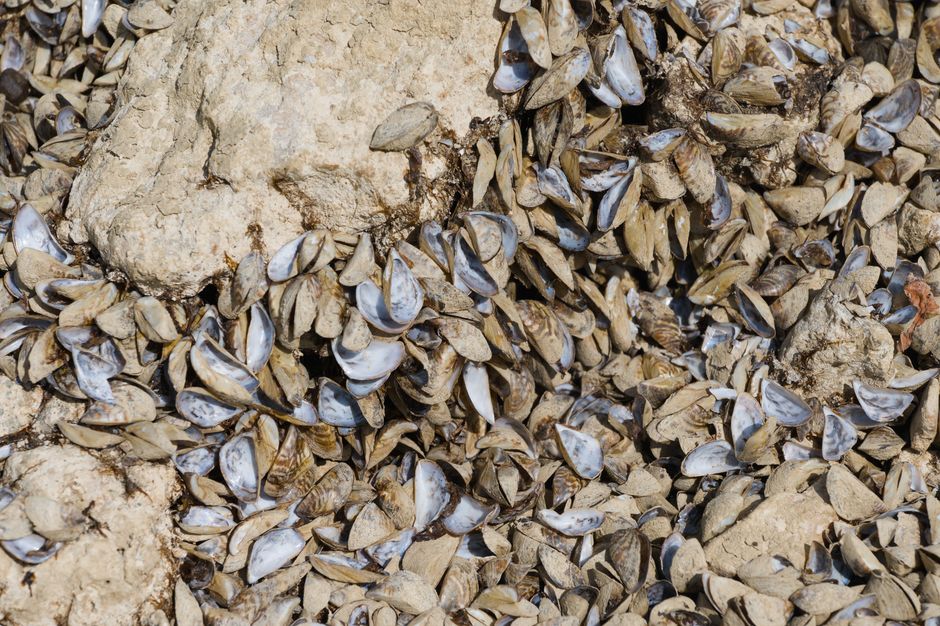
Quagga mussels cannot be removed from a lake once they are established. There is no chemical, biological, or mechanical method that eradicates them from a natural water body at scale. What you can do is prevent their spread, protect water infrastructure, and keep them off your boat, pipes, and equipment. The battle is about containment, not elimination.
That distinction matters. A lot of what circulates online about “getting rid” of quagga mussels describes methods that only work in closed systems like pipes or on dry equipment. In open water, the mussels have no natural predator here, they reproduce in enormous numbers, and they tolerate conditions that kill most other freshwater species. Understanding why they are so hard to remove is the first step to doing anything useful about them.
What Are Quagga Mussels and Why Are They So Hard To Remove?
Quagga mussels are small freshwater mollusks, closely related to zebra mussels, that came to North America from the Black Sea region. They were first detected in the Great Lakes in the late 1980s. Since then they have spread through major river systems and into reservoirs across the western United States.
The reason they are nearly impossible to remove comes down to their biology. A single adult female can release a very large number of eggs in a season. The larvae, called veligers, are microscopic and drift freely in the water for weeks. That means by the time you see adult mussels attached to a surface, they have already been spreading invisibly for a long time.
They also attach to almost anything solid. They use thread-like fibers to bind themselves to rocks, docks, boat hulls, pipes, and even native mussels. Removing the visible adults does not remove the larvae in the water, and new adults settle within weeks.
Why Eradication in Open Water Is Not Realistic
No approved method exists to kill quagga mussels across an entire lake or river without harming everything else in it. Chemicals that kill mussels also kill fish, native mussels, and the broader food web. Physical removal by divers or machines can clear a small area, but recolonization begins almost immediately.
This is not a gap in effort. It is a recognized limit of current tools. Water managers focus on control and protection rather than elimination because the latter is not achievable with available technology.
How To Get Rid Of Quagga Mussels On Boats and Equipment
On boats and gear, you can remove quagga mussels completely, and doing so is one of the most effective ways to stop their spread. The key is killing them before they travel to a new water body. Adult mussels can survive out of water for several days in cool, damp conditions, so simply letting a boat dry in the shade is not reliable.
The standard guidance used by state wildlife agencies rests on three steps: clean, drain, and dry.
- Clean the hull, propeller, anchor, and any gear that touched the water. Remove all visible plants, mud, and mussels.
- Drain all water from the boat, live wells, bilges, ballast tanks, and any containers before leaving the launch area.
- Dry the boat and equipment completely before launching in another water body. Drying times vary with temperature and humidity, and many agencies recommend waiting several days to a week or more in warm, dry conditions.
For boats that move between water bodies frequently, hot water washing is used at many inspection stations. Water hot enough to kill mussels and their larvae is applied to hulls and compartments. If you are unsure what temperature or contact time your local inspection station uses, ask them directly rather than guessing.
Never move water from one lake to another. That includes bait bucket water, live well water, and anything in a cooler. Larvae are invisible, and this is one of the most common ways the mussels spread.
Can You Remove Quagga Mussels From Pipes and Water Systems?
Inside closed systems like pipes, intake screens, and cooling systems, quagga mussels can be removed or controlled, and this is where most active management happens. The mussels clog pipes, reduce flow, and damage pumps, so utilities and treatment plants invest heavily in keeping them out.
Common approaches include:
- Physical cleaning and scraping of intake structures
- Backwashing and mechanical removal from screens
- Chemical treatment with approved compounds in specific, controlled settings
- Temperature control, since mussels are sensitive to heat in confined systems
These methods work because the system is enclosed and the operator controls the conditions. That is the crucial difference from a lake. A treatment that is safe and effective in a pipe is not automatically safe or effective in open water, and it should not be assumed to be.
If you own a private water intake, well system, or irrigation line affected by mussels, the right step is to contact your state fish and wildlife agency or a water systems professional. Do-it-yourself chemical treatments in private systems carry real risks to drinking water and nearby waterways.
What Should You Do If You Find Quagga Mussels?
Report them. Early detection is one of the few things that genuinely changes outcomes, because a new infestation found quickly can sometimes be contained before it spreads. Most states have a reporting hotline or online form through their fish and wildlife or natural resources agency.
Take clear photos if you can. Note the location and date. Do not move the mussels or any water from the site. If you found them on your boat, clean and dry the boat before it goes anywhere else.
For lakes and reservoirs already infested, there is no homeowner-level action that removes them. The realistic goal becomes protecting your equipment, avoiding further spread, and supporting the management efforts already underway.
Why Prevention Is the Only Real Strategy
Stopping the spread is the only approach that has actually protected water bodies from quagga mussels. Once they are in a lake, the cost shifts to ongoing management of pipes, boats, and infrastructure, and that cost does not go away.
The mussels cause real economic and ecological harm. They filter large amounts of plankton from the water, which changes the food base for fish and other organisms. They attach in dense layers to hard surfaces, and those layers can clog intakes and foul equipment. Some research suggests their filtering can also concentrate certain contaminants in the food chain, though the full implications are still being studied.
This is where individual behavior matters more than most people realize. A single boat that was not cleaned can start an infestation in a lake that was previously free of mussels. Inspection and cleaning programs exist because they work when people follow them.
What About Chemical and Biological Controls?
The evidence for wide-scale chemical or biological control in open water is limited, and no method is currently approved for eradicating quagga mussels from a natural lake or river. Some research has explored bacterial agents, thermal treatment, and other approaches, but none has been established as a safe, practical, lake-wide solution.
This is a place where marketing and hopeful claims tend to outrun the science. If you see a product advertised as a way to clear mussels from a lake or pond, treat that claim with real skepticism. No product has been shown to remove an established quagga mussel population from open water without harming the surrounding ecosystem.
In closed systems, some chemical treatments are used under permit and supervision. That is a different situation from a pond or lake, and it requires professional oversight and regulatory approval.
What Actually Works and What Does Not
It helps to separate realistic actions from wishful ones. Here is the honest picture.
- Works: Cleaning, draining, and drying boats and gear between water bodies.
- Works: Reporting new sightings to state agencies.
- Works: Physical and chemical control inside enclosed pipes and systems under professional management.
- Does not work: Trying to kill mussels across an entire lake with chemicals.
- Does not work: Removing visible adults and expecting the population to disappear.
- Not established: Any consumer product marketed to eradicate mussels from open water.
The pattern is consistent. Control works where conditions are contained and managed. Eradication in open water does not work with any tool currently available.
Frequently Asked Questions
Can quagga mussels be eradicated from a lake?
No. No approved method exists to remove quagga mussels from an entire lake or river without harming other aquatic life. Management focuses on containment and protecting infrastructure, not elimination.
How long can quagga mussels survive out of water?
Adult quagga mussels can survive out of water for several days in cool, damp conditions. Drying times depend on temperature and humidity, which is why many agencies recommend waiting several days to a week or more before moving a boat to another water body.
What should I do if I find quagga mussels on my boat?
Clean all visible mussels and plants from the hull and gear, drain all water, and let everything dry completely before launching anywhere else. Report the finding to your state fish and wildlife agency.
Do any chemicals kill quagga mussels safely?
Some chemical treatments are used inside enclosed pipes and water systems under permit and professional supervision. No chemical is approved for treating an entire lake or river, because it would harm fish, native mussels, and the broader ecosystem.
