
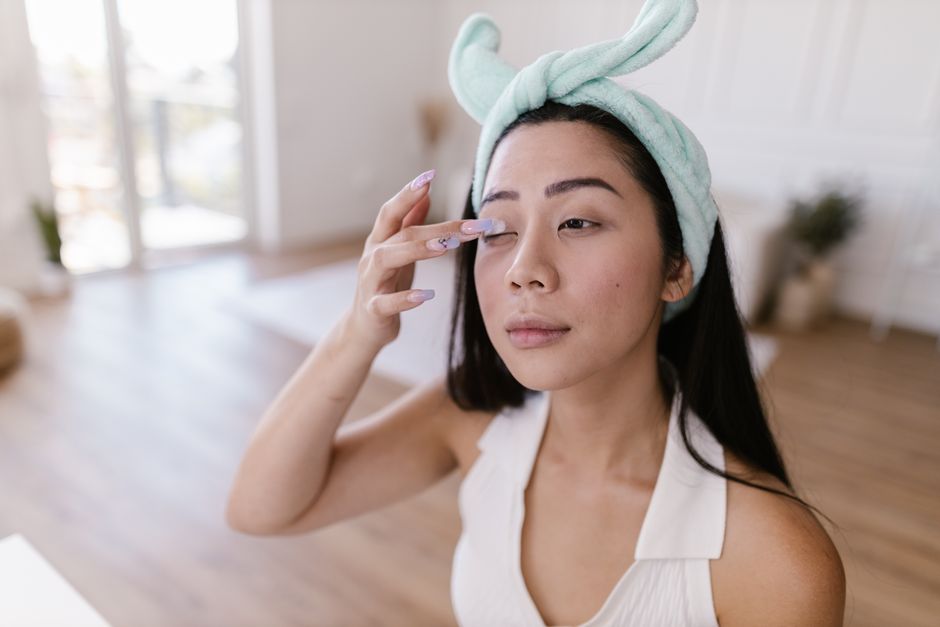
Puffy eyelids happen when fluid collects in the thin tissue around your eyes, and that tissue is among the loosest skin on the body. That is why it swells so easily and why the fix depends entirely on the cause. For occasional morning puffiness, a cool compress, sleeping with your head raised, and a few minutes of gentle movement are usually enough. For puffiness that lasts weeks, comes with pain, or appears on only one side, the answer is different: see a doctor, because the cause is not simple fluid retention.
What Actually Causes Puffy Eyelids?
The skin around your eyes is only a few cell layers thick, and the tissue beneath it is loosely packed. Fluid shifts into that space easily. Gravity, sleep position, salt intake, and hormones all influence how much fluid collects overnight.
Common causes include:
- Sleeping flat, which lets fluid pool around the eyes
- High-sodium meals the night before
- Alcohol, which affects fluid balance and sleep quality
- Allergies, which trigger histamine release and swelling
- Crying, which increases blood flow and fluid in the area
- Hormonal changes, including those around menstruation
- Aging, because the tissue and fat pads around the eye change over time
- Contact lens wear and eye rubbing
Less common but more serious causes include thyroid eye disease, kidney or liver problems, and infections such as orbital cellulitis. These are not things a cold spoon will fix.
One detail worth knowing: the fat pads around your eyes can shift forward with age, creating a permanent puffiness that looks similar to fluid retention but is not. No amount of cooling or caffeine will change that, because there is no fluid to move. This is why some people notice puffiness that never fully goes away no matter what they try.
How To Get Rid Of Puffy Eyelids Fast
Cool temperature and gentle pressure are the two most reliable tools for temporary puffiness. Cold narrows blood vessels, which reduces blood flow and fluid movement into the area. This is a physical effect, not a marketing claim.
What tends to work:
- A cool compress or chilled spoon held gently over closed eyes for a few minutes
- Washing your face with cool water
- Sleeping with your head slightly elevated on an extra pillow
- Drinking water, since dehydration can cause the body to hold onto fluid
- Gentle massage moving from the inner corner outward, if you have no eye infection
What has weaker support: cucumber slices, tea bags, and chilled gel masks are widely used and generally harmless, but the benefit comes from the cold and the resting position, not from anything specific in the cucumber or tea. There is no strong evidence that these outperform a plain cool cloth.
Avoid pressing hard on the eyelids. The tissue is delicate, and aggressive rubbing can make swelling worse and irritate the skin.
Do Home Remedies for Puffy Eyes Actually Work?
Some do, and the reason is straightforward. Cold reduces swelling. Rest reduces fluid pooling. Anything beyond that has much thinner evidence.
Caffeine is often added to eye creams. Applied to the skin, caffeine can temporarily constrict blood vessels, and some small studies suggest a short-term reduction in puffiness. The effect is modest and short-lived. It is not a treatment for an underlying cause.
Cold compresses have the best support because the mechanism is well understood. Elevation works for the same reason. Massage can help move fluid, but only if there is no infection or injury.
What does not have good evidence: drinking extra water specifically to flush puffiness, taking supplements marketed for eye area, or using products that claim to “drain” the under-eye area. No clinical evidence currently confirms these work.
When Is Puffy Eyelid a Medical Problem?
Puffiness that is sudden, painful, one-sided, or accompanied by vision changes needs medical attention. These features point away from simple fluid retention.
See a doctor if you notice:
- Swelling in only one eye
- Pain, warmth, or redness around the eye
- Fever
- Blurred or double vision
- Swelling that keeps getting worse
- Puffiness that has lasted for weeks without explanation
- Swelling along with weight changes, fatigue, or changes in urination
Orbital cellulitis is an infection of the tissue behind the eye. It is uncommon but serious, and it can follow a sinus infection or an injury near the eye. It requires prompt treatment. Thyroid eye disease can also cause persistent puffiness along with a gritty feeling, and it needs a different approach entirely.
This is the part where home remedies can waste time. If the cause is an infection or a thyroid condition, cooling and caffeine will not touch it.
Can Lifestyle Changes Prevent Puffy Eyelids?
Reducing overnight fluid shifts is the most effective prevention. Most of what you can control happens in the hours before sleep.
Steps that help:
- Limit high-sodium foods in the evening
- Reduce or avoid alcohol close to bedtime
- Sleep with your head slightly raised
- Remove makeup and clean your eyelids before bed
- Treat allergies, since allergic swelling is a recurring cause
- Stay hydrated during the day
If you wear contact lenses, follow the cleaning and replacement schedule your eye doctor gave you. Poor lens hygiene is a common and preventable trigger for eyelid irritation.
For people who wake up puffy no matter what, the pattern matters more than any single fix. Tracking what you ate, drank, and how you slept the night before can reveal a trigger that is easy to miss.
What About Under-Eye Fillers and Procedures?
For puffiness caused by shifting fat pads rather than fluid, topical remedies will not help. This is where some people consider procedures.
Options that exist include:
- Dermal fillers, which add volume rather than remove it
- Lower eyelid surgery, which can remove or reposition fat
- Laser and energy-based treatments
These are medical procedures with real risks, including bruising, infection, asymmetry, and in rare cases vision problems. Results vary, and not everyone is a candidate. The evidence for how well each option works over the long term is mixed, and outcomes depend heavily on the practitioner.
There is no procedure that is right for everyone, and none of them address an underlying medical cause. If puffiness is from a thyroid, kidney, or liver condition, treating the eye area will not solve the problem.
Does Diet or Hydration Affect Puffy Eyes?
Sodium and fluid balance have a real effect. High-sodium meals can lead to fluid retention, and the loose tissue around the eyes is one of the first places it shows. This is well established.
Alcohol affects fluid balance and sleep, both of which can increase morning puffiness. Dehydration can also lead the body to hold onto fluid, which is why drinking enough water during the day matters.
What is less clear is whether specific foods reduce puffiness. Claims about certain fruits, teas, or supplements reducing under-eye swelling are largely unsupported. No clinical evidence currently confirms that eating a particular food clears puffy eyelids.
The practical takeaway is simple: manage sodium and alcohol, stay hydrated, and treat the cause if there is one.
Frequently Asked Questions
How do you get rid of puffy eyelids fast?
A cool compress and sleeping with your head raised are the fastest ways to reduce temporary puffiness. Cold narrows blood vessels and reduces fluid movement into the area, usually within minutes.
What causes puffy eyelids in the morning?
Fluid pools around the eyes overnight, especially if you sleep flat or ate a high-sodium meal the night before. Allergies and alcohol can make it worse.
When should I worry about a puffy eyelid?
See a doctor if the swelling is one-sided, painful, or comes with fever or vision changes. These signs point to a cause that home remedies will not fix.
Do cucumber slices really reduce puffy eyes?
The benefit comes from the cold and the rest, not from the cucumber itself. A plain cool cloth works just as well.
