
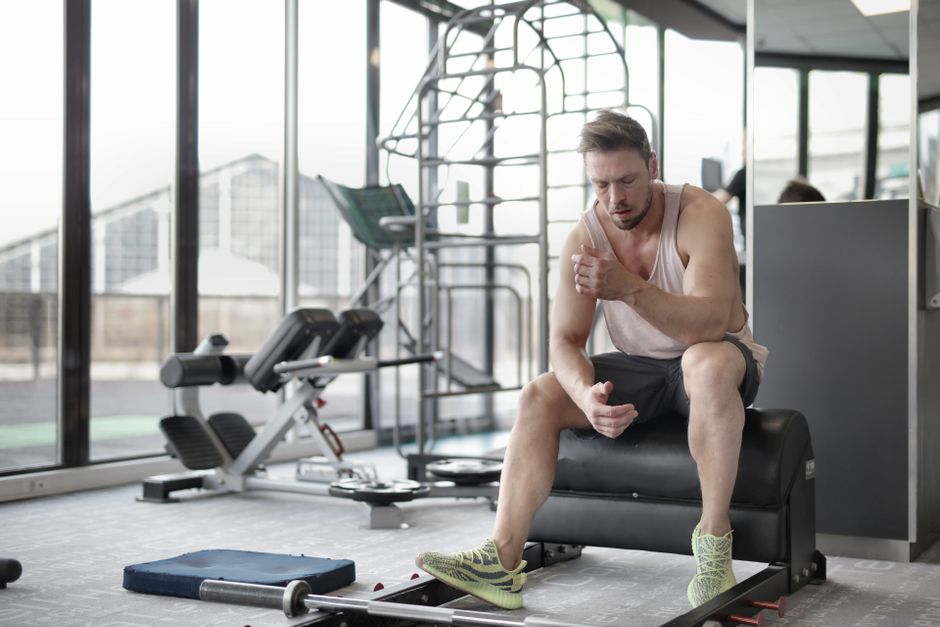
Post-workout muscle soreness is called delayed onset muscle soreness, or DOMS. It usually shows up 12 to 24 hours after exercise, peaks somewhere between 24 and 72 hours, and fades on its own within about three to five days. There is no proven way to erase it, but light movement, adequate protein, good sleep, and time reliably help you function while it runs its course.
That timeline surprises people. Soreness that arrives a full day after a workout is not a sign you did something wrong. It is the normal response to unfamiliar or intense effort, and understanding why it happens makes the recovery advice easier to follow.
What Actually Causes Muscle Soreness After a Workout?
Soreness comes from microscopic damage to muscle fibers, not from a buildup of lactic acid. Lactic acid clears from your bloodstream within roughly an hour of finishing exercise, which is long before soreness typically starts.
The damage happens mostly during the lengthening phase of a movement, called an eccentric contraction. Think of lowering a dumbbell slowly, running downhill, or the descent portion of a squat. The muscle is producing force while it lengthens, and that combination puts the highest mechanical strain on the fibers.
That strain creates small tears in the muscle and the surrounding connective tissue. The soreness you feel is largely the result of the repair process. Immune cells move into the area, inflammation rises, and chemical signals sensitize nearby nerve endings. That is why the muscle feels tender and weak rather than simply tired.
This is also why soreness is not a measure of workout quality. A session can be genuinely productive without leaving you sore, and a session that leaves you very sore was not automatically better. The muscle adapts after repeated exposure to the same stimulus, which is why the first week of a new program hurts more than the fourth.
How Long Does Soreness Last and When Should You Worry?
Typical DOMS peaks between 24 and 72 hours after exercise and resolves within three to five days. If soreness is still climbing past three days, or has not improved by about a week, that pattern does not fit ordinary DOMS.
There is a more serious condition worth knowing about. Rhabdomyolysis is a breakdown of muscle tissue that releases contents of muscle cells into the bloodstream, and it can damage the kidneys. It is uncommon after typical recreational exercise, but it happens. Risk rises with extreme or unaccustomed exertion, particularly in hot conditions, and with certain medications and medical conditions.
Seek urgent medical care for any of the following:
- Severe pain that keeps getting worse instead of better
- Muscle swelling, especially with weakness out of proportion to the pain
- Dark, cola-colored, or tea-colored urine
- Very little urine output
- Confusion, nausea, or a racing heart alongside the muscle symptoms
Dark urine after intense exercise is not something to wait out. It is a reason to be seen the same day.
How To Get Rid Of Post Workout Muscle Soreness: What Actually Helps
Nothing removes DOMS on command. The realistic goal is to reduce how much it interferes with your day while your body repairs the tissue on its own schedule.
Light movement is the most practical tool. Easy walking, cycling at low resistance, or gentle range-of-motion work increases blood flow and reduces stiffness. It will not speed tissue repair, but most people find they feel better moving than sitting still.
Sleep is where the real repair work happens. Growth hormone release and tissue rebuilding are tied to sleep. Shortchanging sleep during a heavy training block is one of the more reliable ways to stay sore longer.
Protein intake supports muscle repair. General guidance for active adults centers on roughly 1.2 to 2.0 grams of protein per kilogram of body weight per day, though individual needs vary with training load, age, and goals. Spreading it across meals tends to work better than loading it all at dinner.
Hydration and normal eating matter more than most people assume. Dehydration and low carbohydrate intake both make recovery feel worse.
Over-the-counter pain relievers can take the edge off, but there is a tradeoff worth knowing. Some evidence suggests that routinely blocking inflammation with certain medications may blunt some of the training adaptations you are working for. Using them occasionally for comfort is reasonable. Using them after every session is a different decision.


Do Massage, Ice Baths, and Foam Rolling Really Work?
These are the most marketed recovery tools and the evidence behind them is modest. They can make you feel better. The claim that they speed recovery is weaker than the marketing suggests.
Massage reduces the perception of soreness in the short term. Studies generally show a small benefit for how sore you feel, with less consistent evidence for improved performance or faster tissue repair.
Cold water immersion reduces soreness ratings. It also appears to blunt some strength and muscle-building adaptations when used routinely after resistance training. Occasional use around a competition or a heavy event is a reasonable choice. Making it a daily habit after every lifting session may work against your goals.
Foam rolling improves short-term range of motion and reduces soreness perception. It does not appear to repair tissue. It is inexpensive, low risk, and reasonable to use if it helps you feel better.
Compression garments show small and inconsistent effects on soreness. Some people find them helpful. The evidence does not support strong claims.
None of these are harmful for most healthy adults. None of them are required. If a recovery tool costs a lot of money and promises to eliminate soreness, that promise is not supported.
Can You Prevent Soreness Before It Starts?
You can reduce it substantially, but not eliminate it. The single biggest factor is how gradually you increase training intensity and volume.
Jumping into a new program at full effort is the most common cause of severe DOMS. Adding volume or intensity in smaller steps gives muscle tissue time to adapt. The same workout that wrecked you in week one often causes little soreness by week four.
Warming up before training raises muscle temperature and prepares the tissue for load. A proper warm-up is well established for injury reduction and performance. Its direct effect on DOMS is smaller and less certain.
Staying consistent matters more than any single recovery tactic. Long gaps between sessions reset much of your adaptation, so every return feels like the first time.
Should You Train Again While Still Sore?
Light activity is usually fine and often helps. Hard training of the same sore muscle group is not a good idea until the soreness has largely resolved.
Sore muscles are weaker muscles. Force output drops during DOMS, and training a damaged muscle hard again can deepen the damage rather than build on it. A practical approach is to train other muscle groups, or keep the sore area at low intensity until it feels close to normal.
The distinction that matters is soreness versus pain. Dull, symmetrical, tender-to-the-touch soreness that improves day by day is ordinary DOMS. Sharp, localized, or one-sided pain is a different signal and worth having evaluated.
Frequently Asked Questions
How long does post workout muscle soreness last?
Typical soreness peaks between 24 and 72 hours after exercise and resolves within three to five days. If it is still worsening after three days or unresolved after about a week, get it checked.
Is it better to rest or keep moving when sore?
Light movement such as walking or easy cycling usually helps more than complete rest. Avoid hard training of the same sore muscle group until the soreness has mostly cleared.
Does stretching prevent muscle soreness?
Stretching does not appear to prevent or meaningfully reduce DOMS. It can improve short-term flexibility and feels good, but the evidence does not support it as a soreness cure.
When is soreness a medical emergency?
Dark or cola-colored urine, severe worsening pain, significant swelling, or very low urine output after intense exercise need urgent medical care. These can signal rhabdomyolysis, which can harm the kidneys.
