
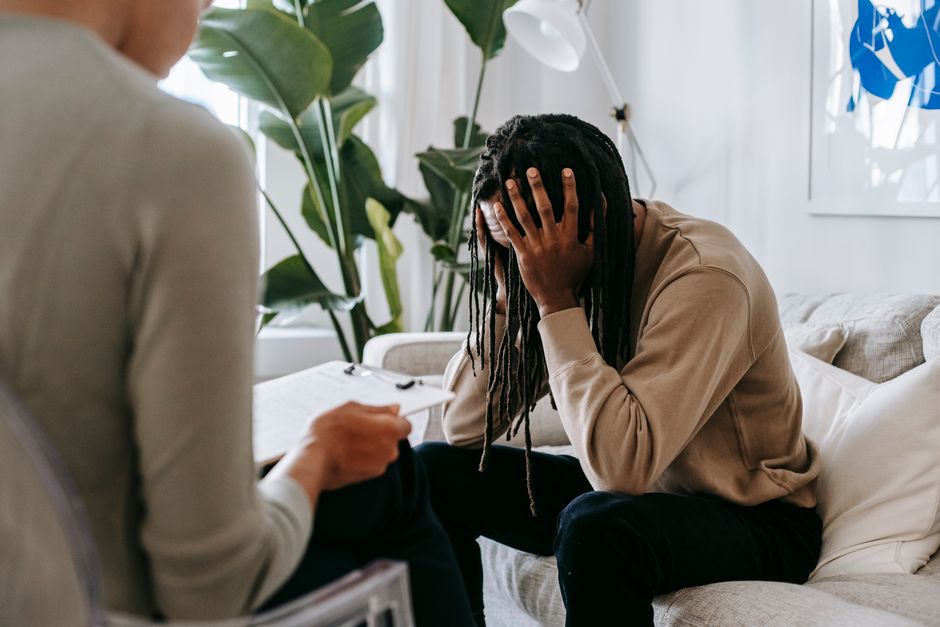
Performance anxiety in bed is a cycle: you worry about how your body will perform, the worry triggers a stress response, and that stress response makes arousal or erection harder to achieve. The way out is not trying harder in the moment. It is calming your nervous system, correcting the thoughts that fuel the worry, and reducing the pressure you put on each encounter. Most people see real improvement by working on these patterns over weeks, not in a single night.
This guide explains what is happening in your body, why the problem tends to repeat, and the practical steps that help. It also covers when to see a doctor, because anxiety is not the only possible cause.
What Actually Happens in Your Body During Performance Anxiety?
Sexual arousal and the stress response pull the body in opposite directions. When your brain reads a sexual situation as a performance test, it activates the sympathetic nervous system — the fight-or-flight branch. Heart rate climbs, muscles tense, and blood flow shifts toward the limbs and away from the digestive and reproductive systems. For men, this makes an erection physically harder to produce and easier to lose. For women, it can reduce natural lubrication and genital blood flow.
This is not a sign that something is broken. It is a normal stress response arriving at the wrong time. The problem is that the brain learns from the experience. One difficult night becomes a memory. The next time, you enter the situation already watching yourself, and the watchfulness itself triggers the same stress response. That is why performance anxiety tends to repeat and even intensify without some kind of intervention.
There is a useful distinction here. Anxiety before sex is common and often fades once things get going. Performance anxiety is different — it persists during the encounter and pulls your attention onto yourself rather than onto your partner or your own sensations. That self-monitoring is the engine of the problem.
Why Does Trying Harder Usually Make It Worse?
Effort and arousal do not work the same way. Trying harder to relax, or forcing an erection or orgasm, keeps your attention locked on the outcome. Attention on the outcome is exactly what keeps the stress response running.
Researchers who study sexual function describe this as “spectatoring” — stepping outside the experience to grade yourself in real time. It is a well-recognized pattern in the clinical literature on sexual dysfunction. The fix is not more effort. It is redirecting attention away from the scoreboard and back to physical sensation, which is where arousal actually lives.
So the first practical shift is counterintuitive. Stop trying to perform. Start paying attention to what you feel and what your partner feels. That is not a trick. It is the mechanism by which attention supports arousal instead of blocking it.
How Can You Get Rid of Performance Anxiety in Bed?
There is no single switch, but several approaches have solid support and work well together. The most effective plan combines calming your body, correcting the thoughts that drive the anxiety, and reducing pressure in the situation itself.
Slow your breathing before and during sex
Slow, steady breathing activates the parasympathetic nervous system — the “rest and digest” branch that supports arousal. Try breathing in for a slow count and out for a longer count, keeping it comfortable rather than forced. You can do this before things start and return to it whenever you notice tension building. This is a skill, so practice it when you are calm, not only when you are anxious.
Shift your attention to sensation
When you catch yourself grading your performance, deliberately move your attention to physical feeling — touch, warmth, breath, the sounds of the moment. Every time you redirect, you interrupt the self-monitoring loop. Expect to have to do this many times. That is normal and it still works.
Take intercourse off the table for a while
Some clinicians recommend a period of intimacy without intercourse or orgasm as a goal. This removes the “test” that triggers the anxiety and lets you and your partner reconnect with touch and closeness. It is widely used in sex therapy, though the strength of trial evidence varies by approach. The idea is to break the association between intimacy and performance pressure.
Talk to your partner
Anxiety thrives in silence. Telling your partner that you have been anxious, and that it is about pressure rather than attraction, removes a layer of fear. It also takes the encounter out of the realm of unspoken evaluation. Many people find this alone reduces the intensity of the problem.
Address the thoughts directly
Cognitive behavioral therapy is one of the better-supported treatments for sexual performance anxiety. It targets the specific thoughts — “I’ll fail again,” “she’ll be disappointed,” “something is wrong with me” — and tests them against reality. If a therapist is not accessible, structured self-help based on CBT principles can help, though working with a professional tends to be more effective for persistent anxiety.
Build a relaxation routine outside the bedroom
General anxiety feeds sexual anxiety. Regular physical activity, good sleep, and a wind-down routine that includes slow breathing or progressive muscle relaxation can lower your baseline stress level. This is not a cure on its own, but it changes the starting point you bring into the bedroom.
What About Medication and Other Medical Options?
Medication is not usually the first step for performance anxiety, but it is worth knowing what exists. Some clinicians prescribe anti-anxiety medication for specific situations, though these carry risks including dependence, and they can interfere with sexual function themselves. Never take a medication for this purpose without a doctor’s guidance.
For men with erectile difficulty, treatments that improve blood flow can sometimes break the cycle by restoring confidence. These are prescription-only and require a medical evaluation. They address the physical side, not the anxiety itself, so they work best alongside the psychological approaches above.
For women, treatment depends heavily on the specific cause. If anxiety is the main driver, psychological approaches are usually the first line. If pain, hormonal changes, or another condition is involved, that needs its own assessment. The evidence base here is less developed than for men, and it is worth saying so plainly.
When Should You See a Doctor?
See a doctor if the problem is new, persistent, or causing real distress. Anxiety is a common cause of sexual difficulty, but it is not the only one, and treating the wrong cause wastes time.
Physical causes worth ruling out include:
- Cardiovascular problems, which can affect blood flow to the genitals
- Diabetes, which can damage the nerves and blood vessels involved in arousal
- Hormonal issues such as low testosterone in men or thyroid problems
- Medication side effects, including from antidepressants and blood pressure drugs
- Pelvic pain or other conditions that make sex uncomfortable
See a doctor promptly if you have chest pain, sudden severe symptoms, or pain during sex. If the problem has lasted more than a few weeks and is affecting your relationship or your mood, that is also a reason to seek help. Sexual difficulties and depression or anxiety often travel together, and both deserve attention.
How Long Does It Take to Improve?
There is no fixed timeline, and anyone who promises one is guessing. Some people notice improvement within a few weeks of practicing the skills above. Others need months, especially if the anxiety is long-standing or tied to a deeper anxiety disorder.
What matters more than speed is consistency. Practicing breathing and attention-shifting when you are not anxious builds the skill so it is available when you are. Working on the thoughts with a therapist or structured program tends to speed things up. Setbacks are normal and do not mean you are back to the start.
One clarification that helps many people: performance anxiety is not a character flaw or a sign of low desire. It is a learned stress response, and learned responses can change. That is not a platitude — it is the reason the approaches above work.
Frequently Asked Questions
Can performance anxiety go away on its own?
Sometimes it fades once pressure eases or a partner changes, but it often repeats without some effort to break the cycle. If it has lasted more than a few weeks, active steps tend to help more than waiting.
Does performance anxiety mean low testosterone or a physical problem?
Not usually, but physical causes can produce similar symptoms and are worth ruling out. A doctor can check for hormonal, cardiovascular, and medication-related causes.
Should I take a pill for performance anxiety?
Only if a doctor prescribes one after an evaluation, because medications carry risks and can affect sexual function themselves. Psychological approaches are usually the first line for anxiety-driven difficulty.
How do I stop overthinking during sex?
Redirect your attention to physical sensation every time you notice yourself grading your performance. Expect to do it repeatedly, and pair it with slow breathing to calm the stress response.
