
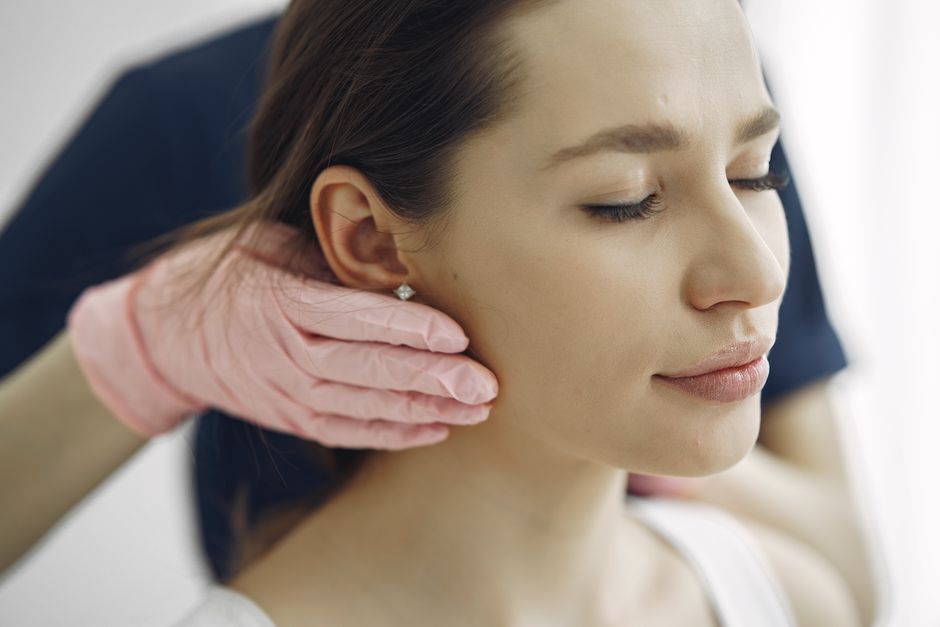
A lump inside the earlobe is usually a cyst, a clogged oil gland, or scar tissue, and most of these are not dangerous. The first step is to stop squeezing it, keep the area clean, and watch it for a week or two. If it grows, hurts, or does not go away, a doctor can drain or remove it — often in a single office visit.
What Causes A Lump Inside The Earlobe?
The earlobe is made mostly of skin, fat, and fibrous tissue. It has no cartilage. That makes it a common spot for certain kinds of lumps and a rare spot for others.
The most frequent cause is an epidermoid cyst — a small sac under the skin that fills with keratin, the same protein that makes up hair and the top layer of skin. Epidermoid cysts feel like a smooth, round pea under the surface. They can be skin-colored or slightly yellow. Some have a tiny dark dot in the center, which is the blocked pore that started it.
Other common causes include:
- Acne cysts — deep, tender bumps that form when a pore clogs and becomes inflamed
- Pilar cysts — similar to epidermoid cysts but firmer and more often found on the scalp and ears
- Clogged sebaceous glands — the glands that produce oil in the skin
- Scar tissue or keloids — firm bumps that form after an ear piercing, especially if the piercing became infected
- Lipomas — soft, movable lumps of fat that can appear almost anywhere on the body
- Infected piercing sites — swelling and trapped fluid around the piercing channel
Less commonly, a lump in the earlobe can be a sign of something that needs medical attention, including certain skin cancers or cysts related to an underlying condition. That is why any lump that keeps growing, bleeds, or changes color should be checked by a clinician rather than watched indefinitely.
A detail worth knowing: the earlobe has no cartilage, so lumps here behave differently than lumps on the hard rim of the ear. Cartilage lumps are more likely to involve the cartilage itself and often need different treatment. Location matters when you are trying to figure out what you are dealing with.
How To Get Rid Of Lump Inside Earlobe Step By Step
Here is a practical sequence you can follow, starting with the least invasive steps.
Step 1: Stop touching it. This is the single most important step. Squeezing, poking, or trying to pop a lump in the earlobe pushes bacteria deeper and can turn a harmless cyst into an infected one. It can also cause scar tissue that is harder to treat than the original lump.
Step 2: Keep the area clean and dry. Wash gently with mild soap and water once or twice a day. Pat dry. Do not scrub. Do not apply alcohol, hydrogen peroxide, or harsh astringents — these irritate skin and can make inflammation worse.
Step 3: Apply a warm compress. A clean washcloth soaked in warm — not hot — water, held against the lump for about 10 to 15 minutes a few times a day, can help a clogged gland or small cyst drain on its own. This works best for lumps that feel like they have fluid inside.
Step 4: Remove your earrings for now. If you wear earrings, take them out until the lump resolves. Metal allergies, tight backs, and bacteria on jewelry can all keep a piercing site irritated. If the lump is near a piercing, this alone sometimes fixes the problem.
Step 5: Give it time. Many small cysts and clogged glands shrink or disappear within a few weeks on their own. If the lump is not painful, not growing, and not changing, watching it for two to four weeks is reasonable.
Step 6: See a doctor if it does not resolve. A clinician can tell the difference between a cyst, a lipoma, and something that needs a biopsy. For a cyst, the usual treatment is a small incision to drain it, sometimes with removal of the cyst wall so it does not come back. This is typically done in the office with local numbing.
What you should not do: try to cut it open at home, use a needle to puncture it, or apply essential oils and hope for the best. No clinical evidence supports using essential oils to dissolve a cyst, and home lancing carries a real risk of infection and scarring.
When Should You See A Doctor About An Earlobe Lump?
Most earlobe lumps are harmless, but some signs mean you should not wait.
See a doctor if the lump:
- Keeps growing over weeks
- Is red, hot, or increasingly painful
- Drains pus or fluid that smells bad
- Bleeds on its own
- Changes color or develops an irregular shape
- Feels hard and fixed in place rather than movable
- Comes with fever or swollen lymph nodes nearby
- Does not improve after several weeks of home care
These signs do not automatically mean cancer. In most cases they point to infection or inflammation. But they do mean a professional should look at it. A lump that is firm, painless, and steadily enlarging deserves prompt evaluation, especially in adults over 40.
If the lump is infected, a doctor may prescribe antibiotics. If it is a cyst that keeps returning, removal of the whole cyst — not just drainage — is the standard approach. Draining alone often leaves the cyst wall behind, and the cyst comes back.





Can You Remove An Earlobe Lump At Home?
No. Trying to remove a lump at home is risky and usually makes things worse.
Home lancing, popping, or cutting can introduce bacteria, cause a deeper infection, and leave a scar. In rare cases, an infection in the ear area can spread. The earlobe itself is not a dangerous place for infection, but the tissue around it can become seriously inflamed if bacteria get in.
There is also a practical problem: even if you manage to drain a cyst at home, you almost certainly have not removed the cyst wall. That means it refills. A doctor removing the whole sac is what stops it from coming back.
The one thing you can safely do at home is warm compresses and gentle cleaning, as described above. Everything beyond that belongs in a clinical setting.
Does An Earlobe Lump Go Away On Its Own?
Sometimes. Small epidermoid cysts, clogged glands, and piercing-related bumps often shrink or clear up on their own within a few weeks, especially if you leave them alone.
Larger cysts, pilar cysts, and lipomas usually do not disappear without treatment. They may stay the same size for years, or they may slowly grow. Keloids and scar tissue typically do not go away on their own either — they may soften over time but rarely vanish completely.
The honest position: there is no reliable way to predict which lumps will resolve and which will not. If yours is not bothering you and is not changing, watching it is reasonable. If it is growing, painful, or you are unsure what it is, get it checked.
How Do Doctors Treat An Earlobe Lump?
The treatment depends entirely on what the lump is.
For an infected cyst or abscess, the usual approach is incision and drainage, sometimes with antibiotics. This relieves pain quickly.
For a non-infected cyst, a doctor may remove the entire cyst including its wall through a small cut. This is done with local anesthesia. The procedure takes minutes and usually leaves a small scar.
For a lipoma, removal is optional unless it is growing, painful, or bothering you. Lipomas are benign fat tumors and are not dangerous.
For a keloid or scar tissue, options include steroid injections, silicone gel sheeting, or other treatments a dermatologist may recommend. Results vary, and keloids can be stubborn.
For anything suspicious — firm, fixed, growing, or unusual in appearance — a doctor may take a small sample of tissue to examine under a microscope. This is the only way to know for certain what a lump is when it does not look typical.
One clarification worth making: a cyst that is drained but not fully removed has a high chance of coming back. If you have had the same lump drained more than once, ask about full removal instead of another drainage.
How Can You Prevent Earlobe Lumps?
You cannot prevent every lump, but you can lower your odds.
- Keep piercings clean, especially during the first few months after piercing
- Choose hypoallergenic earrings if you have sensitive skin
- Avoid tight earring backs that press into the lobe
- Do not squeeze pimples or bumps on the ear
- Keep the skin moisturized but not greasy
- Treat acne on and around the ears rather than ignoring it
If you are prone to cysts, avoiding trauma to the area helps. A cyst often starts after a blocked pore, and repeated irritation increases the chance of one forming.
Frequently Asked Questions
Can I pop a lump in my earlobe?
No. Popping pushes bacteria deeper and can turn a harmless cyst into an infected one, and it often leaves scar tissue. It also rarely removes the cyst wall, so the lump usually returns.
How long should I wait before seeing a doctor?
If the lump is not painful and not growing, watching it for two to four weeks is reasonable. See a doctor sooner if it grows, hurts, bleeds, or shows signs of infection.
Is a lump in the earlobe usually cancer?
No. Most earlobe lumps are cysts, clogged glands, or scar tissue. However, a firm, painless lump that keeps growing should be checked, because only a doctor can rule out less common causes.
Will an earlobe cyst come back after it is drained?
It often does if only the contents are drained and the cyst wall is left behind. Removing the entire cyst is the approach that lowers the chance of it returning.
