
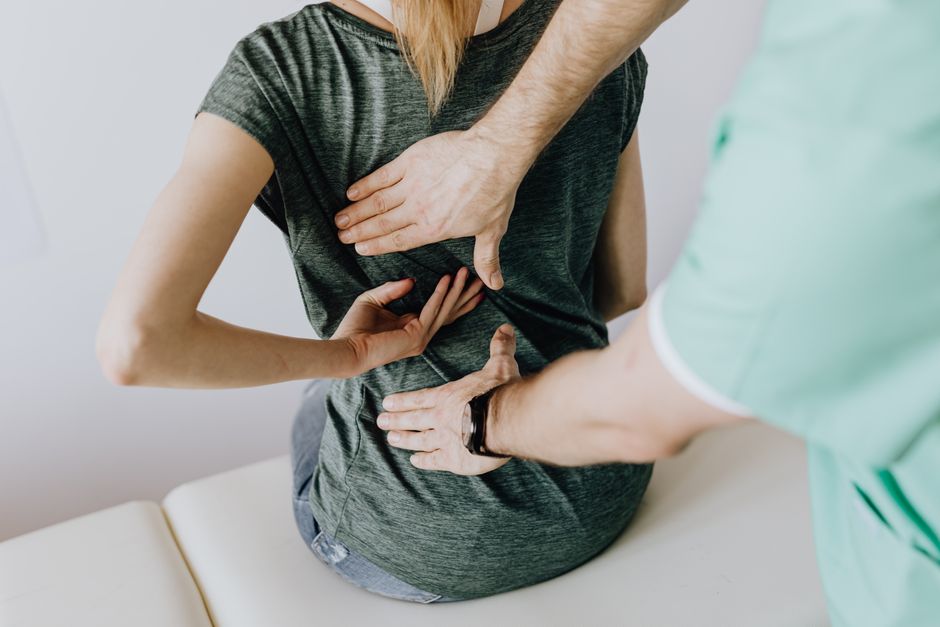
Most lifting-related lower back pain settles within days to a few weeks with the right approach: relative rest rather than total bed rest, gentle movement, ice or heat for comfort, and a gradual return to normal activity. The key is knowing whether this is a simple strain or something that needs a doctor’s attention. This guide covers what’s happening in your back, what actually helps, and what to avoid.
What Actually Causes Lower Back Pain From Lifting?
Most lifting injuries are muscle strains or ligament sprains. The muscles and ligaments that support the spine get stretched beyond what they can handle, and the tissue responds with inflammation and pain.
This usually happens for one of a few reasons. Lifting with a rounded back puts stress on the discs and ligaments rather than the stronger muscles. Twisting while lifting loads the spine unevenly. Lifting something too far from your body multiplies the force on your lower back. And lifting with your legs but then jerking the weight upward can overload tissue that never got a chance to brace.
Less common but more serious is a disc injury, where the cushioning between vertebrae bulges or tears. This can cause pain that radiates down a leg, sometimes with numbness or weakness. That pattern is different from a simple strain and warrants medical evaluation.
Here’s something people often get wrong: pain doesn’t always mean damage. The fear that your back is “out” or “broken” can make you move more cautiously than you need to, which actually slows recovery. Most acute lifting injuries heal without lasting structural problems.
How To Get Rid Of Lower Back Pain From Lifting
The single most effective thing you can do is keep moving gently. Research consistently shows that staying active speeds recovery compared to lying in bed. Prolonged bed rest can actually make back pain worse by weakening muscles and stiffening joints.
What “keep moving” looks like in practice:
- Walk short distances regularly, even if it’s just around the house at first.
- Avoid heavy lifting and twisting for a few days, but don’t stop all activity.
- Return to normal daily tasks as your pain allows, rather than waiting for zero pain.
- Try gentle stretching once the sharp pain eases, not while it’s at its worst.
For pain relief in the first day or two, cold packs can reduce inflammation and numb the area. After that, heat can relax tight muscles and improve comfort. Neither speeds healing directly, but both help you stay mobile, which does.
Over-the-counter pain relievers may help you function. Which one to use, and whether it’s appropriate for you, is a conversation for a pharmacist or doctor, especially if you have other health conditions or take other medications.
Should You Rest or Keep Moving?
Keep moving. This is one of the clearer findings in back pain research. People who stay active recover faster and have less recurrence than those who rest in bed.
The old advice to lie flat for days after a back injury has been largely abandoned. Extended rest leads to muscle deconditioning, joint stiffness, and a slower return to function. It can also feed the fear-avoidance cycle, where worry about pain leads to more inactivity, which leads to more pain.
That said, “keep moving” doesn’t mean pushing through sharp pain or returning to heavy lifting immediately. Relative rest means scaling back the activities that aggravate your back while keeping everything else going. Think of it as dialing down rather than shutting off.





When Should You See a Doctor?
Most lifting-related back pain doesn’t need medical attention. But some signs mean you should be evaluated promptly.
- Pain that shoots down one or both legs, especially below the knee.
- Numbness, tingling, or weakness in a leg or foot.
- Loss of bladder or bowel control, or numbness in the groin or saddle area. This is a medical emergency and needs immediate care.
- Pain that doesn’t improve at all after a few weeks.
- Pain following a fall or accident, or if you have osteoporosis or a history of cancer.
- Fever or unexplained weight loss alongside back pain.
These signs don’t automatically mean something serious, but they’re the ones clinicians use to decide who needs imaging or further testing. Most people with simple strains don’t need an X-ray or MRI, and getting one too early can sometimes lead to unnecessary worry about harmless findings.
What Should You Avoid While Recovering?
Avoid bed rest, heavy lifting, and twisting movements while the pain is acute. These are the main things that slow recovery or risk making the injury worse.
Also avoid returning to your normal lifting routine too soon. The tissue needs time to heal, and going back to the same weight and volume that caused the injury is a common way to re-injure yourself. Build back gradually over days to weeks, not hours.
Be cautious with passive treatments marketed as cures, such as spinal manipulation or traction devices, if they’re presented as a replacement for active recovery. Some people find manual therapy helpful for short-term comfort, but the evidence for it as a stand-alone treatment is mixed, and it shouldn’t replace movement and gradual strengthening.
One more thing worth knowing: wearing a back belt or brace for everyday lifting hasn’t been shown to prevent injury in most workplace studies. It may feel supportive, but it doesn’t substitute for good lifting mechanics and a strong back.
How Can You Prevent It From Happening Again?
Prevention comes down to lifting mechanics, back strength, and load management. None of these is complicated, but all require consistency.
For lifting mechanics: keep the load close to your body, hinge at the hips rather than rounding your back, avoid twisting while loaded, and split heavy loads into smaller ones when you can. Bracing your core before you lift helps stabilize the spine.
For strength: a program that trains the muscles that support the spine, including the glutes, hamstrings, and deep core, reduces the risk of future injury. This doesn’t require fancy equipment. Deadlifts, hip hinges, and carries done with good form build exactly the capacity that lifting demands.
For load management: gradually increase what you lift rather than jumping to a heavy weight. Most lifting injuries happen when the demand exceeds what the tissue is prepared for, so building tolerance over time is the real protection.
Sleep, stress, and overall fitness also influence how well your back tolerates load. These aren’t quick fixes, but they’re part of the picture.
How Long Does It Take to Recover?
Most acute lifting strains improve noticeably within a few days to a couple of weeks. Full recovery, meaning a return to your previous lifting capacity, often takes longer, sometimes several weeks.
Recovery isn’t linear. Some days will feel better than others, and a flare-up during the healing process doesn’t mean you’ve re-injured yourself. The general direction should be toward improvement over one to two weeks.
If pain isn’t improving at all after a few weeks, or if it’s getting worse, that’s a reason to see a clinician. Most people recover fully, but persistent pain deserves a proper evaluation rather than continued guesswork.
Frequently Asked Questions
How long does lower back pain from lifting usually last?
Most acute strains improve within a few days to a couple of weeks. Full return to heavy lifting often takes several weeks.
Should I use ice or heat for back pain from lifting?
Ice is often used in the first day or two to reduce inflammation and numb pain, and heat afterward to relax tight muscles. Neither speeds healing directly, but both can help you stay mobile.
Can I still exercise with lower back pain from lifting?
Gentle movement like walking is usually helpful and speeds recovery. Avoid heavy lifting and twisting until the pain eases, and build back gradually.
When should I worry about back pain after lifting?
Seek prompt care for leg weakness or numbness, loss of bladder or bowel control, or pain that doesn’t improve after a few weeks. These signs warrant medical evaluation.
