
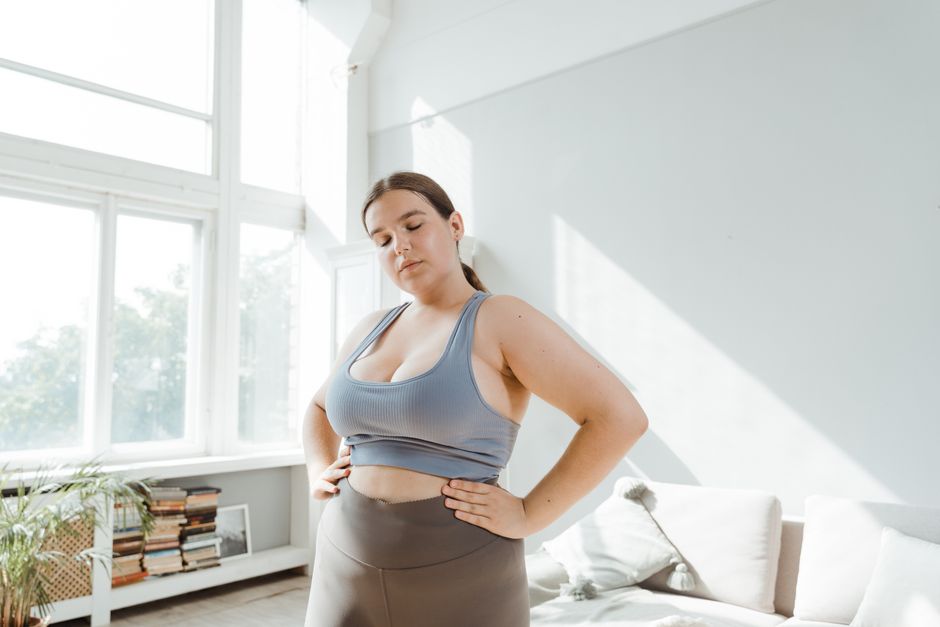
Love handles are stubborn. For many women, they are the last place fat seems to leave. The good news is that spot reduction is a myth, but losing them is not impossible. The honest answer is that you get rid of love handles by lowering overall body fat through a calorie deficit, combined with strength training to build muscle and improve posture. No cream, wrap, or targeted exercise will remove them on its own.
What Actually Causes Love Handles in Women?
Love handles are simply stored fat around your obliques and lower abdomen. Your body stores fat here for a reason. Women naturally carry a higher percentage of body fat than men, and hormones like estrogen influence where fat is stored.
Genetics play a major role. Some women store fat in their hips and thighs. Others store it around the midsection. You cannot choose where your body loses fat first. When you lose weight, your body decides the order, and for many women, the midsection is last.
Age also matters. As women approach menopause, estrogen levels drop. This shift is linked to increased abdominal fat storage. It is a normal physiological change, not a personal failure.
Can You Target Love Handles With Specific Exercises?
No. Spot reduction is not supported by research. Doing hundreds of side bends or Russian twists will strengthen your obliques, but it will not burn the fat sitting on top of them.
Think of fat like water in a bathtub. Doing a crunch is like pushing the water to one side. It looks different for a moment, but the level stays the same. You lower the water level by draining the tub, which means losing body fat overall.
That does not mean core exercises are useless. They build the muscle underneath the fat. When you do lose the fat, stronger muscles create a firmer, more defined look. But the exercise alone will not reveal them.
How To Get Rid Of Love Handles What Works For Women
The combination that works is a calorie deficit plus resistance training. A calorie deficit means eating fewer calories than your body burns. This is the only proven way to lose body fat.
You do not need to starve yourself. A moderate deficit of about 300 to 500 calories per day leads to steady, sustainable fat loss. For most women, this means eating around 1,500 to 1,800 calories daily, but that number depends on your age, height, activity level, and current weight.
Resistance training is the second half. Lifting weights builds muscle, and muscle raises your resting metabolic rate. More importantly, strength training preserves muscle while you lose fat. Without it, up to 25% of the weight you lose can be muscle, not fat.
Compound movements are the most efficient. Squats, deadlifts, hip thrusts, and push-ups engage multiple muscle groups and burn more calories per session than isolation moves. Add in oblique work like side planks and woodchoppers to strengthen the area, but treat it as the accessory, not the main event.





What About Cardio?
Cardio helps create the calorie deficit, but it is not mandatory. Some women find that high-intensity interval training (HIIT) is time-efficient. Others prefer walking or cycling. The best cardio is the one you will do consistently.
Walking is underrated. A daily 30 to 45 minute walk burns calories and is easy to sustain. It also has a low injury risk, which matters when you are exercising consistently for months.
HIIT can be effective for fat loss, but it is not magic. It burns calories during the workout and may slightly elevate your metabolism afterward. However, it is more stressful on the body and harder to recover from. If you are new to exercise, start with brisk walking and add intensity gradually.
How Long Does It Take To See Results?
This is the part most people do not want to hear. It takes time. A safe, sustainable rate of fat loss is about 0.5 to 1 pound per week. Visible changes in love handles often take 8 to 12 weeks of consistent effort.
There is no way to speed this up safely. Faster weight loss usually means losing muscle and water, not just fat. It also often leads to regaining the weight.
Take progress photos. The scale lies. When you lose fat and gain muscle, the number on the scale may barely move, but your waist measurement will shrink. Measure your waist at the navel weekly and trust the trend over the weekly number.
Do Waist Trainers or Creams Work?
No. Waist trainers do not remove fat. They temporarily compress tissue and shift fluid. The moment you take them off, your body returns to its natural shape. Wearing one for hours can also restrict breathing and put pressure on your internal organs.
Fat-burning creams are not supported by clinical evidence. Some contain ingredients like caffeine or aminophylline that may temporarily dehydrate skin cells, creating a brief tightening effect. This is cosmetic and temporary. No cream has been shown to permanently reduce fat in a specific area.
This is a category where marketing outpaces science. If a product promises to melt fat in a specific spot, it is not backed by evidence.
Does Diet Quality Matter Beyond Calories?
Yes. A calorie is not just a calorie when it comes to how you feel and how easy it is to stay in a deficit. Protein is the most important nutrient for fat loss.
Protein keeps you full, preserves muscle, and has a higher thermic effect than carbs or fat, meaning your body burns more calories digesting it. Aim for roughly 0.7 to 1 gram of protein per pound of body weight. For a 150-pound woman, that is about 105 to 150 grams daily.
Fiber also matters. Vegetables, fruits, and whole grains add volume to meals without many calories. They slow digestion and keep blood sugar steady, which reduces cravings.
You do not need to cut out entire food groups. You need to eat in a way you can sustain for months. If you love bread, eat bread. Just account for it in your daily calories.
What Role Do Hormones Play?
Hormones influence fat storage, but they are rarely the sole reason someone cannot lose weight. Cortisol, the stress hormone, is linked to increased abdominal fat. Chronic stress keeps cortisol elevated, which may encourage fat storage around the midsection.
Sleep is connected to this. Poor sleep raises ghrelin, the hunger hormone, and lowers leptin, the fullness hormone. This makes staying in a calorie deficit harder. Most adults need 7 to 9 hours of quality sleep per night.
If you are doing everything right and still not losing weight, it is worth discussing thyroid function and insulin resistance with your doctor. These conditions affect metabolism and fat storage. But they are the exception, not the rule.
Is Posture Part of the Problem?
Sometimes. Anterior pelvic tilt is a common postural issue where the front of the pelvis tilts forward. It makes the stomach and love handles protrude more, even when body fat is moderate.
This posture is often caused by tight hip flexors and a weak core. Sitting for long hours contributes to it. Strengthening the glutes and deep core muscles while stretching the hip flexors can improve posture and make your midsection look flatter.
This is not fat loss. It is structural change. But it can visually reduce the appearance of love handles in a matter of weeks.
What Is the Most Realistic Plan?
Start with a calorie deficit of about 300 to 500 calories per day. Use a food scale and a tracking app for two weeks to learn what your portions actually look like. Most people underestimate calories by 30% or more.
Lift weights two to three times per week. Focus on compound lifts. Walk daily. Get seven to nine hours of sleep. Manage stress with whatever works for you, whether that is reading, meditation, or time outside.
Be consistent for 12 weeks before judging the results. This is not a quick fix. It is a physiological process that follows a predictable timeline. The women who succeed are not the ones with the most willpower. They are the ones who stay consistent long enough for the math to work.
Frequently Asked Questions
Can I lose love handles without losing weight?
No. Love handles are stored fat, and fat only shrinks when you are in a calorie deficit. Strength training can improve posture and muscle tone, but it will not remove the fat itself.
How many calories should I eat to lose love handles?
Most women need a deficit of 300 to 500 calories per day from their maintenance level. That typically lands around 1,500 to 1,800 calories daily, but your exact number depends on your age, height, and activity level.
Are love handles harder to lose after 40?
Yes, it can be harder due to hormonal changes around menopause that shift fat storage toward the abdomen. The approach is the same, but results may come slower, and strength training becomes more important to preserve muscle.
Do waist trainers help get rid of love handles?
No. Waist trainers only compress tissue temporarily and do not remove fat. No clinical evidence supports them for permanent fat loss, and wearing them tightly can restrict breathing and digestion.
