
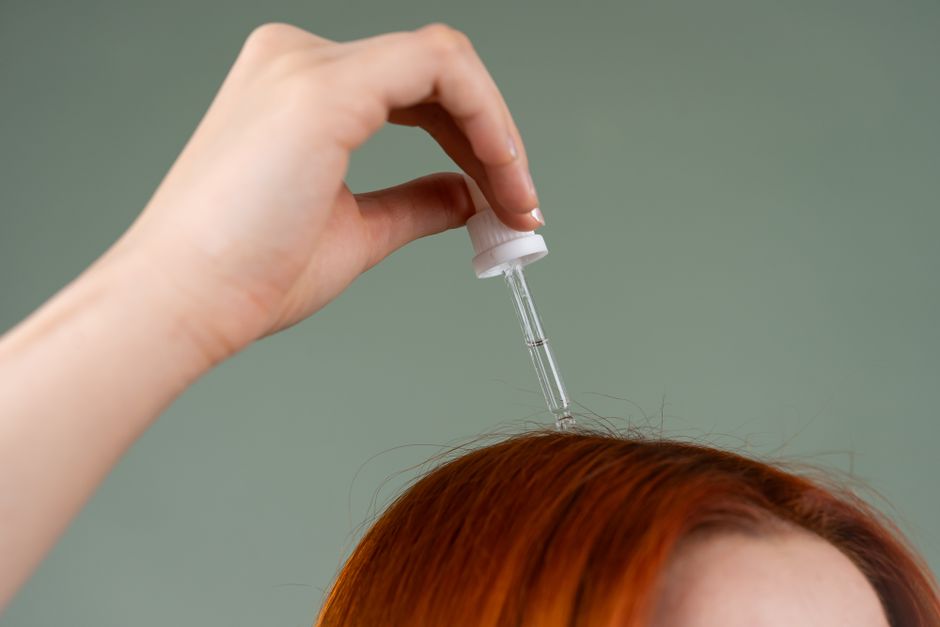
Head lice eggs are glued to hair strands, not washed away by shampoo, and that single fact explains why so many home treatments fail. The most reliable way to get rid of them is to physically remove the eggs with a fine-toothed lice comb after treating the scalp with an approved pediculicide, or by combing alone if you prefer to avoid chemicals. Nothing kills every egg in one step, so combing out the survivors is what actually finishes the job.
What Are Lice Eggs And Why Are They So Hard To Remove?
Lice eggs are tiny, oval-shaped structures cemented to individual hair shafts close to the scalp. A female louse lays them one at a time and glues each one with a substance that does not dissolve in water or ordinary shampoo.
This glue is the whole problem. It is a protein-based cement that holds the egg in place while the hair grows. Shampoo, conditioner, and rinsing do nothing to it. Even many medicated lice treatments kill the hatched lice but leave the egg shells stuck to the hair.
Eggs hatch in about 7 to 10 days. After hatching, the empty shell stays glued to the hair shaft and moves away from the scalp as the hair grows roughly 1 centimeter per month. That growth rate matters, and it is the basis for one of the most useful rules in lice detection.
Nits found more than about 1 centimeter from the scalp are usually already hatched or dead. Nits within that distance may still be viable. This is why location matters as much as presence.
One clarification that gets lost in lice panic: seeing nits does not automatically mean an active infestation. Old empty shells can stay on the hair for months. A diagnosis of active lice requires finding a live louse or a viable egg close to the scalp.
How To Get Rid Of Lice Eggs Methods That Work
Two approaches have the strongest support: chemical treatment with a proven pediculicide, and wet combing. Neither is perfect, and combining them works better than either alone.
Medicated Treatments
Over-the-counter products containing permethrin or pyrethrins are widely used. They kill live lice and have some effect on eggs, but they do not reliably kill all eggs. That is why the label directions almost always call for a second application about 7 to 9 days after the first. The second treatment targets lice that hatched after the first application.
Resistance to permethrin has become common in many parts of the United States. If a product fails after two properly timed applications, resistance is a reasonable explanation. In that case, a different class of medication prescribed by a clinician is the usual next step.
Prescription options include malathion lotion and oral ivermectin. These are clinician decisions, not self-treatment choices. A doctor weighs age, weight, pregnancy status, and prior treatment history before prescribing.
Wet Combing
Wet combing is the mechanical method. Hair is wet and coated with conditioner, then combed section by section with a fine-toothed metal lice comb. The conditioner stops lice from moving and makes combing easier.
The method works, but only if it is done thoroughly and repeated. A single combing session misses eggs and young lice. The accepted schedule is combing every few days over roughly two weeks, covering the full hatching window. This is labor-intensive, and results depend heavily on how carefully it is done.
Some studies suggest wet combing can be as effective as certain over-the-counter treatments when performed correctly. Other studies show it underperforming. The evidence is mixed, and the deciding factor appears to be technique and consistency rather than the method itself.
Why The Comb Matters
A fine-toothed metal comb with teeth spaced closely enough to catch eggs is not optional. Standard combs and brushes glide over nits. The gap between teeth needs to be narrow enough to trap an egg, which is roughly the size of a sesame seed.
Plastic combs are common in kits but tend to flex and skip. Metal combs hold their spacing better. This is a practical detail, not a marketing point.
Does Combing Alone Remove All The Eggs?
No. Combing alone can remove most eggs if it is done carefully and repeatedly, but no combing session clears every egg in one pass.
The reason is mechanical. Eggs are glued at an angle along the hair shaft, and some sit in spots that are hard to reach — behind the ears, at the nape of the neck, and along the crown. Missing even a few viable eggs restarts the cycle.
This is why timing matters more than effort. Eggs hatch over several days, not all at once. A combing session on day one removes the eggs present then. Eggs that were laid later, or that were missed, hatch afterward. Repeated sessions catch each new wave.
Combing is also the only method that removes the empty shells. Chemical treatments may leave dead nits glued in place, which can look like a failed treatment even when it worked.





Do You Need To Treat The Whole House?
No. Head lice do not live long off the human scalp, and they do not burrow into furniture or carpets the way some people assume.
Lice feed on human blood and need the scalp environment to survive. Away from a host, adult lice typically die within a day or two. Eggs cannot hatch at room temperature off a head because they need the warmth and humidity next to the scalp.
That said, a few simple steps are reasonable:
- Machine wash and dry bedding, hats, and clothing used in the past two days on a hot cycle
- Soak combs and hair accessories in hot water
- Vacuum surfaces where the person’s head rested recently
- Seal items that cannot be washed in a bag for two weeks
Fumigant sprays are not recommended. They expose household members to pesticides for a benefit that the evidence does not support.
What Actually Kills Lice Eggs?
Heat kills lice eggs. Pesticides kill them inconsistently.
This distinction is often misunderstood. Many people assume a medicated shampoo wipes out the whole infestation in one wash. It does not. Most pediculicides are more effective against live lice than against eggs, and none of the common over-the-counter products is fully ovicidal.
Heat is a different story. Eggs exposed to sustained high temperatures do not survive. This is why hot water washing and hot dryer cycles are part of standard lice guidance for bedding and clothing. It is one of the few household measures with a clear mechanism behind it.
What does not work is worth naming directly. Mayonnaise, olive oil, petroleum jelly, and vinegar rinses are widely circulated home remedies. Some can smother live lice temporarily, but there is no reliable clinical evidence that they kill eggs or resolve an infestation. They also make hair harder to comb, which works against the one method that does remove eggs.
Essential oil products marketed for lice have limited and mixed evidence. Some trials suggest certain oils may repel or kill lice, but results vary by formulation and study design. They are not a substitute for combing or approved treatment.
How Do You Know The Treatment Worked?
You know it worked when repeated combing finds no live lice and no viable eggs close to the scalp for about two weeks.
The check is specific. Comb wet, conditioned hair with a fine-toothed comb, wipe the comb on a white cloth or paper towel after each pass, and look for movement. Live lice move. Empty shells do not.
Finding only nits more than 1 centimeter from the scalp is generally a good sign. Finding live lice or nits right at the scalp means the infestation is still active and treatment needs to continue or change.
Itching can continue for a week or two after successful treatment. The itch is an allergic reaction to lice saliva, and it fades after the lice are gone. Ongoing itching alone is not proof of failure.
Frequently Asked Questions
Can you get rid of lice eggs without medication?
Yes, wet combing with a fine-toothed metal comb can remove eggs and lice without any medication. It works only if done thoroughly every few days for about two weeks to cover the full hatching cycle.
How many days does it take to get rid of lice eggs completely?
Expect about two weeks of consistent treatment and combing. Eggs hatch over roughly 7 to 10 days, so a single session cannot clear an infestation.
Does vinegar kill lice eggs?
No reliable clinical evidence shows vinegar kills lice eggs. It may loosen the glue slightly in some home recipes, but it is not a proven treatment on its own.
Should I throw away my child’s stuffed animals if they have lice?
No. Lice die within a day or two off the scalp, so sealing items in a bag for two weeks is enough. Throwing them away is not necessary.
