
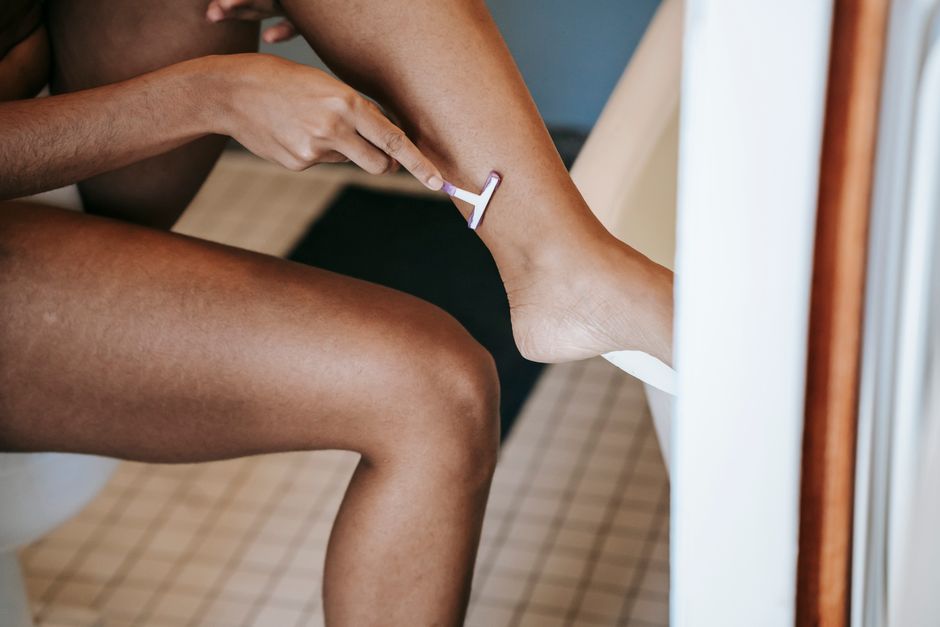
An ingrown hair happens when a hair curls back into the skin or grows sideways instead of pushing out through the surface. The result is a small, sometimes itchy or tender bump that can look like a pimple. To get rid of ingrown hairs on your legs for good, you have to stop the hair from re-entering the skin and let the trapped hair release on its own — not dig it out. Most ingrown hairs clear with simple changes to how you remove hair and a little patience. Some people get them repeatedly and need to change their hair removal method entirely.
What Actually Causes Ingrown Hairs on Legs?
An ingrown hair forms when a growing hair gets trapped below the skin surface. The hair may curl back into the skin, or dead skin cells can block the follicle opening so the hair cannot break through. The body responds to the trapped hair the way it responds to any irritant — with redness, swelling, and sometimes a small collection of pus.
Several things make this more likely on the legs:
- Curly or coarse hair — the tighter the curl, the more likely a hair bends back toward the skin.
- Shaving too close — cutting hair below the surface leaves a sharp edge that can grow inward.
- Dry skin and dead cell buildup — this can physically block the follicle opening.
- Tight clothing — friction against the skin can push hairs sideways as they grow.
- Waxing and tweezing — pulling hair out can sometimes cause the new hair to emerge crooked.
Ingrown hairs are not an infection at the start. They become a problem when bacteria get into the irritated follicle, which is when redness spreads and tenderness increases. That distinction matters for how you treat them.
How To Get Rid Of Ingrown Hairs On Legs For Good
The permanent fix is not a product — it is a change in how you remove hair and how you care for the skin between removals. No method guarantees you will never get another ingrown hair, but the right habits sharply reduce how often they happen.
The single most effective change is to stop cutting hair so short. When you shave, leave a small amount of stubble rather than shaving down to bare skin. A razor that does not pull the skin taut and cut below the surface reduces the sharp-edge problem that drives most ingrown hairs.
Exfoliation helps, but gently. Using a washcloth or a soft scrub a few times a week removes dead skin that can block follicles. Rough scrubbing on an active ingrown hair makes irritation worse. Some clinicians recommend chemical exfoliants containing salicylic acid or glycolic acid to keep the follicle opening clear. The evidence for these specifically preventing ingrown hairs is limited, though they are widely used and generally well tolerated by most skin types.
Moisturize the legs daily. Soft, hydrated skin lets hairs pass through more easily than dry, flaky skin. This is simple and low-risk, and it supports the exfoliation step rather than replacing it.
If shaving keeps causing ingrown hairs, switching methods can help more than any product. Some people do better with an electric razor, which does not cut as close. Others find waxing or depilatory creams reduce recurrence. There is no single best method for everyone — it depends on your hair type and skin sensitivity.
Should You Squeeze or Dig Out an Ingrown Hair?
No. Squeezing, picking, or digging at an ingrown hair is the most common way people make it worse. The trapped hair is below the surface, so squeezing rarely releases it. What it does do is break the skin and push bacteria deeper, which can turn a minor bump into an infection or a scar.
A warm compress is the safer approach. Holding a warm, damp cloth against the bump for several minutes a few times a day softens the skin and encourages the hair to work its way out on its own. Once the hair is visible at the surface, you can gently lift it with clean tweezers — but do not pull it out completely, and do not force it if it is still under the skin.
Leave the bump alone otherwise. Most ingrown hairs resolve within a week or two once the hair grows out. If you pick at it, you extend that timeline and raise the risk of a scar or a skin infection.




When Should You See a Doctor About an Ingrown Hair?
Most ingrown hairs are harmless and clear on their own. Some need medical attention. See a doctor if a bump becomes increasingly painful, spreads redness, feels hot, or drains pus. These can be signs of a bacterial infection in the follicle, which may need treatment a doctor provides.
Also get checked if you develop a firm, dark, or enlarging lump that does not go away, or if ingrown hairs keep coming back in the same spot despite changing your hair removal habits. A doctor can tell the difference between a stubborn ingrown hair and other skin conditions that can look similar — including cysts or other growths. Do not assume every bump is an ingrown hair.
People with diabetes or weakened immune systems should be more cautious with any skin irritation and seek care earlier rather than waiting.
How Do You Prevent Ingrown Hairs From Coming Back?
Prevention comes down to consistent habits rather than one fix. The goal is to keep hair growing out cleanly and to keep the skin surface clear.
- Shave in the direction the hair grows, not against it.
- Use a sharp razor and replace it regularly — a dull blade drags and cuts unevenly.
- Warm the skin and use shaving cream or gel before shaving.
- Exfoliate gently a few times a week, not daily and not aggressively.
- Moisturize daily to keep skin soft.
- Avoid tight clothing that rubs against the legs right after hair removal.
- Give skin a break between removals rather than shaving every day.
If you have tried these changes for several weeks and still get ingrown hairs regularly, the more reliable solution is to change your hair removal method altogether. For some people, that means stopping hair removal in the affected area for a while to let the skin settle.
Do Ingrown Hair Treatments and Products Actually Work?
The evidence for most over-the-counter ingrown hair products is thin. Many contain exfoliating acids or soothing ingredients that may reduce irritation, but few have been tested in large human trials specifically for preventing ingrown hairs. That does not mean they are useless — it means the marketing often runs ahead of the proof.
What is well supported is the basics: gentle exfoliation, moisturizing, not shaving too close, and not picking. These are low-cost and low-risk. Products that promise to “dissolve” ingrown hairs or prevent them entirely have no strong clinical evidence behind those claims.
For persistent or recurring ingrown hairs, some clinicians recommend treatments such as prescription creams or, in more stubborn cases, procedures to remove the hair permanently. Laser hair removal reduces hair regrowth and is used for recurrent ingrown hairs, but it is not appropriate for everyone and results vary. This is a conversation to have with a dermatologist rather than something to decide from a product label.
Frequently Asked Questions
How long does an ingrown hair take to go away?
Most ingrown hairs clear within one to two weeks once the hair grows out. Picking or squeezing at them usually makes them last longer and raises the risk of infection or scarring.
Can I pop an ingrown hair like a pimple?
No, you should not pop or squeeze an ingrown hair. The hair is trapped below the skin, so squeezing rarely helps and can push bacteria deeper and cause infection or a scar.
Does exfoliating help ingrown hairs on legs?
Gentle exfoliation a few times a week can help by removing dead skin that blocks follicles. Rough scrubbing on an active ingrown hair makes irritation worse.
When should I see a doctor for an ingrown hair?
See a doctor if the bump becomes very painful, the redness spreads, it feels hot, or it drains pus. Also get checked if a firm lump does not go away or ingrown hairs keep returning in the same spot.
