
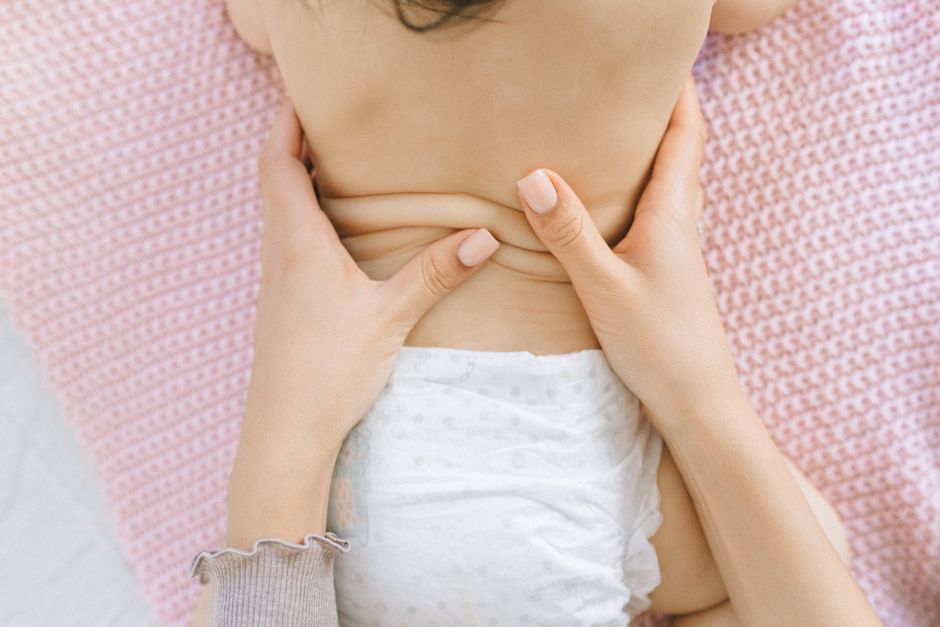
Hiccups in a newborn can sound alarming, but they are rarely a sign that anything is wrong. In most cases, infant hiccups stop on their own within a few minutes and need no treatment at all. If you want to help them along, the most reliable steps are to pause the feeding, hold your baby upright, and give them a chance to settle before offering more milk.
Why Do Babies Get Hiccups So Often?
Hiccups happen when the diaphragm — the dome-shaped muscle under the lungs that drives breathing — contracts suddenly and repeatedly. Each contraction pulls air in, and the vocal cords snap shut right after, which creates the familiar “hic” sound.
Newborns hiccup far more than older children and adults. Part of the reason is simple anatomy: a baby’s diaphragm and the nerves that control it are still maturing. The reflex is easier to trigger and harder to shut off.
Another factor is feeding. Babies spend a huge portion of their early months eating, and feeding is one of the most common triggers. The diaphragm sits directly above the stomach. When the stomach fills and stretches, it presses upward against the diaphragm, which can set off the reflex.
Hiccups also appear during sleep and even before birth. Many pregnant women feel rhythmic little jolts in the third trimester, which are fetal hiccups. That timing matters, because it tells us hiccups are a normal part of development rather than a symptom of a problem.
One point worth clarifying: hiccups in infants are not a sign of poor health, and they are not caused by something the mother ate or did during pregnancy. They are a normal reflex.
How To Get Rid Of Infant Hiccups
There is no cure for hiccups, in babies or adults. The goal is to remove the trigger and let the reflex fade, which usually takes a few minutes.
The most effective approach is to stop the feeding as soon as hiccups start. Continuing to feed a hiccupping baby often makes it worse, because more milk means more stomach stretching against the diaphragm.
Try these steps in order:
- Pause the feed and lift your baby to an upright position against your shoulder.
- Hold them there for a few minutes and let the hiccups run their course.
- Burp gently. Patting the back can help release swallowed air, which may be part of the trigger.
- Once the hiccups stop, offer the feed again if your baby still seems hungry.
If your baby is calm and comfortable, you can simply do nothing. Hiccups that are not bothering your baby do not need to be interrupted.
Resist old-fashioned tricks like pulling on the tongue, startling the baby, or pressing on the soft spot. None of these are supported by evidence, and some carry real risk of injury.
What Actually Helps and What Does Not
Some widely shared tips work for reasons that make sense. Others are folklore.
Burping helps because trapped air in the stomach can irritate the diaphragm. Giving a pacifier sometimes helps because sucking and swallowing can reset the breathing rhythm. A brief change of position, like sitting your baby up or laying them on their tummy while awake and supervised, may interrupt the cycle.
What does not help: holding your baby upside down, giving water, or offering sugar water. Giving water to a young infant is not recommended, and sugar water is used in some clinical settings for pain relief during procedures — not for hiccups at home.
There is one interesting research thread here. Some studies have looked at whether hiccups serve a purpose in newborns, including a possible role in helping the brain learn to regulate breathing and in clearing air from the stomach. This is still an area of active study, and no confirmed function has been established.




When Should You Worry About Baby Hiccups?
Hiccups by themselves are not a reason to call a doctor. They are common, they resolve, and they do not harm a healthy baby.
What matters is the bigger picture. Contact your pediatrician if hiccups come with any of the following:
- Feeding problems, such as choking, coughing, or turning blue during feeds
- Frequent spitting up or forceful vomiting
- Poor weight gain or weight loss
- Breathing that looks labored, fast, or noisy between hiccups
- Hiccups that last for hours without stopping, especially if they interfere with sleep or feeding
- Signs of reflux, such as arching the back and crying during or after feeds
These signs are not caused by hiccups. They point to something else that deserves a medical look. Persistent hiccups lasting more than 48 hours in an older child or adult is a recognized clinical concern, though this is rare in infants.
If your baby is feeding well, gaining weight, and seems unbothered by the hiccups, there is no cause for alarm.
Can You Prevent Infant Hiccups?
You cannot stop hiccups entirely, but you can lower how often they happen.
Feeding technique is the biggest lever. Feeding your baby before they get frantic with hunger reduces how much air they swallow. Pacing the feed and burping partway through — especially with bottle feeding — can help. Keeping the bottle tilted so the nipple stays full of milk, rather than half full of air, also cuts down on swallowed air.
Overfeeding is a common trigger. A very full stomach presses against the diaphragm. Offering smaller amounts more often can help if hiccups seem tied to big feeds.
For breastfeeding mothers, a good latch matters. If your baby is gulping or clicking during feeds, they may be taking in extra air. A lactation consultant can help if you are unsure.
None of these steps will eliminate hiccups completely. They are a normal part of being a baby, and they become less frequent as the nervous system matures.
Do Hiccups Mean Something Is Wrong With My Baby?
No. Hiccups in a healthy infant are not a sign of illness, and they are not a sign of a digestive problem on their own.
The confusion often comes from reflux. Babies with gastroesophageal reflux can have more hiccups, because stomach contents and stomach stretching both irritate the diaphragm. But hiccups do not cause reflux, and having hiccups does not mean your baby has reflux. The two can appear together without one causing the other.
There is also a persistent myth that hiccups mean a baby is cold or has been overfed. Neither is reliably true. Hiccups can happen after a feed, during sleep, or for no clear reason at all.
If your baby is otherwise well — feeding normally, gaining weight, sleeping, and alert when awake — hiccups are just hiccups.
Frequently Asked Questions
How long do baby hiccups usually last?
Most episodes of infant hiccups last a few minutes and stop on their own. If hiccups continue for hours or interfere with feeding or sleep, talk to your pediatrician.
Should I stop feeding my baby when they get hiccups?
Yes, pausing the feed and holding your baby upright is the most reliable way to help hiccups settle. You can offer the feed again once the hiccups stop if your baby still seems hungry.
Can I give my newborn water to stop hiccups?
No. Water is not recommended for young infants and does not stop hiccups. Feeding your baby only breast milk or formula is the standard guidance for the first several months.
Are hiccups a sign of reflux in babies?
Hiccups and reflux can occur together, but hiccups do not cause reflux and are not proof of it. Signs that matter more include frequent spitting up, arching during feeds, and poor weight gain.
