
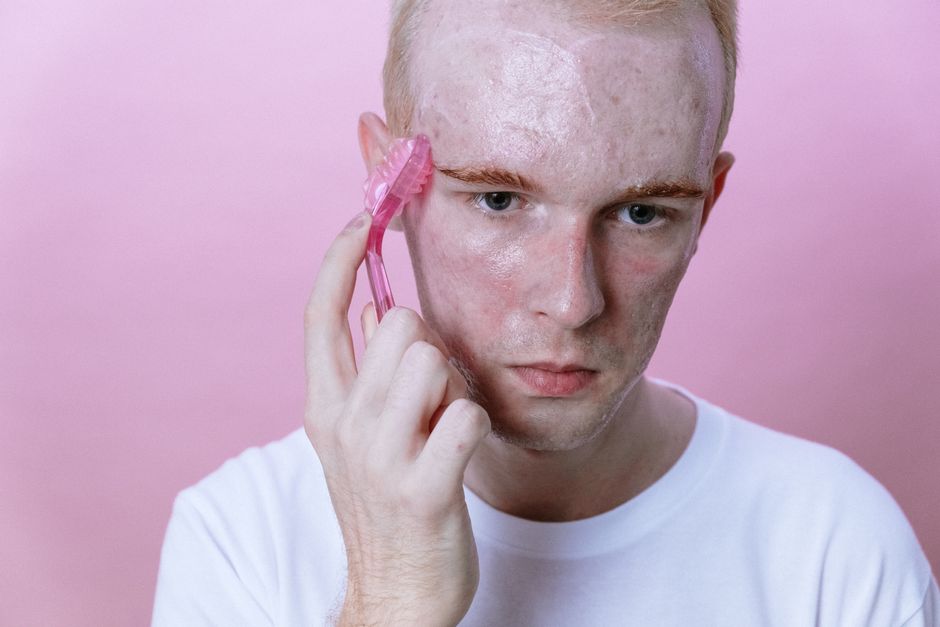
Hormonal cystic acne is driven by oil glands that respond to androgens, inflammation deep in the follicle, and a lining of the pore that sheds abnormally. That is why surface treatments alone rarely clear it. Getting rid of it for good usually means treating the hormonal driver, not just the pimple you can see. For many people this takes months of consistent treatment, and for some it means ongoing medication rather than a permanent cure.
What Makes Cystic Acne Different From Regular Acne?
A cyst is not a bigger pimple. It is a blocked, inflamed follicle that has ruptured below the skin surface, and the body’s immune response to that rupture is what creates the deep, tender lump.
In ordinary acne, a pore clogs with dead skin cells and oil, and the blockage stays near the surface. In cystic acne, the follicle wall breaks deeper down. Oil, bacteria, and cell debris spill into the surrounding tissue. The immune system floods the area, and you get a red, painful swelling that never comes to a head.
That depth matters for two reasons. First, it explains the pain — nerve endings and pressure receptors sit well below the top layer of skin. Second, it explains scarring. When inflammation destroys tissue at that depth, the skin heals with a permanent dip or ridge. This is why picking and squeezing cystic acne is genuinely harmful rather than just unwise.
Hormonal cystic acne tends to cluster along the jawline, chin, and lower cheeks. It often flares in the week before a period, and it can persist well past the teenage years. Adult women in their 30s, 40s, and 50s are commonly affected.
What Actually Causes Hormonal Cystic Acne?
Androgens — hormones present in everyone, though at different levels — signal the sebaceous glands to produce more oil. More oil means a higher chance a follicle becomes blocked and ruptures.
Several things can push this process:
- Androgen levels and sensitivity. Some people have normal blood androgen levels but oil glands that respond strongly to them. Others have measurably elevated androgens, which can point to conditions like polycystic ovary syndrome.
- Menstrual cycle shifts. Androgen activity relative to estrogen can rise in the days before bleeding, which is why flares follow a predictable pattern for many women.
- Changes in ovarian function. The years leading up to menopause involve wide swings in hormone levels, and acne can appear or worsen during this time even in women who never had it before.
- Medications and supplements. Certain hormonal medications, some steroids, and some bodybuilding supplements can trigger or worsen acne.
- Genetics. A family history of severe acne raises your own risk.
- Cosmetics and skin products. Heavy, occlusive products can contribute to clogged pores, though this is a separate issue from the hormonal driver.
Diet is often blamed. The evidence here is mixed. Some studies suggest that high-glycemic diets and dairy may influence acne in some people, but results vary and no single food has been shown to cause hormonal cystic acne. Cutting out entire food groups is not a reliable treatment.
Stress, poor sleep, and high humidity can worsen existing acne. They do not create the hormonal mechanism on their own.
Can Hormonal Cystic Acne Be Cured For Good?
For a large share of people, yes — with the right treatment, cystic acne can be cleared and kept clear. But “for good” usually depends on whether the treatment continues.
This is the part most marketing skips. Acne is a chronic condition for many people. It behaves more like high blood pressure than like a cold. If the treatment that controls it is stopped, it often returns. That is not treatment failure. It is how the condition works.
Two exceptions are worth knowing. Some women see acne resolve permanently after menopause. And some people simply outgrow it in their 20s. Neither can be predicted reliably, and neither is something you can plan around.
The realistic goal is control: fewer lesions, less pain, less scarring, and a routine you can actually maintain.


How To Get Rid Of Hormonal Cystic Acne For Good: Treatment Options
Treatment falls into three broad groups: topical, oral, and hormonal. For deep cystic acne, topicals alone are often not enough, because they act near the surface where the problem is not.
Topical treatments
These are usually the first step and remain part of most routines.
- Benzoyl peroxide reduces acne bacteria and helps calm inflammation. It is available without a prescription.
- Retinoids help the follicle lining shed normally, which addresses one of the root problems. Prescription versions tend to be more effective than over-the-counter retinol.
- Azelaic acid and salicylic acid are used for milder or maintenance treatment.
Topicals take time. Improvement typically takes several weeks to a few months, and early weeks can look worse before they look better.
Oral treatments
For moderate to severe cystic acne, oral options are often needed.
- Oral antibiotics reduce bacteria and inflammation. They are generally used short-term alongside other treatments, not as a long-term solution, because of antibiotic resistance.
- Isotretinoin is the most effective treatment available for severe cystic acne and can produce long-lasting clearance in some people. It also carries serious risks, including severe birth defects, and requires strict monitoring. It is a decision to make with a dermatologist, not from an article.
Hormonal treatments
Because androgens drive the process, treatments that reduce androgen effect can be highly effective in women.
- Combined oral contraceptives are used to lower androgen activity and can improve acne.
- Spironolactone blocks androgen receptors and is widely prescribed for hormonal acne in women. It is not for use in pregnancy.
These are prescription decisions. Dosing, suitability, and monitoring are individual, and no general article can set them for you.
What Actually Works In A Daily Routine?
Consistency matters more than intensity. A simple routine used every day outperforms an elaborate one used sporadically.
- Wash gently twice a day. Scrubbing does not clear cystic acne and can irritate skin.
- Use a non-comedogenic moisturizer. Dry, irritated skin heals worse and can look more inflamed.
- Apply sunscreen daily, especially if using retinoids or antibiotics, which increase sun sensitivity.
- Do not pick, squeeze, or lance cysts. This is the single biggest driver of scarring.
- Give any new treatment several weeks before judging it.
One clarification worth stating plainly: spot treatments do not fix cystic acne. A cyst is a deep inflammatory event, and a cream applied to the surface cannot reach it. If your routine is built around spot-treating individual lumps, that is likely why it is not working.
When Should You See A Dermatologist?
See a dermatologist if you have deep, painful lumps, if over-the-counter treatments have not helped after a few months, or if you are developing scars.
Scarring is the main reason not to wait. Once a scar forms, treating acne does not remove it — you then need separate treatment for the scar itself. Preventing scars is far easier than removing them.
Also see a doctor if acne appears suddenly with other symptoms, such as irregular periods, excess hair growth, or rapid changes. These can point to an underlying hormonal condition that needs its own evaluation.
If you are pregnant, planning pregnancy, or breastfeeding, tell your clinician before starting or continuing any acne treatment. Several effective options are not safe in pregnancy, and the guidance here differs from standard treatment.
What Does Not Work, Despite The Claims
A lot of acne marketing targets people who are frustrated and willing to try anything. Some of it is harmless but useless. Some of it is not harmless.
- Detoxes and cleanses. No clinical evidence supports these for acne. Acne is not caused by retained toxins.
- Extreme elimination diets. Cutting out broad food groups has not been shown to clear hormonal cystic acne and can create nutritional problems.
- Essential oil blends marketed as cures. Some may irritate or sensitize skin. None have been shown to clear cystic acne.
- At-home extraction tools. These increase the risk of scarring and infection.
- Sun exposure to “dry out” acne. This damages skin and raises skin cancer risk. It does not treat the cause.
If a product promises a permanent cure with no prescription and no side effects, that claim is not supported by evidence.
How Long Does It Take To See Results?
Most acne treatments take weeks to months to show clear improvement. This is true for topicals, oral antibiotics, hormonal treatments, and isotretinoin.
Expecting overnight results leads people to abandon treatments that were working. A common pattern is stopping at week three, when the skin has not yet responded, and concluding the treatment failed.
The honest timeline: some improvement in the first month or two, more meaningful clearing over several months, and continued improvement after that. If a treatment is producing no change after a reasonable trial, that is a conversation to have with your clinician — not a reason to switch products every two weeks.
Frequently Asked Questions
Can hormonal cystic acne go away on its own?
It can improve with time, especially after the teenage years or after menopause, but deep cystic acne often persists without treatment and can leave permanent scars. Waiting is usually not the best approach when cysts are deep or painful.
Is hormonal cystic acne caused by poor hygiene?
No. Cystic acne is driven by hormones, oil production, and inflammation deep in the follicle, not by cleanliness. Over-washing and scrubbing can actually make it worse by irritating the skin.
Do I need a prescription for hormonal cystic acne?
Often yes. Deep cystic acne frequently does not respond to over-the-counter products alone, and effective options like retinoids, hormonal treatments, and isotretinoin require a prescription and medical supervision.
Will changing my diet clear hormonal cystic acne?
The evidence is mixed. Some studies suggest high-glycemic diets and dairy may affect acne in some people, but no diet has been shown to reliably clear hormonal cystic acne. Diet changes are not a substitute for treatment.
