
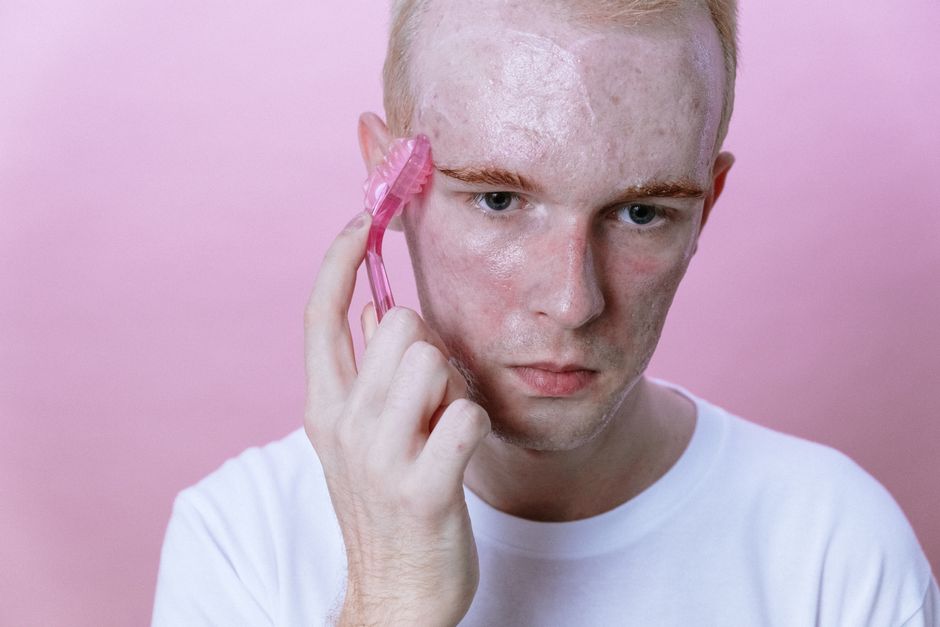
Hairline acne is acne that forms along the edge of your scalp, where your forehead meets your hair. It has the same root cause as acne anywhere else on the body: a pore becomes blocked with oil and dead skin cells, and the blockage becomes inflamed. The difference is location. Hair products, sweat, hats, and shampoo residue all concentrate along that border, which is why hairline breakouts can persist even when the rest of your face is clear. Getting rid of them usually means changing what touches that skin and how you wash it — not buying a stronger spot treatment.
What Causes Acne Along The Hairline?
Acne at the hairline is driven by the same process as facial acne: excess sebum, blocked follicles, and the bacterium Cutibacterium acnes colonizing the blocked pore. What makes the hairline different is what sits on it.
Hair products are the most common trigger. Pomades, gels, leave-in conditioners, oils, and dry shampoos can migrate onto the forehead and clog follicles. This pattern is well documented in dermatology and is sometimes called pomade acne — breakouts concentrated where a product sits against the skin. Heavy occlusive ingredients like mineral oil, coconut oil, and silicones are frequent culprits, though any product can cause problems in a given person.
Shampoo and conditioner residue matter too. If conditioner is applied near the roots and not rinsed fully, a film can remain along the hairline after showering.
Other contributors include:
- Sweat and friction — sweat mixed with sebum, plus the rubbing of a hat or headband, can block pores. This is why breakouts cluster under tight caps and helmets.
- Hair covering the forehead — bangs and fringe trap heat and oil against the skin.
- Comedogenic makeup or sunscreen applied too close to the hairline and not removed at night.
- Hormonal fluctuation — androgens increase sebum production, which is why acne often flares before menstruation or during times of hormonal change.
One clarification worth making: hairline acne is not caused by poor hygiene. Washing harder or more often typically makes it worse by irritating the skin barrier. The problem is usually what is left on the skin, not what is not washed off.
How To Get Rid Of Hairline Acne? Causes And Fixes
The most effective approach is to remove the triggers first, then treat any acne that remains with proven topical ingredients. Most hairline breakouts improve within a few weeks once the offending product or habit is removed, though this timeline varies by person.
Start with what touches your hair and skin:
- Switch to lighter, non-comedogenic hair products, or stop using heavy pomades and oils near the roots.
- Rinse conditioner thoroughly and keep it off the scalp and hairline where possible.
- Wash your face after sweating, and shower after workouts rather than letting sweat dry on the skin.
- Wash hats, headbands, and pillowcases regularly — these collect oil and bacteria.
- Keep bangs off your forehead when you can, especially while sleeping or exercising.
For active breakouts, over-the-counter topical treatments with a track record include benzoyl peroxide and salicylic acid. Benzoyl peroxide reduces C. acnes and helps unblock pores; salicylic acid helps shed dead skin cells inside the follicle. Use one at a time at first, applied only to the affected area, and expect several weeks before you judge results. If your skin becomes dry or irritated, reduce how often you apply it rather than stopping abruptly.
If breakouts are widespread, deep, or not responding after a few months of consistent over-the-counter care, a dermatologist can assess whether prescription treatment is appropriate. Some clinicians also recommend checking whether a product is the cause by stopping it for several weeks and watching what happens.
Which Hair Products Trigger Breakouts?
There is no single list of “safe” products, because reactions vary between people. What matters is how a product behaves on your skin and where it sits.
Products that tend to cause more problems are those that are heavy, occlusive, or applied close to the roots. Ingredients often flagged as more likely to clog pores include mineral oil, coconut oil, cocoa butter, and some silicones. This does not mean these ingredients cause acne in everyone — many people use them without issue. But if you have persistent hairline breakouts, they are reasonable things to reduce.
Look for products labeled non-comedogenic, which means the manufacturer has formulated them to be less likely to block pores. That label is a helpful guide, not a guarantee.
Application matters as much as the product. Keep styling products a few centimeters back from the hairline, and wash them out before bed rather than sleeping in them.
Does Washing Your Hair More Often Help Or Hurt?
Washing your hair regularly helps if oil and product buildup are contributing to breakouts. Washing too aggressively or too often can dry and irritate the scalp and skin, which may worsen irritation.
There is no single correct frequency — it depends on your hair type, scalp oiliness, and activity level. For many people, washing when the hair feels oily or after heavy sweating is reasonable. The key is to rinse thoroughly and to make sure shampoo and conditioner do not sit on the skin.
If your scalp is flaky or itchy alongside hairline breakouts, that is worth mentioning to a clinician. Scalp conditions such as seborrheic dermatitis can cause redness and flaking near the hairline that looks like acne but is treated differently. A dermatologist can tell the difference.
What Skincare Routine Helps Hairline Acne?
A simple, gentle routine works better than a complicated one. The goal is to keep the hairline clean without stripping or irritating it.
A reasonable routine looks like this:
- Cleanse once or twice daily with a mild, non-comedogenic cleanser. Avoid harsh scrubs and alcohol-heavy toners near the hairline.
- Treat with a single acne ingredient — benzoyl peroxide or salicylic acid — applied to the affected area.
- Moisturize with a light, non-comedogenic moisturizer. Dry, irritated skin can make acne worse, so moisturizing is not optional even for oily skin.
- Protect with a non-comedogenic sunscreen during the day, and remove it fully at night.
Resist the urge to pick or squeeze. Picking pushes bacteria and oil deeper and increases the risk of scarring and dark marks that can last for months.
Give any routine at least several weeks before deciding whether it works. Skin cell turnover takes time, and acne treatments are not fast.
When Should You See A Doctor For Hairline Acne?
See a clinician if breakouts are deep, painful, or leaving scars, or if over-the-counter treatment has not helped after a few months of consistent use. Deep nodules and cysts carry a higher risk of scarring and often need prescription treatment.
Also seek advice if the breakout is sudden and severe, if you have other symptoms such as significant hair loss or scalp pain, or if you are unsure whether what you have is acne at all. Conditions like folliculitis — inflammation of the hair follicles — can look similar to acne but are managed differently. A clinician can distinguish between them.
For anyone who is pregnant, breastfeeding, or considering pregnancy, check with a clinician before starting any acne medication, including some over-the-counter products. Some topical and oral acne treatments are not recommended during pregnancy, and guidance here should come from a clinician rather than general advice.
Frequently Asked Questions
How do I get rid of hairline acne fast?
Stop using heavy hair products near the roots and wash your face after sweating, then treat remaining spots with benzoyl peroxide or salicylic acid. Expect improvement over several weeks, not days.
Is hairline acne caused by not washing enough?
No. Hairline acne is usually caused by hair products, sweat, and friction blocking pores, not by poor hygiene. Washing harder or more often can irritate the skin and make it worse.
Can shampoo cause acne on the hairline?
Yes. Conditioner and shampoo residue left along the hairline can block pores, and heavy styling products are a common trigger. Rinse thoroughly and keep products away from the roots.
How long does hairline acne take to clear?
Many people see improvement within a few weeks of removing the trigger, though timelines vary. If breakouts persist after a few months of consistent care, see a dermatologist.
