
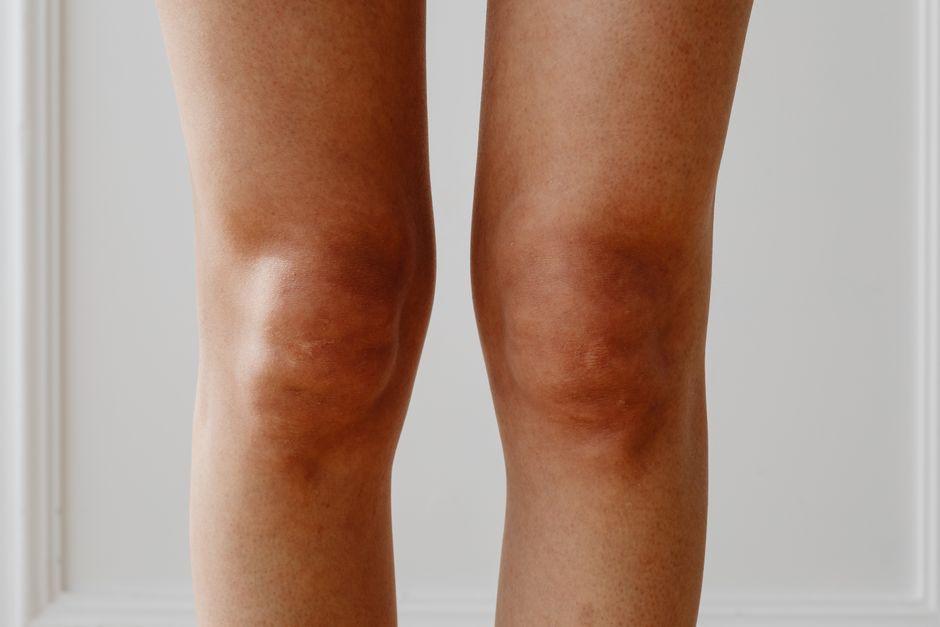
A crunching or crackling sound in your knee is called crepitus. In most cases, it is not something you can “get rid of” — and that is the honest answer. The sound itself is usually not the problem. What matters is whether it comes with pain, swelling, or instability. If your knee feels fine, the noise is generally harmless and needs no treatment. If it hurts, the sound is a signal to treat the underlying cause, not the sound itself.
This guide explains what causes knee crepitus, when it deserves attention, and what actually helps based on current evidence.
What Causes a Crunching Sound in the Knee?
Knee crepitus has several distinct causes, and the sound alone does not tell you which one you have.
The most common cause is harmless. Joints contain synovial fluid, and that fluid holds dissolved gases. When a joint moves and pressure shifts, those gases can form a bubble that pops — the same mechanism behind cracking your knuckles. This produces a single, distinct pop and is not a sign of damage.
A second cause is roughened cartilage surfaces. Cartilage is the smooth tissue covering the ends of bones. Over time, from age, injury, or repetitive load, it can become frayed or uneven. When two roughened surfaces glide across each other, they produce a grinding or crunching sensation. This is common in osteoarthritis, but it can also occur in knees with no arthritis at all.
A third cause involves the soft tissues around the joint. Tendons and ligaments can snap over bony bumps as the knee bends and straightens. The kneecap, or patella, tracks in a groove at the front of the thigh bone, and a slight tracking problem can create a crunching or grinding feeling under the kneecap.
Less common causes include a torn meniscus, loose cartilage fragments, and, rarely, a condition called synovial chondromatosis, in which small cartilage nodules form in the joint lining. These usually come with pain, locking, or a feeling that the knee catches.
Is a Crunching Knee Always a Sign of Arthritis?
No. Crepitus and arthritis are not the same thing. Many people with noisy knees have completely normal joint structure, and many people with confirmed knee arthritis have no crepitus at all.
This is where a common misunderstanding causes unnecessary worry. A study published in the journal Arthritis Care & Research found that people who frequently heard grating or cracking sounds in their knees were more likely to develop knee osteoarthritis over the following years than those who did not. That finding is real, but it does not mean the sound caused the arthritis. It more likely means both the sound and the arthritis share an underlying cause: early changes in cartilage and joint tissue.
The practical takeaway is this. A noisy knee without pain is not a reason for alarm. A noisy knee with pain, stiffness, or swelling deserves a proper evaluation.
When Should You Worry About Knee Crunching?
The sound itself is not the warning sign. The company it keeps is what matters. See a clinician if you notice any of the following.
- Pain that persists or worsens with activity
- Swelling that comes and goes or does not resolve
- The knee locking, catching, or giving way
- Stiffness that is worst in the morning or after rest
- Reduced range of motion compared with the other knee
- A recent injury followed by new crunching
Sudden onset after a twist or fall, especially with rapid swelling, suggests a structural injury such as a meniscus tear or ligament damage. That situation needs prompt medical attention, not home remedies.





How To Get Rid Of Crunching Sound In Knee
You cannot reliably eliminate a harmless popping sound, and trying to is not a useful goal. What you can do is address the conditions that make crepitus worse and, in some cases, reduce the noise as a side effect.
Strengthening the muscles around the knee is the most evidence-supported step. The quadriceps muscles at the front of the thigh help control how the kneecap tracks in its groove. When these muscles are weak, the kneecap can move less smoothly, which increases grinding. Resistance training for the quadriceps and hips is widely recommended for knee pain related to patellofemoral problems and osteoarthritis.
Weight management matters if you carry extra body weight. Every pound of body weight places several pounds of force through the knee during walking. Losing weight reduces that load. For people with knee osteoarthritis and excess weight, weight loss is one of the few interventions with consistent evidence for reducing pain and improving function.
Low-impact activity keeps the joint moving without hammering it. Walking, swimming, cycling, and elliptical training are generally well tolerated. Complete rest tends to make knees stiffer, not better.
Physical therapy can help if your kneecap tracks poorly or if you have muscle imbalances. A therapist can identify which muscles are weak or tight and build a targeted program.
What does not work: supplements marketed for joint health. Glucosamine and chondroitin have been studied extensively, and the largest trials have not shown meaningful benefit for knee pain or joint structure. The evidence is not strong enough to recommend them.
Do Knee Exercises Actually Reduce the Noise?
Sometimes the noise decreases, but that is not the point of the exercise. The goal is a knee that works better and hurts less. If the sound fades along the way, that is a bonus, not a guarantee.
Here is the physiology. Strong quadriceps and hip muscles improve how forces distribute across the knee joint. Better muscle control means smoother movement of the kneecap and less abnormal friction. Over weeks to months of consistent training, some people notice less grinding. Others notice no change in sound but clear improvement in pain and function.
There is no exercise that specifically targets the sound. Be skeptical of any program that promises to “cure” knee crepitus. That is not how joints work.
Can You Prevent Knee Crunching From Getting Worse?
You cannot stop the natural aging of cartilage, but you can influence how much load your knees carry over time.
Stay active. Regular movement keeps synovial fluid circulating and supports cartilage health. Sedentary living tends to accelerate stiffness and weakness.
Keep your muscles strong. This is the single most protective habit for long-term knee function. It applies at every age.
Manage your weight. Excess body weight is one of the strongest modifiable risk factors for knee osteoarthritis.
Avoid repetitive high-impact loading if your knees already hurt. Running and jumping are not inherently bad, but if they consistently cause pain, adjust the volume or switch to lower-impact options.
Address injuries early. A knee injury that is not properly rehabilitated raises the risk of later osteoarthritis in that joint.
The Bottom Line on Knee Noise
A crunching sound in the knee is usually harmless and often cannot be eliminated. The presence of pain, swelling, or instability is what turns a harmless noise into something worth investigating.
If your knee is noisy but comfortable, there is nothing to fix. If it is noisy and painful, focus on strength, weight, activity, and, when needed, professional care. Treat the knee, not the sound.
Frequently Asked Questions
Is a crunching sound in my knee dangerous?
In most cases, no. A crunching or popping sound without pain, swelling, or instability is generally harmless and does not require treatment.
Can I get rid of knee crepitus completely?
Usually not, and it is not a realistic goal. Strengthening the muscles around the knee may reduce the noise for some people, but many healthy knees stay noisy for life.
Does knee crunching mean I have arthritis?
No. Crepitus and arthritis are different things, and many people with noisy knees have no arthritis at all. A diagnosis requires a clinical evaluation, not just the sound.
Should I take glucosamine for my noisy knee?
The evidence does not support it. Large trials have not shown meaningful benefit from glucosamine or chondroitin for knee pain or joint structure.
