
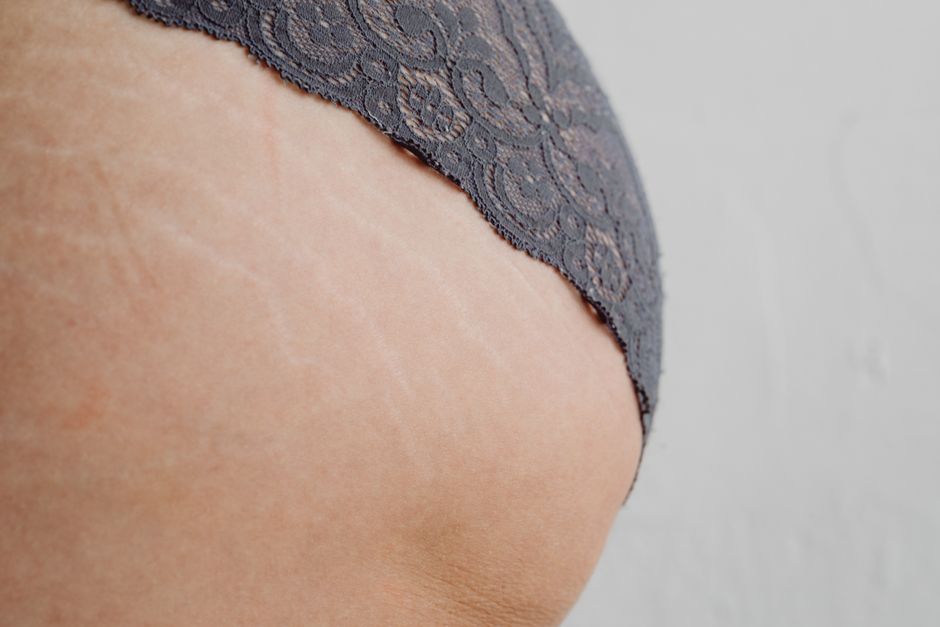
Cellulite on the buttocks is not a disease or a sign of being unhealthy. It is normal fat pushing against connective tissue under your skin. The dimpled look happens when that tissue pulls tight in some spots and looser fat bulges out in others. No cream, lotion, or tool can permanently erase it. But research shows you can reduce its appearance with consistent effort. The real approach combines strength training that builds muscle in the glutes, healthy eating that lowers body fat percentage, and treatments that thicken the skin. No single thing works for everyone. But a few methods have actual evidence behind them.
What Causes Cellulite on the Buttocks in the First Place?
Cellulite forms because of how your body stores fat. Everyone has fibrous bands called septae that connect your skin to the deeper muscle layer. In people with cellulite, those bands are tight and pull down. The fat cells between them push up. That creates the cottage cheese look.
Hormones play a big role. Estrogen is the main driver. That is why women get cellulite far more than men. Men have different connective tissue structure and less estrogen. As women age, estrogen drops, circulation to the skin decreases, and the skin gets thinner. That makes cellulite more visible.
Genetics also matter. If your mother had it, you likely will too. A 2015 study in the Journal of the European Academy of Dermatology and Venereology found that genetic factors influence how your fat is distributed and how strong your connective tissue is. You cannot change your genes. But you can change the factors that make cellulite more noticeable.
Body fat percentage is the most controllable factor. Higher body fat means more fat cells pushing against the bands. Lower body fat reduces the pressure. But even thin people get cellulite. It is not about weight alone. It is about fat distribution and skin thickness.
Does Exercise Really Get Rid of Butt Cellulite?
Exercise cannot erase cellulite completely. But it can make it less visible. The key is building muscle in the glutes while reducing overall body fat. Stronger muscles fill out the skin from underneath. That creates a smoother surface. Less fat means less pressure on the connective bands.
Compound exercises work best. Squats, deadlifts, lunges, and hip thrusts target the glutes directly. A 2018 study in the Journal of Strength and Conditioning Research found that hip thrusts activate the gluteus maximus more than squats. That matters because the gluteus maximus is the largest muscle in the area. Building it pushes the skin outward and reduces the dimpled look.
Cardio alone will not do it. Running or cycling for hours without strength training can actually make cellulite look worse. That happens because you lose muscle along with fat. Less muscle means less support under the skin. The result is looser skin and more visible dimpling.
Consistency matters more than intensity. Three strength sessions per week for 12 weeks will produce visible change for most people. You will not look like a fitness model. But the dimples will be less deep and less numerous.
What Do Topical Creams and Lotions Actually Do?
Most cellulite creams are overhyped. The skin is designed to keep things out. No cream can reach the fat cells or connective bands underneath. What some creams can do is temporarily tighten the surface of the skin. That makes the dimples less visible for a few hours.
Caffeine is the most common active ingredient in these products. It is a vasoconstrictor that tightens blood vessels and dehydrates fat cells temporarily. That shrinks the cells slightly and makes the skin look smoother. A 2012 review in the Journal of Cosmetic Dermatology found that caffeine-based creams can produce a visible but temporary reduction in cellulite appearance. The effect lasts about 6 to 12 hours.
Retinol creams work differently. Retinol thickens the skin over weeks of daily use. Thicker skin hides the fat bulges better. A 2011 study in the Journal of Drugs in Dermatology found that 0.3 percent retinol cream applied daily for six months reduced the appearance of cellulite in most participants. The change was modest but real.
No cream removes fat. No cream tightens connective tissue. If a product promises permanent results, it is lying. The best you can get from a cream is temporary tightening or gradual skin thickening. Neither is a cure.





Do Massage Tools and Body Brushing Help?
Massage tools like foam rollers, handheld massagers, and wooden rollers claim to break up fat deposits and improve circulation. The evidence for this is weak. No tool can break fat cells through the skin. Fat cells are not lumps of clay. They are living cells held in place by fibrous bands.
What massage can do is temporarily redistribute fluid. Cellulite often looks worse when you are retaining water or have poor lymphatic drainage. Massage moves that fluid out of the area. The skin appears smoother for a few hours. A 2015 study in the Journal of Cosmetic and Laser Therapy found that mechanical massage reduced thigh circumference by a small amount temporarily. But the effect faded within 24 hours.
Dry brushing is even less studied. The theory is that brushing stimulates blood flow and exfoliates dead skin. That can make the skin look temporarily brighter and smoother. But it does not change the underlying fat or connective tissue. If you enjoy it, it is harmless. But do not expect it to reduce cellulite long-term.
Vacuum-based devices used in clinics are different. These machines pull the skin upward to stretch the fibrous bands. Some studies show modest improvement after multiple sessions. But the results are temporary and require maintenance treatments. They are not a one-time fix.
What About Medical Treatments Like Laser and Radiofrequency?
Medical treatments for cellulite have gotten more effective in recent years. The best evidence supports procedures that target the connective tissue directly. These are done by dermatologists or plastic surgeons. They are expensive and not covered by insurance.
Subcision is one of the most studied treatments. A needle is inserted under the skin to cut the tight fibrous bands. That releases the tension and allows the fat to sit more evenly. A 2019 study in the Journal of the American Academy of Dermatology found that subcision reduced cellulite severity by an average of 75 percent after one session. Results lasted at least one year for most participants. The brand name for this procedure is Cellfina.
Radiofrequency devices heat the skin to stimulate collagen production. Thicker skin means less visible cellulite. A 2017 study in Lasers in Surgery and Medicine found that radiofrequency treatments reduced cellulite appearance by about 30 percent after three sessions. Results lasted six months to a year. The brand names include Thermage and Venus Freeze.
Laser treatments combine heat with tissue manipulation. A fiber is inserted under the skin to melt fat and tighten the connective tissue. A 2016 study in Dermatologic Surgery found that laser treatment reduced cellulite by about 50 percent after one session. Results lasted up to two years for some participants. The brand name is Cellulaze.
These procedures come with risks. Bruising, swelling, and infection are possible. They are not permanent. Maintenance sessions are usually needed. And they cost thousands of dollars. They work for many people but are not a casual decision.
| Treatment | What It Does | Average Reduction | Duration of Results | Cost Range |
|---|---|---|---|---|
| Subcision (Cellfina) | Cuts fibrous bands | 75% | 1-3 years | $3,000-$5,000 |
| Radiofrequency (Thermage) | Stimulates collagen | 30% | 6-12 months | $2,000-$4,000 |
| Laser (Cellulaze) | Melts fat and tightens tissue | 50% | 1-2 years | $3,000-$6,000 |
What Role Does Diet Play in Reducing Cellulite?
Diet alone will not get rid of cellulite. But it can make a noticeable difference. The goal is to lower body fat percentage and reduce water retention. Both make cellulite less visible.
Calorie deficit is the most reliable way to reduce body fat. You do not need to starve yourself. A modest deficit of 300 to 500 calories per day combined with strength training will lower body fat over time. As fat cells shrink, there is less pressure against the connective bands. The dimples become shallower.
Sodium is a hidden contributor. High sodium intake causes water retention. That makes fat cells swell and pushes them harder against the fibrous bands. Cutting processed foods and salty snacks can reduce visible cellulite within a few days. The effect is temporary but real.
Collagen supplements are popular but the evidence is mixed. A 2019 study in the Journal of Medicinal Food found that women who took collagen peptides daily for six months had less visible cellulite compared to a placebo group. The skin also became thicker. But the study was small and funded by a supplement company. More independent research is needed.
Hydration matters. Dehydrated skin looks thinner and more wrinkled. That makes cellulite more obvious. Drinking enough water keeps the skin plump and smooth. It is not a cure but it helps.
What Common Myths Should You Ignore?
There is a lot of bad information about cellulite online. Some myths are harmless. Others waste your time and money. Here are the ones worth ignoring.
- Dry brushing removes cellulite. It exfoliates skin and may improve circulation temporarily. It does not change fat or connective tissue. The smoothness lasts a few hours.
- Detox teas flush out cellulite. No tea can remove fat or tighten connective tissue. Most detox teas are laxatives that cause temporary water loss. That is not fat loss.
- Liposuction removes cellulite. Liposuction removes deep fat. Cellulite is in the superficial fat layer. Liposuction can actually make cellulite look worse by removing support tissue.
- Only overweight people have cellulite. Many thin people have visible cellulite. Body fat percentage matters more than weight. Skin thickness and genetics also play a role.
- Cellulite creams work permanently. No topical product permanently changes the structure of fat or connective tissue. The best creams offer temporary cosmetic improvement.
Understanding what does not work saves you from chasing false promises. Cellulite is normal. It is not a flaw that needs fixing. But if you want to reduce its appearance, focus on the methods with real evidence.
Frequently Asked Questions
How long does it take to see results from exercise?
Most people see visible changes after 8 to 12 weeks of consistent strength training three times per week. Results depend on your starting body fat percentage and how well you build muscle.
Do cellulite creams work at all?
Some creams with caffeine or retinol can temporarily tighten the skin or thicken it over weeks. The effect is modest and temporary. No cream permanently removes cellulite.
Is cellulite a sign of being unhealthy?
No. Cellulite is a normal variation in how fat and connective tissue are arranged. It affects about 90 percent of women regardless of fitness level or body weight.
What is the most effective medical treatment for butt cellulite?
Subcision, sold as Cellfina, has the strongest evidence. A single session reduces cellulite severity by about 75 percent on average. Results last one to three years.
