
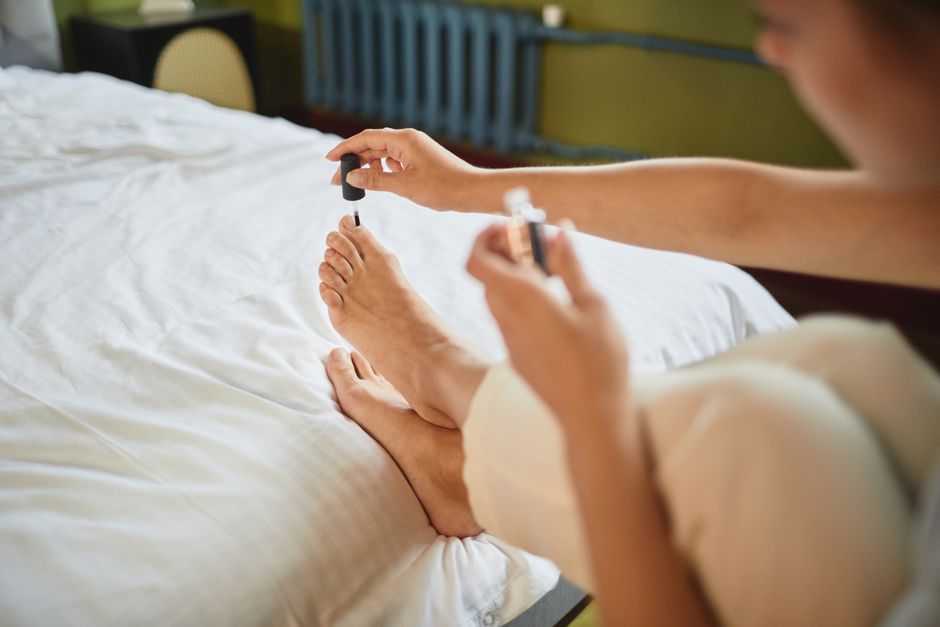
A blister on your toe is your skin’s way of protecting damaged tissue underneath. The fastest way to get rid of one is to leave it intact, keep it clean and covered, and let the fluid drain on its own. Most small toe blisters heal in about three to seven days if you stop the friction that caused them.
That advice sounds too simple for how much a blister can hurt. But the evidence behind it is solid. The roof of a blister is a sterile bandage your body built. Break it open and you invite infection into a spot that is already raw.
What Actually Causes Blisters On Toes?
Friction is the main cause. When your skin rubs against a shoe or sock, the top layer slides back and forth over the layers beneath it. That shearing force tears the connections between skin cells, and fluid fills the gap to cushion the damage.
Moisture makes this worse. Sweat softens the outer layer of skin and lowers the amount of rubbing needed to cause a separation. This is why blisters show up more often on hot days, during long walks, or when your socks are damp.
Heat and pressure add to the problem. A shoe that is too tight, a seam that sits against your little toe, or a rough insole all concentrate force on one small area.
A few other causes are worth knowing about because they change what you should do:
- Friction blisters are the common type and heal well with basic care.
- Frostbite can cause blisters after cold exposure. These need medical care.
- Burns, including sunburn, can blister. So can contact with chemicals.
- Some skin conditions cause blisters with little or no friction. Examples include eczema and certain autoimmune diseases.
- Fungal infections between the toes can cause peeling and small blisters, though this is a different process than a friction blister.
If blisters appear without any rubbing, or show up in clusters, that is a reason to see a clinician rather than treat them at home.
Should You Pop A Blister On Your Toe?
No. Leave an intact blister alone unless it is so large or painful that it interferes with walking.
The fluid inside a friction blister is mostly sterile. The skin over it keeps bacteria out and gives new skin underneath a chance to form. Once you puncture that roof, you create an open wound on a part of your body that sits inside a warm, dark, sweaty shoe all day. That is a good environment for infection.
There is one situation where draining makes sense. If a blister is stretched tight and pressing painfully against a shoe, some clinicians recommend draining it carefully. If you do this, use a sterile needle, puncture it at the edge rather than the center, let the fluid drain, and keep the roof of the skin in place. Do not tear it off.
Never drain a blister that looks cloudy, yellow, or green, or one with pus. Those signs point to infection, and a clinician should look at it.
How To Get Rid Of Blisters On Toes: Treat And Prevent
Treatment and prevention are two halves of the same job. You treat the blister you have while removing the friction that caused it. Skip the second part and you will keep getting new ones.
Treating A Blister That Is Still Intact
Clean the area gently with mild soap and water. Pat it dry. Cover it with a bandage or a piece of moleskin with a hole cut out around the blister so the ring takes the pressure, not the blister itself.
Change the dressing daily, or sooner if it gets wet or dirty. Wash your hands before and after you touch it.
If the blister breaks on its own, treat it like a minor wound. Keep it clean, cover it, and watch for signs of infection. Do not pick at the loose skin.
Treating A Blister That Has Already Popped
Once the roof is gone, the raw skin underneath is exposed and more vulnerable. Gently wash the area, apply a thin layer of petroleum jelly if you have it, and cover with a sterile bandage. Some clinicians suggest leaving the flap of skin in place if it is clean, because it still offers some protection.
Watch this kind of blister closely. An open blister on a toe is more likely to get infected than an intact one.
Preventing Toe Blisters
The single most effective step is getting shoes that fit. There should be about a thumb’s width of space between your longest toe and the front of the shoe. Heels should not slip.
Beyond fit, a few habits help:
- Wear moisture-wicking socks rather than cotton, which holds sweat against the skin.
- Change socks when they get damp, especially on long walks or hikes.
- Break in new shoes gradually instead of wearing them for a full day right away.
- Use moleskin, blister bandages, or tape on hot spots before a blister forms.
- Keep toenails trimmed so they do not press against the front of the shoe.
A hot spot — that warm, tender feeling before a blister appears — is your cue to stop and cover the area. Acting at that stage often prevents the blister entirely.


When Does A Toe Blister Need Medical Attention?
Most toe blisters are minor. Some are not, and the difference matters.
See a clinician if you notice any of these:
- Increasing pain, swelling, redness, or warmth around the blister
- Pus or fluid that looks cloudy or yellow
- Red streaks spreading away from the blister
- Fever or chills
- A blister that will not heal after a week or more
These are signs of possible infection, and skin infections on the feet can move quickly. People with diabetes need to be especially careful. Nerve damage from diabetes can dull the pain of a foot blister, so it may go unnoticed until it is worse. Poor circulation also slows healing. Anyone with diabetes who develops a foot blister should check with a clinician rather than wait.
The same caution applies to people with poor circulation, a weakened immune system, or neuropathy from any cause.
Do Home Remedies For Toe Blisters Work?
Some do. Others range from useless to harmful.
Keeping the blister clean, covered, and protected from friction is the core of good care. That is not a folk remedy — it is standard wound care.
Things that do not help include popping a blister to “let it breathe,” applying alcohol or hydrogen peroxide to the open skin, and using a needle that has not been sterilized. Alcohol and peroxide can damage the new skin trying to form.
Petroleum jelly and simple bandages are reasonable for a broken blister. There is no strong evidence that specialty blister creams do more than a plain dressing.
One point that gets lost: the fluid inside a blister is not “toxin” or “bad fluid” that needs to come out. It is serum, a normal part of the healing response. Draining it does not speed healing and can slow it down.
How Long Do Toe Blisters Take To Heal?
A small friction blister usually heals in about three to seven days when you keep it clean and stop the rubbing. A larger one, or one that has popped, can take longer.
If a blister is still there after a week, or is getting worse instead of better, that is a reason to have it checked. Healing that stalls often means friction is continuing, an infection has set in, or something other than friction is going on.
Frequently Asked Questions
Should I pop a blister on my toe?
No, an intact blister should be left alone because the skin over it protects against infection and helps new skin form. Only a clinician should drain one, or you may drain a very painful blister with a sterile needle while keeping the skin roof in place.
How long does a toe blister take to heal?
A small friction blister usually heals in about three to seven days if you keep it clean and stop the friction. A larger or popped blister can take longer, and one that is still there after a week should be checked.
What is the fastest way to get rid of a blister on a toe?
The fastest approach is to stop the friction, keep the blister clean and covered, and let it drain on its own. Popping it does not speed healing and raises the risk of infection.
When should I worry about a blister on my toe?
Worry if you see pus, spreading redness, red streaks, increasing pain, or fever, or if the blister will not heal. People with diabetes or poor circulation should have any foot blister checked promptly.
