
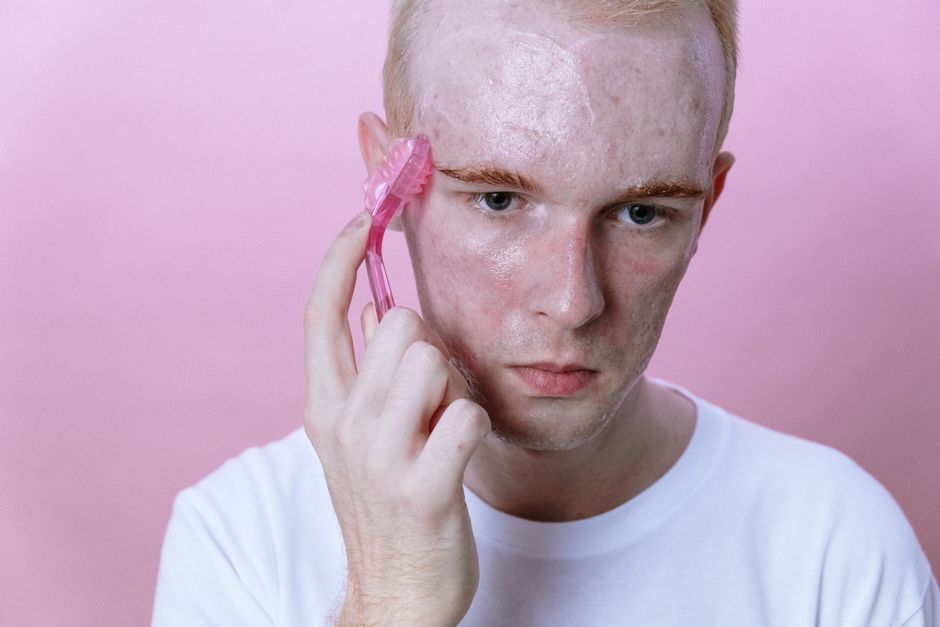
If your acne has not improved after months of consistent use of standard over-the-counter products, the problem is usually not your willpower or your face wash. It is most often the type of acne, the strength of the treatment, or how long it was used. Persistent acne usually needs a prescription-strength approach, and in many cases, evaluation by a dermatologist. When nothing works, the answer is to change the strategy, not to try harder with the same products.
Below is an honest look at why stubborn acne resists treatment, what doctors actually do next, and what the evidence does and does not support.
Why Does Acne Keep Coming Back Even When You Treat It?
Acne is a disorder of the hair follicle and the oil gland attached to it. Four things drive it: excess oil production, dead skin cells that stick together and block the pore, the bacterium Cutibacterium acnes, and inflammation. A product has to address enough of these at once to make a visible difference.
Most over-the-counter treatments target only one or two of these steps. Benzoyl peroxide kills bacteria and reduces inflammation. Salicylic acid helps unclog pores. Neither meaningfully reduces oil production or changes the hormonal signals driving it. That is why someone with moderate inflammatory acne can use a good routine for months and still break out.
There is also a timeline problem. Acne treatments work slowly. A pore that is already blocked takes weeks to clear, and new lesions keep forming underneath while you wait. Clinical guidance generally suggests giving a treatment about 8 to 12 weeks of consistent use before judging whether it works. Many people quit at four weeks, decide the product failed, and switch — restarting the clock each time.
Consistency matters more than product choice. Skipping days, layering too many actives, or scrubbing aggressively can all keep skin irritated and inflamed, which looks a lot like treatment failure.
When Should You See a Dermatologist for Acne?
See a dermatologist if acne has not improved after about 8 to 12 weeks of consistent over-the-counter treatment, or sooner if it is causing scarring, dark spots, or significant distress. These are the situations where prescription treatment changes outcomes.
Several specific situations warrant earlier evaluation:
- Deep, painful nodules or cysts, which are more likely to scar
- Acne that leaves marks or indentations even after it heals
- Sudden severe acne in an adult, which can sometimes reflect a hormonal issue
- Acne along the jawline and chin in adults, a pattern often linked to hormonal fluctuations
- Signs of excess androgen such as irregular periods or excess facial hair
- Acne that is affecting your mental health or daily life
Emotional impact alone is a valid reason to seek care. Acne is associated with higher rates of anxiety and depression, and that is a clinical concern, not a cosmetic one.
What Prescription Treatments Do Dermatologists Use?
Prescription acne treatment is not one drug. It is usually a combination chosen for your specific pattern of acne. The goal is to hit several of the four drivers at once.
Topical retinoids are the backbone of most prescription regimens. They normalize how skin cells shed inside the pore, which prevents new blockages. Tretinoin, adapalene, and tazarotene are common examples. Adapalene is available over the counter at a lower strength, which is why it is often the first step. Retinoids take time and often cause irritation and a temporary worsening early on before they help.
Topical antibiotics such as clindamycin reduce C. acnes. They are generally used alongside benzoyl peroxide, because using an antibiotic alone promotes bacterial resistance.
Oral antibiotics may be prescribed for moderate to severe inflammatory acne. They are typically used for a limited period, not indefinitely, and combined with topical treatment.
Hormonal therapy — certain combined oral contraceptives or spironolactone — can be effective in women, particularly when acne is driven by androgens. These are prescription decisions made with a clinician who knows your history.
Isotretinoin is the most effective treatment available for severe nodular acne. It is also the most tightly regulated because of serious risks, including severe birth defects. It requires monitoring and, for people who can become pregnant, strict pregnancy-prevention requirements. This is a decision for a dermatologist, not a self-directed one.
One non-obvious point: more is not better. Stacking a retinoid, benzoyl peroxide, salicylic acid, and an antibiotic all at once often produces so much irritation that people cannot tolerate any of them. Dermatologists usually build a routine gradually.
What If Prescription Treatment Still Is Not Working?
If prescription treatment is not working, the first question is whether it was used correctly and long enough. Retinoids can take 12 weeks or more to show full benefit. Using a pea-sized amount for the whole face, applying it consistently, and not layering it with irritating products all matter.
If adherence is not the issue, a dermatologist will reconsider the diagnosis. Several conditions mimic acne and do not respond to acne treatment:
- Rosacea — causes redness, flushing, and bumpy breakouts, often without blackheads
- Folliculitis — inflamed hair follicles, sometimes from bacteria or yeast
- Keratosis pilaris — rough bumps, usually on the upper arms and sometimes the face
- Perioral dermatitis — a bumpy rash around the mouth, sometimes triggered or worsened by topical steroids
- Fungal acne (Malassezia folliculitis) — itchy, uniform bumps that do not respond to standard acne treatment
These look similar to acne but need different treatment. This is one of the main reasons “nothing works” — the treatment was aimed at the wrong condition. A dermatologist can usually tell them apart by examining the skin and asking about symptoms.
For women, an underlying hormonal condition such as polycystic ovary syndrome may need to be evaluated, since treating the hormonal driver can change the response to everything else.
What Actually Helps When Standard Treatments Fail?
When first-line options fail, dermatologists escalate rather than repeat. That usually means combining treatments from different classes, adjusting strengths, or moving to a systemic option.
Combination therapy is the established approach for moderate to severe acne. Pairing a topical retinoid with benzoyl peroxide, or adding an oral medication to a topical regimen, generally works better than any single agent alone.
For people who cannot take or do not respond to standard oral antibiotics, other options exist, but they are decisions made with a specialist based on your health history. The evidence for each varies, and no single alternative works for everyone.
Procedures such as chemical peels, laser therapy, and drainage of large cysts are sometimes used alongside medical treatment. These can help with specific lesions or scarring, but they are not a replacement for treating the underlying acne process. Evidence for how well they work varies by procedure and by skin type.
What does not help: continuing to buy new over-the-counter products every few weeks. If three or four well-chosen products have failed, the next step is a clinician, not another bottle.
What Skin Care Habits Support Acne Treatment?
Good skin care does not cure acne, but poor skin care can make treatment fail. The habits below are the ones that matter most.
- Wash gently twice a day with a mild cleanser. Scrubbing and harsh soaps irritate skin and worsen inflammation.
- Apply treatment to the whole affected area, not just individual spots. Acne forms under the surface before it is visible.
- Give each treatment 8 to 12 weeks before deciding it does not work.
- Use a non-comedogenic moisturizer. Many acne treatments dry the skin, and dryness makes people quit.
- Use sunscreen daily, especially with retinoids, which make skin more sensitive to the sun.
- Do not pick or squeeze. It pushes inflammation deeper and raises the risk of scarring and dark marks.
Diet is often raised as a fix. The evidence here is mixed. Some studies suggest that high-glycemic diets and possibly dairy may be associated with acne in some people, but the effect is generally modest and results vary. No diet has been shown to reliably clear moderate to severe acne. Cutting out entire food groups is not a substitute for effective treatment.
Things like toothpaste on a pimple, lemon juice, and baking soda are not supported by evidence and can cause irritation or chemical burns. They are worth skipping.
Frequently Asked Questions
How long should I try an acne treatment before giving up?
Give most acne treatments about 8 to 12 weeks of consistent use before judging whether they work. If there is no improvement after that, it is reasonable to see a dermatologist rather than switch products repeatedly.
Why is my acne not responding to benzoyl peroxide or salicylic acid?
These over-the-counter treatments only address part of what causes acne and may be too weak for moderate or severe cases. If they have not helped after 8 to 12 weeks, prescription treatment is usually the next step.
Can acne be cured permanently?
Acne can usually be controlled well, but it is often a long-term condition that flares and settles over time. Most people see significant improvement with the right treatment, though some need ongoing management.
Is acne always caused by poor hygiene?
No. Acne is driven mainly by oil production, blocked pores, bacteria, and inflammation, along with genetics and hormones. Washing more or harder does not clear it and can make irritation worse.
