
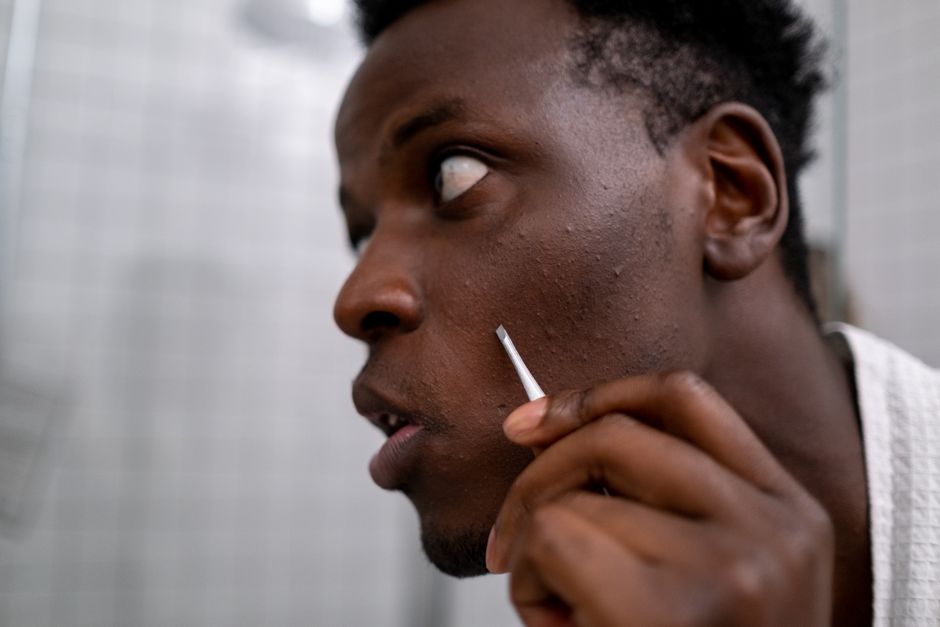
Acne that shows up on just one side of your face usually has a physical or behavioral cause, not a random one. The most common culprits are repeated contact with a dirty phone screen, resting your face on one hand, a pillowcase you sleep on the same way every night, or friction from a helmet or mask strap. Fix the one-sided trigger and keep a simple, consistent skincare routine, and most of these breakouts improve. If the acne is severe, painful, or leaving scars, a dermatologist can offer treatments that work far better than anything you can buy at a store.
Why Is My Acne Only On One Side Of My Face?
Acne forms when a hair follicle gets blocked by oil and dead skin cells, and bacteria that normally live on the skin multiply inside the blocked pore. This process is the same on both sides of your face. So when breakouts cluster on one side, something is repeatedly irritating or contaminating that side.
The most common reasons dermatologists see:
- Phone contact. A phone screen presses against the same cheek or jaw every time you talk. Phones carry oil, bacteria, and friction.
- Hand resting. Leaning your chin or cheek on one hand transfers oil and dirt and adds pressure.
- Sleep position. If you always sleep on the same side, that cheek sits against a pillowcase that collects oil, sweat, and residue from hair products.
- Hair. Long hair, bangs, or a ponytail that falls to one side can drag oil and styling products across the skin.
- Friction and pressure. Helmets, chin straps, headbands, and face masks rub the same area. This is sometimes called acne mechanica.
- Light and heat. Sun exposure or heat on one side (like driving with sun on one arm and cheek) can worsen some people’s acne.
Less often, one-sided acne can reflect an underlying issue. If the pattern looks like a rash rather than typical pimples, or if it does not respond to normal acne care, it is worth having a doctor look at it. Several skin conditions can mimic acne, and they are treated differently.
How To Get Rid Of Acne On One Side Of Your Face
Start by removing the one-sided trigger, then treat the acne itself the same way you would treat acne anywhere on the face. The trigger is what keeps it coming back on that side.
Clean the things that touch your face
Wipe your phone screen with a gentle cleanser or an alcohol wipe regularly. Use speakerphone or earbuds when you can. Try to sleep on your back, or change your pillowcase every few days. Keep hair off your face, especially at night. Wash anything that presses against your skin, like helmet padding or mask straps.
Keep a simple skincare routine
Wash your face twice a day with a mild cleanser and lukewarm water. Scrubbing harder does not clear acne faster and can make it worse. Do not pick or squeeze pimples — this pushes bacteria deeper and raises the risk of scarring and dark spots.
For over-the-counter treatment, the ingredients with the best evidence are:
- Benzoyl peroxide. Kills acne bacteria and helps unclog pores. Available in many strengths.
- Salicylic acid. Helps clear blocked pores. Common in cleansers and spot treatments.
- Adapalene. A retinoid available without a prescription that helps prevent new blockages.
These work slowly. Most people need several weeks of consistent use before they see clear improvement, and it often gets a little worse before it gets better. If one product dries or irritates your skin, cut back to every other day rather than stopping completely.
What If Over-The-Counter Products Do Not Work?
If you have used over-the-counter products consistently for a couple of months with no improvement, a dermatologist can help. Prescription options include stronger retinoids, prescription-strength benzoyl peroxide combinations, topical antibiotics, and oral medications for more severe cases.
Prescription treatments are not automatically better for mild acne, but for moderate to severe acne they can make a real difference. A doctor can also check whether something other than acne is causing the one-sided pattern.
One thing worth knowing: acne is not caused by poor hygiene. Washing more often or harder does not fix it and can damage the skin barrier, which tends to make things worse. The problem is the follicle, not dirt on the surface.
Does Diet Or Stress Cause One-Sided Acne?
Diet and stress can affect acne in general, but they do not explain why it appears on only one side. If your breakouts are truly one-sided, the cause is almost always something physical touching that side.
That said, some research suggests certain diets may influence acne. Studies have looked at high-glycemic diets (lots of sugary and refined foods) and dairy, with mixed results. The evidence is not strong enough to say that cutting out a specific food will clear your skin for everyone. If you notice a pattern with a particular food, it is reasonable to test it, but do not expect diet alone to solve one-sided acne.
Stress is often reported as an acne trigger. The link is real for many people, but stress tends to affect the whole face, not one side.
When Should You See A Doctor?
See a dermatologist if:
- Acne is deep, painful, or forming nodules or cysts
- You are getting scars or dark marks that linger
- Over-the-counter treatment has not helped after about two to three months of consistent use
- The one-sided rash does not look like typical acne, or comes with itching, scaling, or blisters
- Acne is affecting your confidence or mood
Early treatment matters most for scarring. Once a scar forms, it is much harder to reverse than it is to prevent.
Can One-Sided Acne Be Prevented?
You cannot prevent all acne — genetics and hormones play a large role. But you can reduce the one-sided triggers that keep it coming back in the same spot.
Small habits add up: clean your phone, change your pillowcase often, keep your hands off your face, and keep hair away from your skin. Stick with a gentle routine instead of switching products every week. Consistency matters more than finding a “perfect” product.
Be patient. Skin takes time to respond, and most treatments need weeks, not days, to show results.
Frequently Asked Questions
Why is my acne only on one cheek?
The most common cause is repeated contact with something on that side, like a phone screen, your hand, or a pillowcase. Removing that trigger is usually the first step to clearing it.
Can a dirty phone case cause acne?
Yes. Phones carry oil, bacteria, and friction, and pressing one against the same cheek repeatedly can clog pores and cause breakouts on that side. Wiping your phone regularly can help.
How long does one-sided acne take to clear up?
With consistent treatment, most people see improvement in a few weeks, but full clearing often takes two to three months. If it has not improved after that, see a dermatologist.
Is one-sided acne a sign of something more serious?
Usually not — it is most often caused by contact or friction. But if the rash does not look like typical acne or does not respond to treatment, a doctor should check it.
