
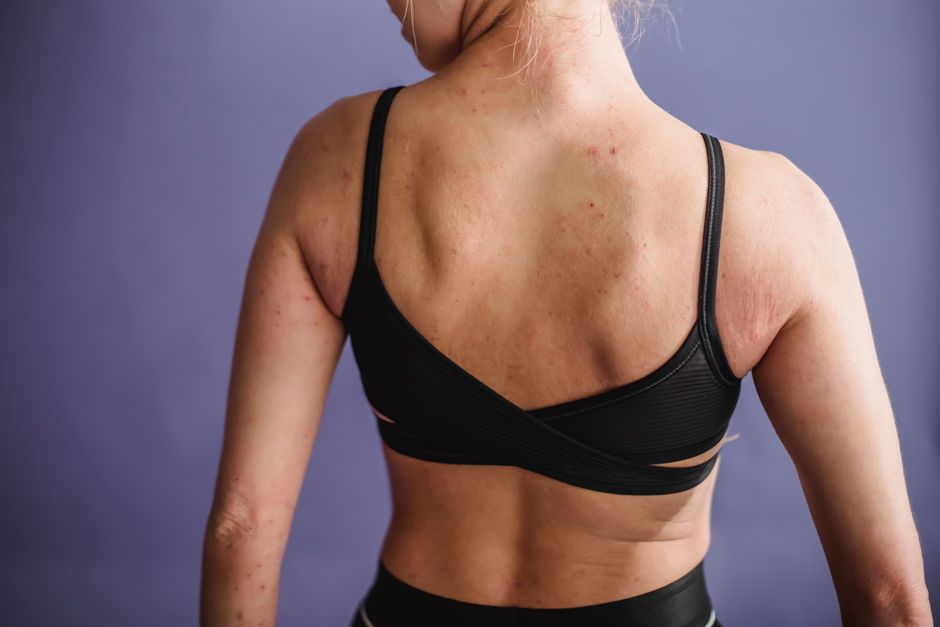
A rash from new clothes usually settles within a few days once you stop wearing the item and rinse your skin. Take the garment off right away, wash the area with cool water and a mild, fragrance-free cleanser, and apply a cool compress to calm itching. If the rash is from dye or a chemical finish, a short course of an over-the-counter hydrocortisone cream can help, but see a doctor if the rash spreads, blisters, or does not improve in about a week.
That covers the fast answer. The rest of this article explains why new clothing causes rashes, how to tell the common causes apart, and what actually helps versus what just gets repeated online.
Why Do New Clothes Cause A Rash?
New clothing can irritate skin in two fundamentally different ways, and the distinction matters because the treatment is not the same.
The first is irritant contact dermatitis. This is a direct chemical or physical injury to the skin surface. It is not an allergy. It happens to anyone exposed to enough of the offending substance. Common triggers in new clothing include:
- Formaldehyde resins used to make fabrics wrinkle-resistant and shrink-proof
- Dyes, especially certain azo dyes used on dark and vivid colors
- Chemical finishes that make fabric feel soft or repel water
- Rough fibers or stiff seams that physically rub the skin
- Detergents and fabric softeners left over from manufacturing
The second is allergic contact dermatitis. This is a true immune reaction. It requires prior sensitization — meaning your immune system has to have met the substance before. That is why someone can wear a type of fabric for years and then suddenly react. The most common clothing-related allergen is disperse dye, a class of dye used heavily on synthetic fabrics like polyester and nylon because it bonds well to them.
There is a third possibility worth naming: some people react to textile fibers themselves, particularly wool. That is usually a mechanical irritation rather than an allergy, though wool can also trigger true allergy in some people.
One thing that surprises many people: fabric softener and detergent residue on new clothes is a frequent culprit, and it is often mistaken for a dye reaction. The fix is the same either way — wash before wearing.
What Does A New Clothes Rash Look Like?
The appearance depends on whether you are dealing with irritation or allergy, and where the fabric touched your skin.
Irritant reactions tend to look like a red, dry, chapped area. They show up where friction and chemical exposure are highest — the neckline, waistband, underarms, inner thighs, and anywhere a seam presses. The skin may feel raw or sting rather than itch intensely. The border often matches the shape of the garment edge.
Allergic reactions usually itch more than they sting. They can appear as red patches, small bumps, or tiny blisters. Importantly, allergic contact dermatitis often spreads beyond the area that touched the fabric, because the immune reaction is not confined to the contact point. It can take 24 to 72 hours after exposure to fully develop, which is why some people do not connect the rash to the shirt they wore two days ago.
Both types can look similar in the early stages. If you are unsure which you have, the practical approach is the same at first: remove the clothing, wash the skin, and watch how it behaves.
How To Get Rid Of A Rash From New Clothes Fast
The fastest relief comes from stopping the exposure and calming the skin. Here is the sequence that works.
Step 1: Take the garment off immediately. Do not wait to see if it gets worse. Continued contact keeps the reaction going.
Step 2: Wash the area. Use cool or lukewarm water and a mild, fragrance-free cleanser. This removes residual dye, finish, or detergent. Avoid hot water, which increases blood flow and can make itching worse.
Step 3: Apply a cool compress. A clean cloth soaked in cool water, held on the area for 10 to 15 minutes, reduces inflammation and itch. Repeat as needed through the day.
Step 4: Consider an over-the-counter cream. For itching and redness, a hydrocortisone cream (typically 1%) is widely used for short-term relief of mild contact dermatitis. It should not be used on the face or on broken skin without medical advice, and it is not meant for long-term use. An oral antihistamine may help with itching, particularly if it is interfering with sleep.
Step 5: Do not scratch. Scratching damages the skin barrier and can introduce infection. Keep fingernails short if the itch is hard to control.
Step 6: Wash the garment before wearing it again. If you want to keep the item, wash it thoroughly — sometimes more than once — with a fragrance-free detergent. This removes much of the surface dye and chemical finish. If the rash returns, the item is not for you.
What you should not do: apply essential oils, vinegar, baking soda pastes, or “natural” remedies directly to the rash. There is no clinical evidence these speed healing, and some — particularly undiluted essential oils — can cause their own irritation or allergic reaction on already-compromised skin.
Should You Wash New Clothes Before Wearing Them?
Yes. Washing new clothes before the first wear is the single most effective way to prevent this rash.
New garments commonly carry residues from manufacturing. These include dye that has not fully bonded, formaldehyde-based finishes, and sometimes residues from the chemicals used to grow or process the fibers. Washing removes a substantial portion of these. For people with sensitive skin or a known dye allergy, one wash may not be enough — a second wash, or washing with a fragrance-free detergent and no fabric softener, reduces residue further.
There is a persistent idea that washing new clothes is only necessary for underwear or items worn close to the skin. That is not accurate. Any garment that contacts skin for an extended period — a shirt, a dress, a fitted top — can trigger a reaction. The neck, chest, and arms are common sites.
Fabric softener is worth avoiding on new clothes specifically. It coats fibers and can trap residues rather than remove them, and it adds its own fragrance and chemical load.
When Should You See A Doctor?
Most new-clothes rashes are mild and resolve on their own within one to two weeks once the trigger is removed. Some situations need medical attention.
See a doctor if:
- The rash is spreading rapidly or covering a large area
- You develop blisters, oozing, or open sores
- There are signs of infection — increasing pain, warmth, pus, or fever
- The rash does not improve after about a week of home care
- The reaction is severe enough to disrupt sleep or daily activity
- You have a history of eczema or a known dye allergy
A doctor can distinguish irritant from allergic contact dermatitis, which matters for long-term management. If you have a true dye allergy, patch testing can identify which dyes to avoid. This is done by a dermatologist and is the standard method for pinpointing specific allergens.
For persistent or severe cases, a doctor may prescribe a stronger topical steroid or, in some cases, a short course of oral steroids. These are not appropriate for self-treatment.
How Long Does A New Clothes Rash Last?
Once the offending garment is removed and the skin is cared for, most mild cases improve within a few days and clear within one to two weeks.
Allergic contact dermatitis can take longer. Because it is an immune response, it may continue to worsen for a day or two after exposure stops before it begins to improve. This delayed pattern is one of the reasons people sometimes think the rash is unrelated to the clothing.
If the rash is still present after two weeks, or if it keeps returning, the trigger has likely not been fully eliminated — or something else is causing it. At that point, medical evaluation is the right next step.
Can You Prevent A Rash From New Clothes?
Prevention is straightforward and largely about reducing chemical exposure before the garment touches your skin.
Wash new clothes before wearing them, using a fragrance-free, dye-free detergent. Skip fabric softener and dryer sheets on new items. For people with known sensitive skin, washing twice is reasonable.
When buying, consider these points:
- Natural fibers like cotton and linen generally require fewer chemical finishes than synthetics, though they are not automatically safe
- Dark and vivid colors use more dye than light colors
- “Wrinkle-free” and “no-iron” labels indicate chemical finishes
- Clothing labeled as containing no formaldehyde or made with low-impact dyes may be a better choice for reactive skin
If you have reacted to a specific garment, note the fabric and color. Patterns matter. If polyester dark blue caused a reaction, similar fabrics in similar colors are worth approaching with caution.
One clarification worth making: “hypoallergenic” on a clothing label is not a regulated term the way it is for some cosmetics. It has no standard definition for textiles, so it is not a reliable guarantee.
Frequently Asked Questions
How long does a rash from new clothes take to go away?
Most mild cases improve within a few days and clear within one to two weeks once you stop wearing the item. Allergic reactions may take longer because the immune response can keep developing for a day or two after exposure ends.
Can I wear the clothes again after the rash heals?
Only after washing the garment thoroughly, sometimes more than once, with a fragrance-free detergent. If the rash returns, your skin is reacting to something in that item and you should stop wearing it.
Is a rash from new clothes an allergy or just irritation?
It can be either. Irritant contact dermatitis is a direct reaction to chemicals or friction and affects anyone exposed. Allergic contact dermatitis is a true immune reaction that requires prior sensitization and often spreads beyond the contact area.
What cream helps a new clothes rash fast?
An over-the-counter 1% hydrocortisone cream is commonly used for short-term relief of mild contact dermatitis itching and redness. Do not use it on the face or broken skin without medical advice, and see a doctor if the rash does not improve within about a week.
